Loading...
Searching...
No Matches
constitutive::StateVariable< T > Struct Template Reference
State variables for constitutive models. More...
#include <statevariable.hpp>
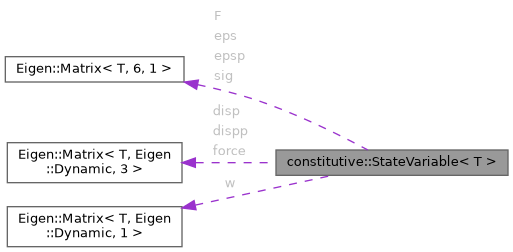
Collaboration diagram for constitutive::StateVariable< T >:
Public Member Functions | |
| StateVariable (const int size=37) | |
| Constructor. | |
| void | addStrain (const Eigen::Matrix< T, 6, 1 > &deps, const bool update_void_ratio=true) |
| Add strain and update void ratio. | |
| void | setStrain (const Eigen::Matrix< T, 6, 1 > &eps, const bool update_void_ratio=true) |
| Set strain and update void ratio. | |
| const Eigen::Matrix< T, 6, 1 > & | sig_ () const |
| Eigen::Matrix< T, 6, 1 > & | sig_ (const bool clear_caches=true) |
| const Eigen::Matrix< T, 6, 1 > & | F_ () const |
| Eigen::Matrix< T, 6, 1 > & | F_ (const bool clear_caches=true) |
| void | clearCaches () |
| Clear caches. | |
| void | revertSymmetricContactStateVariables (const int idx, const std::vector< std::string > &cscalars={}, const std::vector< std::string > &cvectors={}) |
| Revert contact force, displacement and specified custom variables by multiplying them with -1. | |
| std::size_t | hash (const Eigen::Matrix< T, 3, 1 > &dfi, const Eigen::Matrix< T, 3, 1 > &dui, const int idx, const int precision=15, const bool symmetric=false, const std::vector< std::string > &cscalars={}, const std::vector< std::string > &cvectors={}) |
| Hash the state variables at the integration point with index idx. | |
| void | copyContactStateVariables (const int from_idx, const int to_idx, const bool symmetric=false, const std::vector< std::string > &cscalars={}, const std::vector< std::string > &cvectors={}) |
| Deep copy the contact state variables from one integration point to another. | |
| void | copyTo (T *ptr, int offset=0, const bool dispp=true, const bool cscalars=true, const bool cvectors=true) |
| Copy state variables to a raw pointer for ABAQUS UMAT/VUMAT interfaces. | |
| void | copyTo (std::vector< T > data, const bool dispp=true, const bool cscalars=true, const bool cvectors=true) |
| Copy state variables to a vector. | |
| void | copyTo (StateVariable &sv) const |
| Copy state variables to another state variable. | |
| void | copyFrom (T *ptr, int offset=0, const bool dispp=true, const bool cscalars=true, const bool cvectors=true) |
| Copy state variables from a raw pointer for ABAQUS UMAT/VUMAT interfaces. | |
| void | copyFrom (std::vector< T > &data, const bool dispp=true, const bool cscalars=true, const bool cvectors=true) |
| Copy state variables from a vector. | |
| void | copyFrom (const StateVariable &sv) |
| Copy state variables from another state variable. | |
| Eigen::Matrix< T, 3, 3 > | elasticStiffnessMatrix () |
| bool | elastic () const |
| Whether the current state is elastic. | |
| bool | plastic () const |
| Whether the current state is plastic. | |
| const Tensor2< T > & | stress () const |
| Get the stress tensor. | |
| const Eigen::Matrix< T, 3, 3 > & | sigm () const |
| Get the stress tensor. | |
| Eigen::Matrix< T, 3, 3 > | sigkk () const |
| Get the mean stress tensor. | |
| Eigen::Matrix< T, 3, 3 > | tauij () const |
| Get the deviatoric stress tensor. | |
| Eigen::Matrix< T, 3, 3 > | tauij_normalized () const |
| Get the normalized deviatoric stress tensor. | |
| Eigen::Matrix< T, 3, 1 > | sig123 () const |
| Get the principal stresses. | |
| T | sig11 () const |
| Get the first principal stress. | |
| T | sig22 () const |
| Get the second principal stress. | |
| T | sig33 () const |
| Get the third principal stress. | |
| T | b () const |
| Get the lode parameter. | |
| T | R () const |
| Major stress ratio sig1/sig3. | |
| T | theta () const |
| Get the lode angle (0, pi/3). | |
| T | lode () const |
| Get the lode angle. | |
| T | I1 () const |
| Get the first invariant of the stress tensor. | |
| T | I2 () const |
| Get the second invariant of the stress tensor. | |
| T | I3 () const |
| Get the third invariant of the stress tensor. | |
| T | J2 () const |
| Get the second invariant of the deviatoric stress tensor. | |
| T | J3 () const |
| Get the third invariant of the deviatoric stress tensor. | |
| T | p () const |
| Get the mean stress. | |
| T | q () const |
| Get the deviatoric stress. | |
| T | eta () const |
| Get the stress ratio. | |
| const Tensor2< T > & | stressa () const |
| anisotropic stress tensor | |
| const Eigen::Matrix< T, 3, 3 > & | sigam () const |
| Get the anisotropic stress tensor. | |
| Eigen::Matrix< T, 3, 3 > | sigakk () const |
| Get the anisotropic mean stress tensor. | |
| Eigen::Matrix< T, 3, 3 > | tauaij () const |
| Get the anisotropic deviatoric stress tensor. | |
| Eigen::Matrix< T, 3, 3 > | tauaij_normalized () const |
| Get the normalized anisotropic deviatoric stress tensor. | |
| Eigen::Matrix< T, 3, 1 > | siga123 () const |
| Principal stresses with anisotropy. | |
| T | siga11 () const |
| First principal stress with anisotropy. | |
| T | siga22 () const |
| Second principal stress with anisotropy. | |
| T | siga33 () const |
| Third principal stress with anisotropy. | |
| T | ba () const |
| Lode parameter with anisotropy. | |
| T | Ra () const |
| Major stress ratio siga1/siga3. | |
| T | thetaa () const |
| Lode angle (0, pi/3) with anisotropy. | |
| T | lodea () const |
| Lode angle with anisotropy. | |
| T | Ia1 () const |
| Get the first invariant of the anisotropic stress tensor. | |
| T | Ia2 () const |
| Get the second invariant of the anisotropic stress tensor. | |
| T | Ia3 () const |
| Get the third invariant of the anisotropic stress tensor. | |
| T | Ja2 () const |
| Get the second invariant of the anisotropic deviatoric stress tensor. | |
| T | Ja3 () const |
| Get the third invariant of the anisotropic deviatoric stress tensor. | |
| T | pa () const |
| Get the anisotropic mean stress. | |
| T | qa () const |
| Get the anisotropic deviatoric stress. | |
| T | etaa () const |
| Get the anisotropic stress ratio. | |
| Tensor2< T > | strain () const |
| Get the strain tensor. | |
| Eigen::Matrix< T, 3, 3 > | epsm () const |
| Get the strain tensor. | |
| Eigen::Matrix< T, 3, 3 > | epskk () const |
| Get the mean strain tensor. | |
| Eigen::Matrix< T, 3, 3 > | epsij () const |
| Get the deviatoric strain tensor. | |
| Eigen::Matrix< T, 3, 3 > | epsij_normalized () const |
| Get the normalized deviatoric strain tensor. | |
| T | epsv () const |
| Get the volumetric strain. | |
| T | epsa () const |
| Get the axial strain. | |
| T | epsd () const |
| Get the general shear strain. | |
| T | eeq () const |
| Get the equivalent strain. | |
| Tensor2< T > | strainp () const |
| Get the plastic strain tensor. | |
| Eigen::Matrix< T, 3, 3 > | epspm () const |
| Get the plastic strain tensor. | |
| Eigen::Matrix< T, 3, 3 > | epspkk () const |
| Get the mean plastic strain tensor. | |
| Eigen::Matrix< T, 3, 3 > | epspij () const |
| Get the deviatoric plastic strain tensor. | |
| Eigen::Matrix< T, 3, 3 > | epspij_normalized () const |
| Get the normalized deviatoric plastic strain tensor. | |
| T | epspv () const |
| Get the plastic volumetric strain. | |
| T | epspa () const |
| Get the plastic axial strain. | |
| T | epspd () const |
| Get the general plastic shear strain. | |
| T | peeq () const |
| Get the equivalent plastic strain. | |
| T | fn (const int idx) const |
| Get the normal force. | |
| Eigen::Matrix< T, Eigen::Dynamic, 1 > | fn () const |
| T | fnc (const int idx, T cohesion=0.0) const |
| Get the normal force with minimal adhesive force. | |
| Eigen::Matrix< T, Eigen::Dynamic, 1 > | fnc (T cohesion=0.0) const |
| T | fs (const int idx) const |
| Get the shear force at the first direction. | |
| Eigen::Matrix< T, Eigen::Dynamic, 1 > | fs () const |
| T | ft (const int idx) const |
| Get the shear force at the second direction. | |
| Eigen::Matrix< T, Eigen::Dynamic, 1 > | ft () const |
| Eigen::Matrix< T, 2, 1 > | fst (const int idx) const |
| Get the shear force at both directions. | |
| Eigen::Matrix< T, Eigen::Dynamic, 2 > | fst () const |
| T | fr (const int idx) const |
| Get the shear force. | |
| Eigen::Matrix< T, Eigen::Dynamic, 1 > | fr () const |
| T | feta (const int idx) const |
| Get the shear force ratio. | |
| Eigen::Matrix< T, Eigen::Dynamic, 1 > | feta () const |
| Eigen::Matrix< T, 2, 1 > | nst (const int idx) const |
| Get the shear force direction. | |
| T | ns (const int idx) const |
| T | nt (const int idx) const |
| T | un (const int idx) const |
| Get the normal displacement. | |
| Eigen::Matrix< T, Eigen::Dynamic, 1 > | un () const |
| T | us (const int idx) const |
| Get the shear displacement at the first direction. | |
| Eigen::Matrix< T, Eigen::Dynamic, 1 > | us () const |
| T | ut (const int idx) const |
| Get the shear displacement at the second direction. | |
| Eigen::Matrix< T, Eigen::Dynamic, 1 > | ut () const |
| Eigen::Matrix< T, 2, 1 > | ust (const int idx) const |
| Get the shear displacement at both directions. | |
| Eigen::Matrix< T, Eigen::Dynamic, 2 > | ust () const |
| T | ur (const int idx) const |
| Get the shear displacement. | |
| Eigen::Matrix< T, Eigen::Dynamic, 1 > | ur () const |
| T | upn (const int idx) const |
| Get the plastic normal displacement. | |
| Eigen::Matrix< T, Eigen::Dynamic, 1 > | upn () const |
| T | ups (const int idx) const |
| Get the plastic shear displacement at the first direction. | |
| Eigen::Matrix< T, Eigen::Dynamic, 1 > | ups () const |
| T | upt (const int idx) const |
| Get the plastic shear displacement at the second direction. | |
| Eigen::Matrix< T, Eigen::Dynamic, 1 > | upt () const |
| Eigen::Matrix< T, 2, 1 > | upst (const int idx) const |
| Get the plastic shear displacement at both directions. | |
| Eigen::Matrix< T, Eigen::Dynamic, 2 > | upst () const |
| T | upr (const int idx) const |
| Get the plastic shear displacement. | |
| Eigen::Matrix< T, Eigen::Dynamic, 1 > | upr () const |
| Eigen::Matrix< T, 3, 3 > | Fij () const |
| Get the fabric tensor as a matrix. | |
| T | F11 () const |
| Get the fabric tensor component F11. | |
| T | F22 () const |
| Get the fabric tensor component F22. | |
| T | F33 () const |
| Get the fabric tensor component F33. | |
| T | F12 () const |
| Get the fabric tensor component F12. | |
| T | F13 () const |
| Get the fabric tensor component F13. | |
| T | F23 () const |
| Get the fabric tensor component F23. | |
| T | Fnorm () const |
| Norm of the fabric tensor. | |
| Eigen::Matrix< T, 3, 3 > | n () const |
| Loading direction. | |
| T | FAV (std::optional< Eigen::Matrix< T, 3, 3 > > n=std::nullopt) const |
| Fabric anisotropy variable. | |
| T | ar () const |
| Get the degree of fabric anisotropy. | |
| Eigen::Matrix< T, 3, 3 > | Aij () const |
| Get the fabric tensor A as a matrix. | |
| T | A11 () const |
| Get the fabric tensor component A11. | |
| T | A22 () const |
| Get the fabric tensor component A22. | |
| T | A33 () const |
| Get the fabric tensor component A33. | |
| T | A12 () const |
| Get the fabric tensor component A12. | |
| T | A13 () const |
| Get the fabric tensor component A13. | |
| T | A23 () const |
| Get the fabric tensor component A23. | |
| Eigen::Matrix< T, 3, 3 > | FNij () |
| Get the fabric tensor of contact normal force. | |
| T | FN11 () |
| Get the fabric tensor of contact normal force component FN11. | |
| T | FN22 () |
| Get the fabric tensor of contact normal force component FN22. | |
| T | FN33 () |
| Get the fabric tensor of contact normal force component FN33. | |
| T | FN12 () |
| Get the fabric tensor of contact normal force component FN12. | |
| T | FN13 () |
| Get the fabric tensor of contact normal force component FN13. | |
| T | FN23 () |
| Get the fabric tensor of contact normal force component FN23. | |
| T | an () |
| Get the degree of fabric anisotropy of contact normal force. | |
| Eigen::Matrix< T, 3, 3 > | FTij () |
| Get the fabric tensor of contact shear force. | |
| T | FT11 () |
| Get the fabric tensor of contact shear force component FT11. | |
| T | FT22 () |
| Get the fabric tensor of contact shear force component FT22. | |
| T | FT33 () |
| Get the fabric tensor of contact shear force component FT33. | |
| T | FT12 () |
| Get the fabric tensor of contact shear force component FT12. | |
| T | FT13 () |
| Get the fabric tensor of contact normal force component FT13. | |
| T | FT23 () |
| Get the fabric tensor of contact shear force component FT23. | |
| T | at () |
| Get the degree of fabric anisotropy of contact shear force. | |
Static Public Member Functions | |
| static int | nStateVariables (const int size=37, const bool dispp=false, const int nstatev_custom=0) |
| Get the number of state variables. | |
| static std::vector< std::string > | stateVariableNames (const int size=37, const bool dispp=true, const int nstatev_custom=0) |
| Get the names of the state variables. | |
Public Attributes | |
| int | phase = 0 |
| load phase index | |
| int | size = 37 |
| number of the integration points | |
| int | cached_num = 0 |
| cached number of the integration points | |
| Eigen::Matrix< T, 6, 1 > | sig = Eigen::Matrix<T, 6, 1>::Zero() |
| stress vector | |
| Eigen::Matrix< T, 6, 1 > | F = Eigen::Matrix<T, 6, 1>::Zero() |
| fabric vector F | |
| Eigen::Matrix< T, 6, 1 > | eps = Eigen::Matrix<T, 6, 1>::Zero() |
| strain vector | |
| Eigen::Matrix< T, 6, 1 > | epsp = Eigen::Matrix<T, 6, 1>::Zero() |
| plastic strain vector | |
| Eigen::Matrix< T, Eigen::Dynamic, 3 > | force |
| force | |
| Eigen::Matrix< T, Eigen::Dynamic, 3 > | disp |
| displacement | |
| Eigen::Matrix< T, Eigen::Dynamic, 3 > | dispp |
| plastic displacement | |
| Eigen::Matrix< T, Eigen::Dynamic, 1 > | w |
| plastic work | |
| T | e = 0.0 |
| void ratio | |
| T | e0 = 0.0 |
| initial void ratio | |
| T | ec = 0.0 |
| critical void ratio | |
| std::unordered_map< std::string, T > | scalars = {} |
| custom scalars | |
| std::unordered_map< std::string, Eigen::Matrix< T, Eigen::Dynamic, 1 > > | vectors = {} |
| custom vectors | |
| std::unordered_map< std::string, Eigen::Matrix< T, Eigen::Dynamic, Eigen::Dynamic > > | matrices |
| custom matrices | |
| std::unordered_map< std::string, Eigen::Matrix< T, Eigen::Dynamic, 1 > > | cscalars = {} |
| custom contact scalars | |
| std::unordered_map< std::string, Eigen::Matrix< T, Eigen::Dynamic, Eigen::Dynamic > > | cvectors |
| custom contact vectors | |
| T | contact_min_normal_force = 1e-10 |
| minimum normal force | |
Detailed Description
template<typename T>
struct constitutive::StateVariable< T >
struct constitutive::StateVariable< T >
State variables for constitutive models.
Constructor & Destructor Documentation
◆ StateVariable()
template<typename T>
|
inlineexplicit |
Constructor.
- Parameters
-
size Number of integration points
References size.
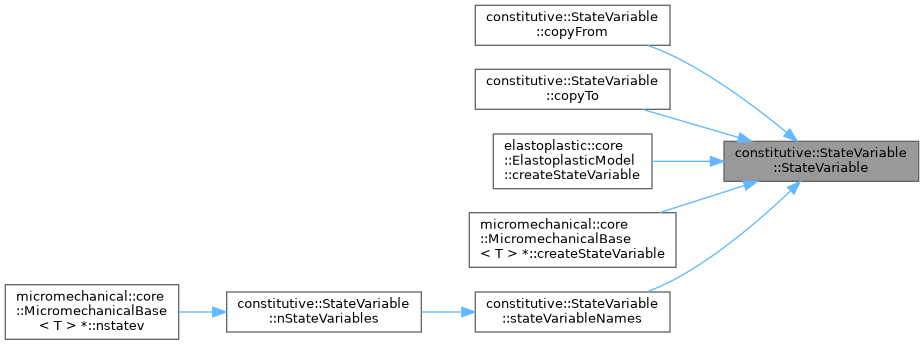
Referenced by copyFrom(), copyTo(), elastoplastic::core::ElastoplasticModel< T >::createStateVariable(), micromechanical::core::MicromechanicalBase< T > *::createStateVariable(), and stateVariableNames().
Here is the caller graph for this function:
Member Function Documentation
◆ A11()
template<typename T>
|
inline |

◆ A12()
template<typename T>
|
inline |

◆ A13()
template<typename T>
|
inline |

◆ A22()
template<typename T>
|
inline |

◆ A23()
template<typename T>
|
inline |

◆ A33()
template<typename T>
|
inline |

◆ addStrain()
template<typename T>
|
inline |
Add strain and update void ratio.
- Parameters
-
deps Strain increment update_void_ratio Whether to update void ratio
Referenced by constitutive::ElastoplasticModelBase< T >::elasticTrial(), constitutive::ElastoplasticModelBase< T >::revertElasticTrial(), constitutive::ElastoplasticModelBase< T >::RKn(), constitutive::ElastoplasticModelBase< T >::RungeKutta(), and setStrain().
Here is the caller graph for this function:

◆ Aij()
template<typename T>
|
inline |
Get the fabric tensor A as a matrix.
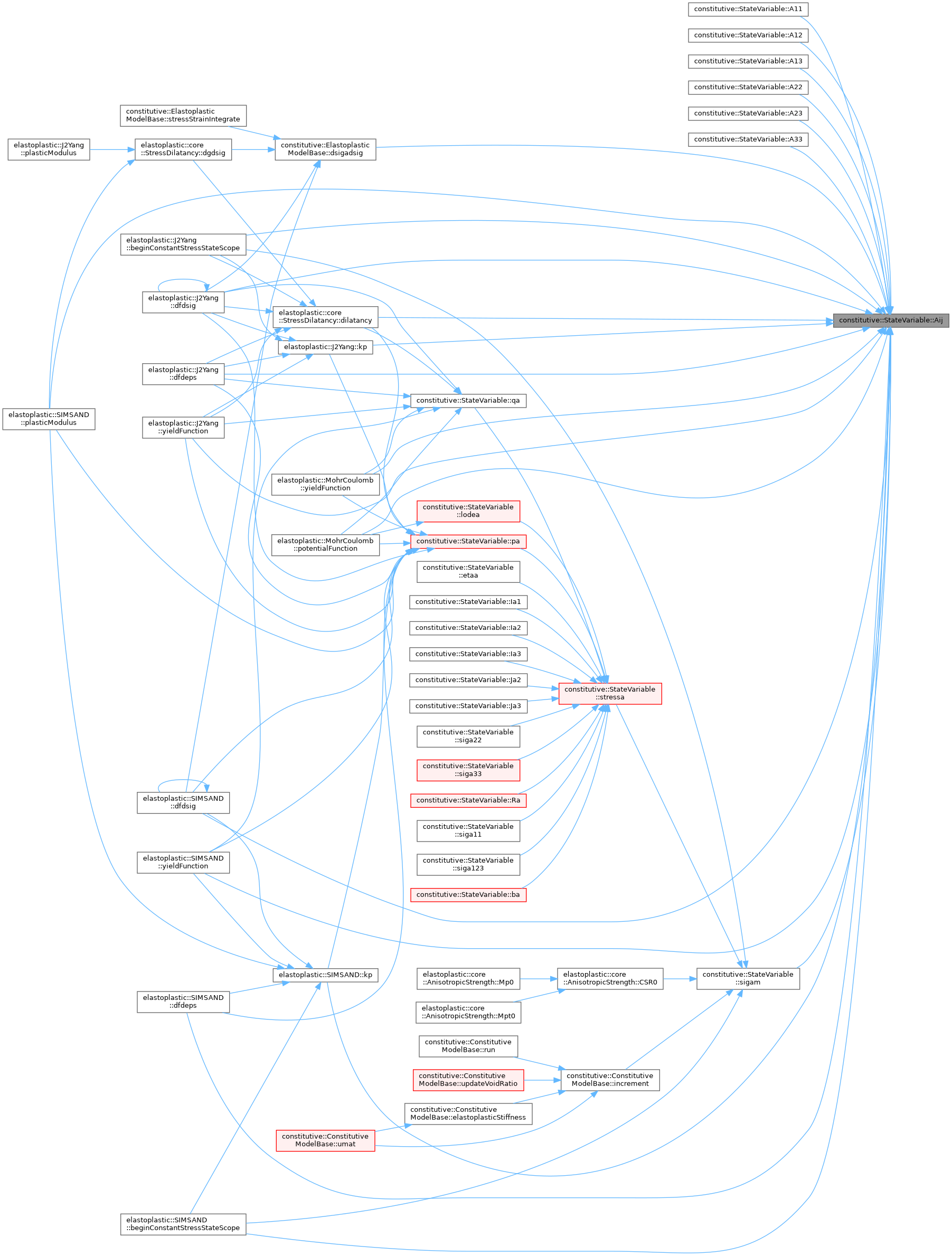
References Fij().
Referenced by A11(), A12(), A13(), A22(), A23(), A33(), elastoplastic::J2Yang< T >::beginConstantStressStateScope(), elastoplastic::SIMSAND< T >::beginConstantStressStateScope(), elastoplastic::J2Yang< T >::dfdeps(), elastoplastic::SIMSAND< T >::dfdeps(), elastoplastic::J2Yang< T >::dfdsig(), elastoplastic::SIMSAND< T >::dfdsig(), elastoplastic::core::StressDilatancy< T >::dilatancy(), constitutive::ElastoplasticModelBase< T >::dsigadsig(), elastoplastic::J2Yang< T >::kp(), elastoplastic::SIMSAND< T >::kp(), elastoplastic::SIMSAND< T >::plasticModulus(), elastoplastic::MohrCoulomb< T >::potentialFunction(), sigam(), elastoplastic::J2Yang< T >::yieldFunction(), elastoplastic::MohrCoulomb< T >::yieldFunction(), and elastoplastic::SIMSAND< T >::yieldFunction().
Here is the call graph for this function:

Here is the caller graph for this function:
◆ an()
template<typename T>
|
inline |
Get the degree of fabric anisotropy of contact normal force.
References FNij().
Here is the call graph for this function:

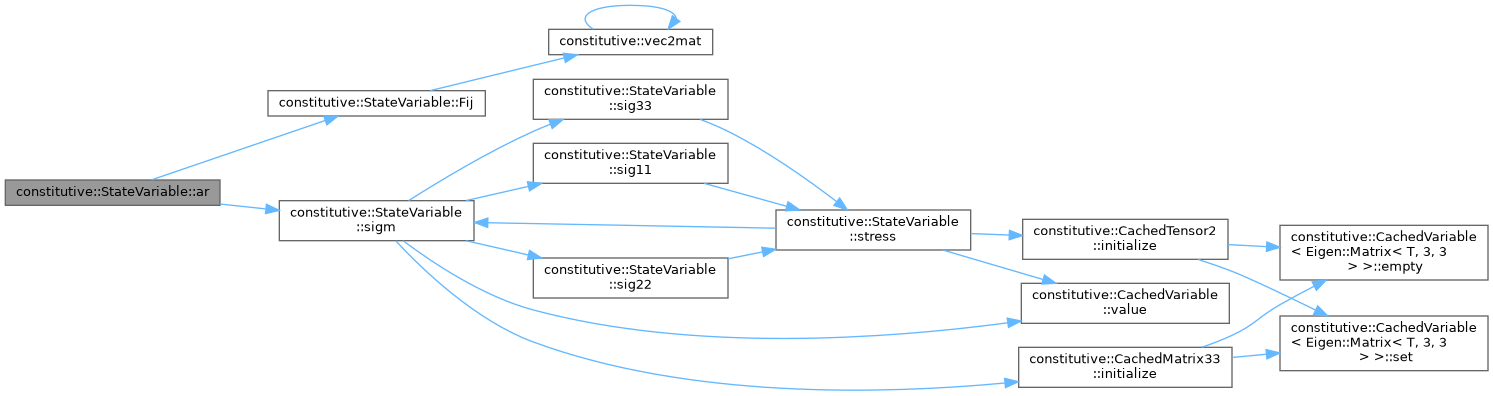
◆ ar()
template<typename T>
|
inline |
◆ at()
template<typename T>
|
inline |
Get the degree of fabric anisotropy of contact shear force.
References FTij().
Here is the call graph for this function:

◆ b()
template<typename T>
|
inline |
Get the lode parameter.
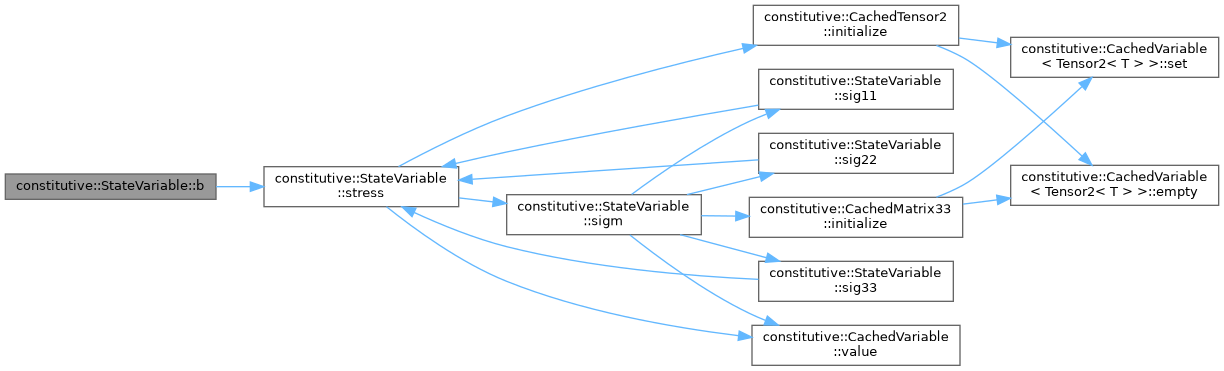
References stress().
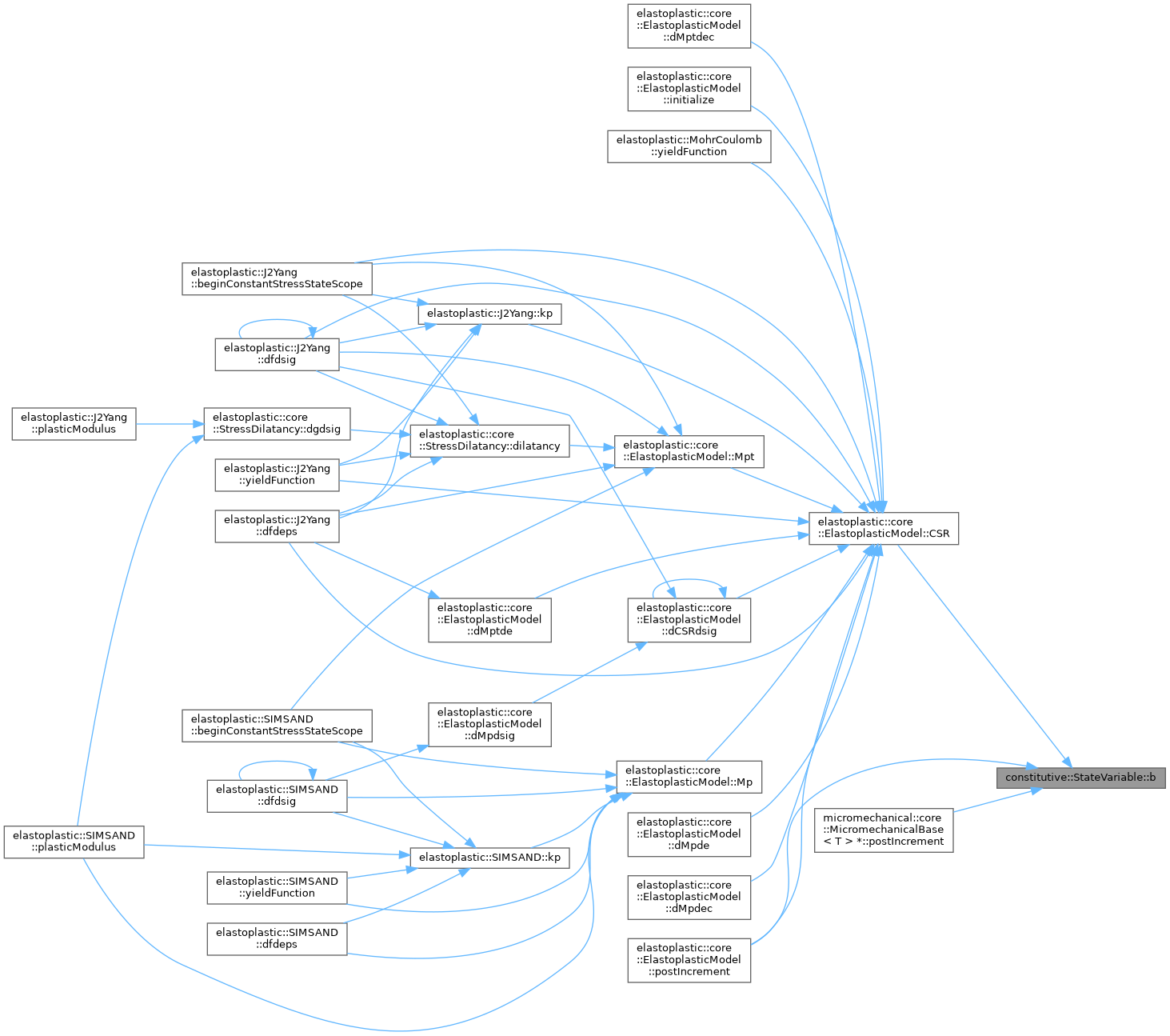
Referenced by elastoplastic::core::ElastoplasticModel< T >::CSR(), elastoplastic::core::ElastoplasticModel< T >::postIncrement(), and micromechanical::core::MicromechanicalBase< T > *::postIncrement().
Here is the call graph for this function:
Here is the caller graph for this function:
◆ ba()
template<typename T>
|
inline |
Lode parameter with anisotropy.
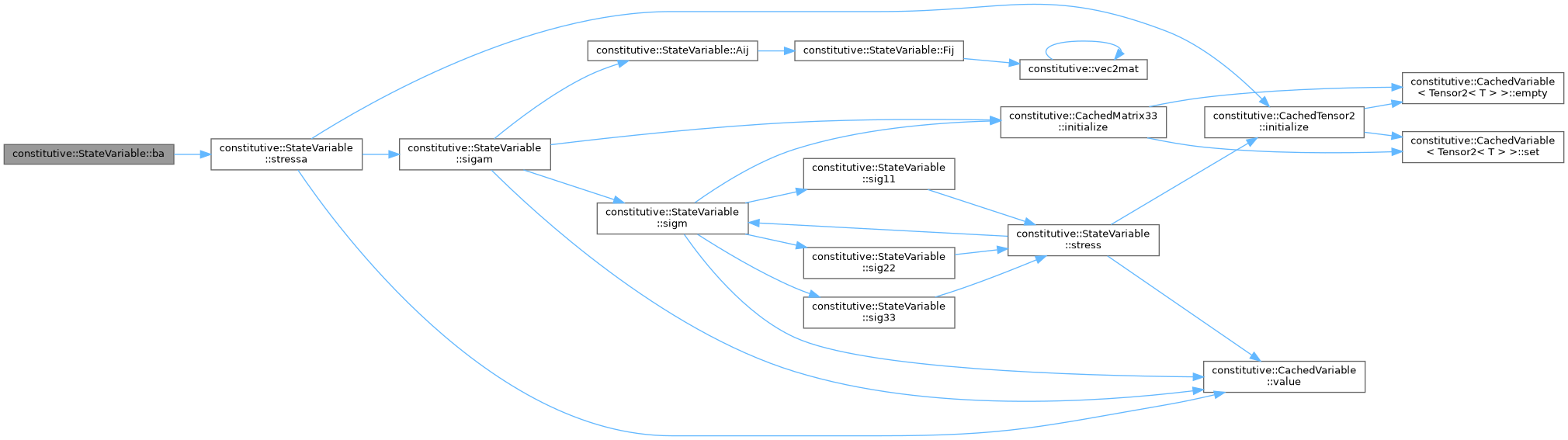
References stressa().
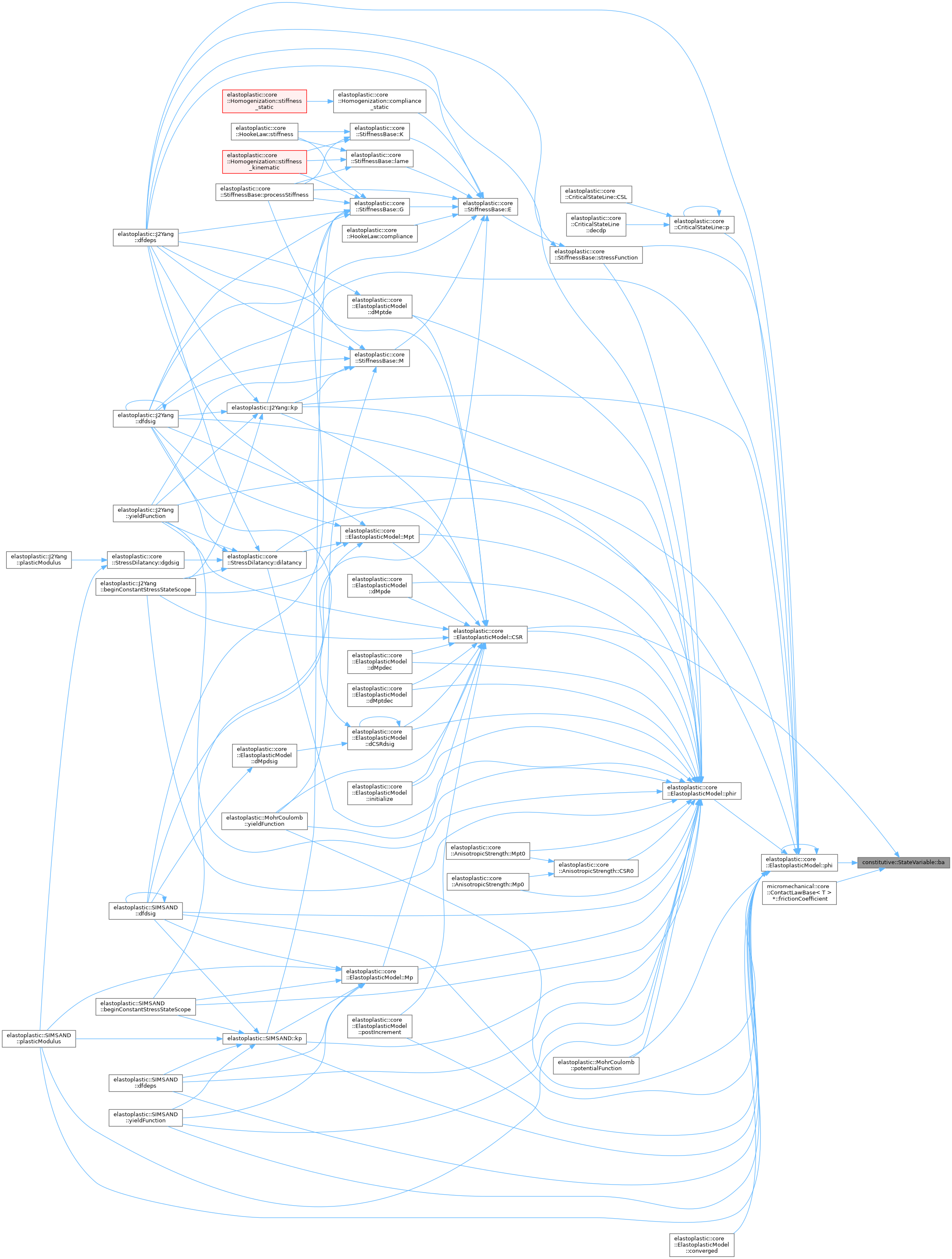
Referenced by elastoplastic::core::ElastoplasticModel< T >::CSR(), micromechanical::core::ContactLawBase< T > *::frictionCoefficient(), and elastoplastic::core::ElastoplasticModel< T >::phi().
Here is the call graph for this function:
Here is the caller graph for this function:
◆ clearCaches()
template<typename T>
|
inline |
Clear caches.
References constitutive::CachedVariable< T >::cached.
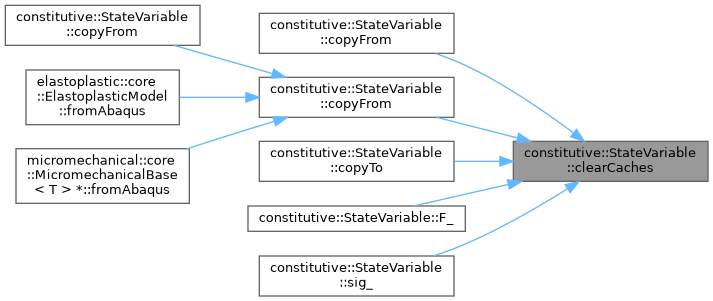
Referenced by copyFrom(), copyFrom(), copyTo(), F_(), and sig_().
Here is the caller graph for this function:
◆ copyContactStateVariables()
template<typename T>
|
inline |
Deep copy the contact state variables from one integration point to another.
- Parameters
-
from_idx Index of the integration point to copy from to_idx Index of the integration point to copy to symmetric Whether to revert the symmetric contact state variables, by default False cscalars Custom scalar fields to be multiplied by -1 cvectors Custom vector fields to be multiplied by -1
References cscalars.
Referenced by micromechanical::core::MicromechanicalBase< T > *::contactIntegrates().
Here is the caller graph for this function:

◆ copyFrom() [1/3]
template<typename T>
|
inline |
Copy state variables from another state variable.
- Parameters
-
sv State variable to copy from
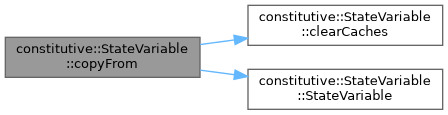
References cached_num, clearCaches(), contact_min_normal_force, cscalars, cvectors, disp, dispp, e, ec, eps, epsp, F, force, matrices, phase, scalars, sig, size, StateVariable(), vectors, and w.
Here is the call graph for this function:
◆ copyFrom() [2/3]
template<typename T>
|
inline |
Copy state variables from a vector.
- Parameters
-
data Vector of state variables dispp Include plastic displacements cscalars Include custom scalars cvectors Include custom vectors
References copyFrom(), cscalars, cvectors, and dispp.
Here is the call graph for this function:

◆ copyFrom() [3/3]
template<typename T>
|
inline |
Copy state variables from a raw pointer for ABAQUS UMAT/VUMAT interfaces.
- Parameters
-
ptr Raw pointer offset Offset dispp Include plastic displacements cscalars Include custom scalars cvectors Include custom vectors
References clearCaches(), cscalars, cvectors, and dispp.
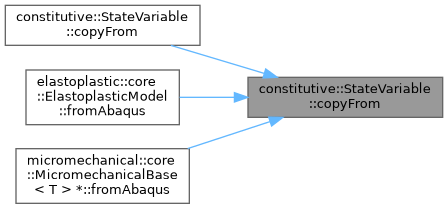
Referenced by copyFrom(), elastoplastic::core::ElastoplasticModel< T >::fromAbaqus(), and micromechanical::core::MicromechanicalBase< T > *::fromAbaqus().
Here is the call graph for this function:

Here is the caller graph for this function:
◆ copyTo() [1/3]
template<typename T>
|
inline |
Copy state variables to another state variable.
- Parameters
-
sv State variable to copy to
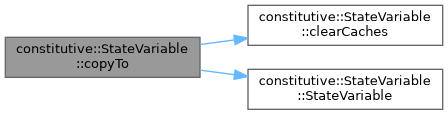
References cached_num, clearCaches(), contact_min_normal_force, cscalars, cvectors, disp, dispp, e, ec, eps, epsp, F, force, matrices, phase, scalars, sig, size, StateVariable(), vectors, and w.
Here is the call graph for this function:
◆ copyTo() [2/3]
template<typename T>
|
inline |

◆ copyTo() [3/3]
template<typename T>
|
inline |
Copy state variables to a raw pointer for ABAQUS UMAT/VUMAT interfaces.
- Parameters
-
ptr Raw pointer offset Offset dispp Include plastic displacements cscalars Include custom scalars cvectors Include custom vectors
References cscalars, cvectors, and dispp.
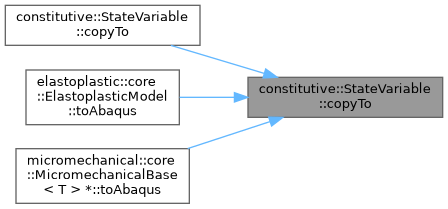
Referenced by copyTo(), elastoplastic::core::ElastoplasticModel< T >::toAbaqus(), and micromechanical::core::MicromechanicalBase< T > *::toAbaqus().
Here is the caller graph for this function:
◆ eeq()
template<typename T>
|
inline |

◆ elastic()
template<typename T>
|
inline |
Whether the current state is elastic.
References plastic().
Referenced by constitutive::ElastoplasticModelBase< T >::consistentElastoplasticStiffness(), constitutive::ElastoplasticModelBase< T >::continuumElastoplasticStiffness(), constitutive::ConstitutiveModelBase< T >::elastoplasticStiffness(), and constitutive::ElastoplasticModelBase< T >::symmetricContinuumElastoplasticStiffness().
Here is the call graph for this function:

Here is the caller graph for this function:

◆ elasticStiffnessMatrix()
template<typename T>
|
inline |
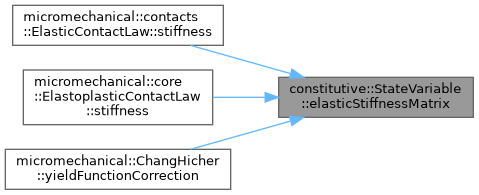
Referenced by micromechanical::contacts::ElasticContactLaw< T >::stiffness(), micromechanical::core::ElastoplasticContactLaw< T >::stiffness(), and micromechanical::ChangHicher< T >::yieldFunctionCorrection().
Here is the caller graph for this function:
◆ epsa()
template<typename T>
|
inline |

◆ epsd()
template<typename T>
|
inline |
Get the general shear strain.
References epsij().
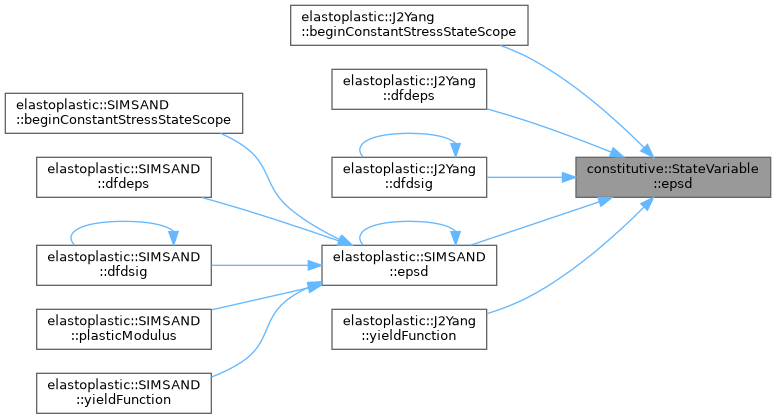
Referenced by elastoplastic::J2Yang< T >::beginConstantStressStateScope(), elastoplastic::J2Yang< T >::dfdeps(), elastoplastic::J2Yang< T >::dfdsig(), elastoplastic::SIMSAND< T >::epsd(), and elastoplastic::J2Yang< T >::yieldFunction().
Here is the call graph for this function:

Here is the caller graph for this function:
◆ epsij()
template<typename T>
|
inline |
Get the deviatoric strain tensor.
References epskk(), and epsm().
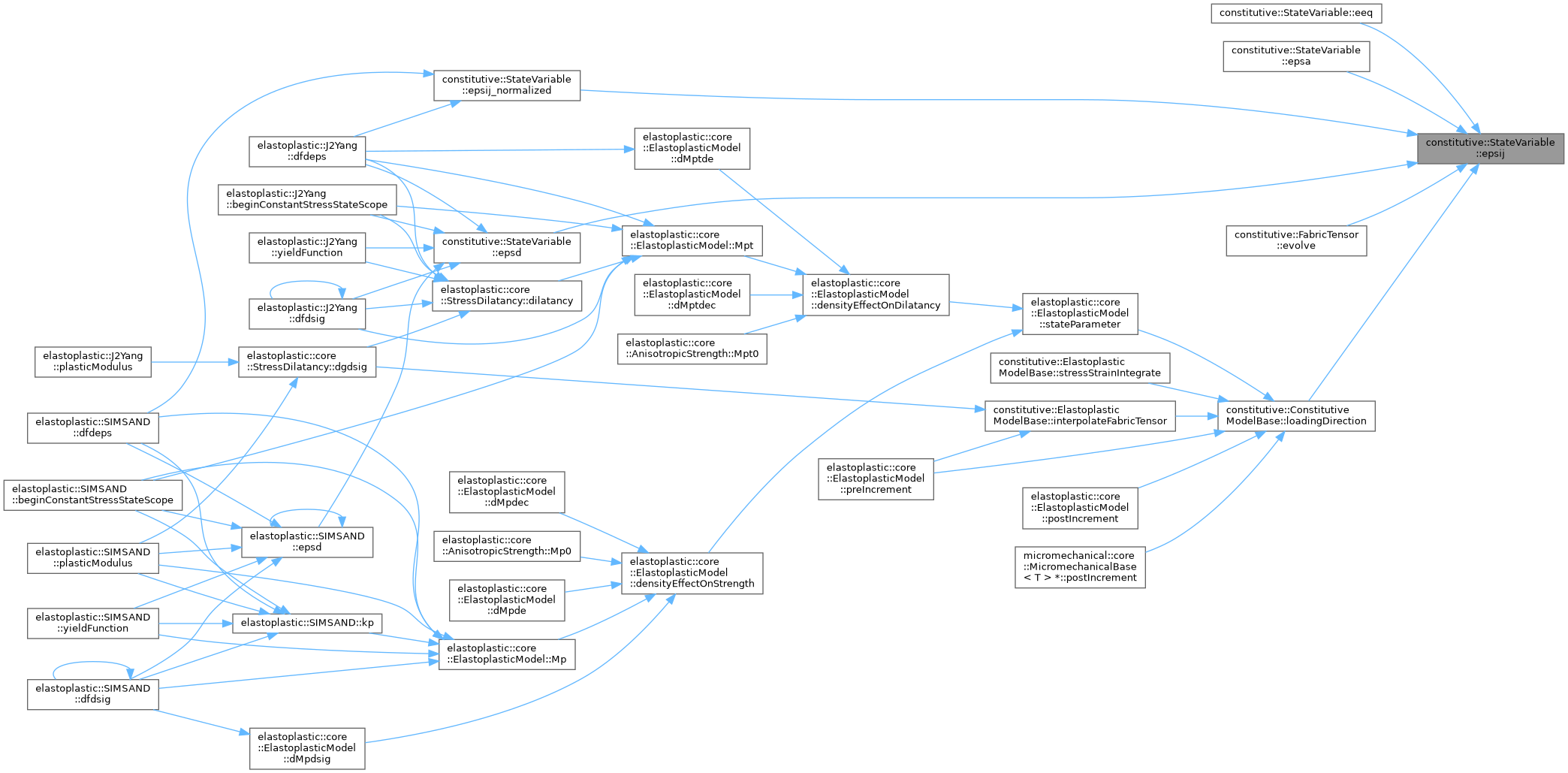
Referenced by eeq(), epsa(), epsd(), epsij_normalized(), constitutive::FabricTensor< T >::evolve(), and constitutive::ConstitutiveModelBase< T >::loadingDirection().
Here is the call graph for this function:

Here is the caller graph for this function:
◆ epsij_normalized()
template<typename T>
|
inline |
Get the normalized deviatoric strain tensor.
References epsij().
Referenced by elastoplastic::J2Yang< T >::dfdeps(), and elastoplastic::SIMSAND< T >::dfdeps().
Here is the call graph for this function:

Here is the caller graph for this function:
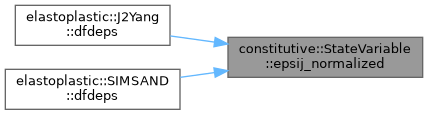
◆ epskk()
template<typename T>
|
inline |
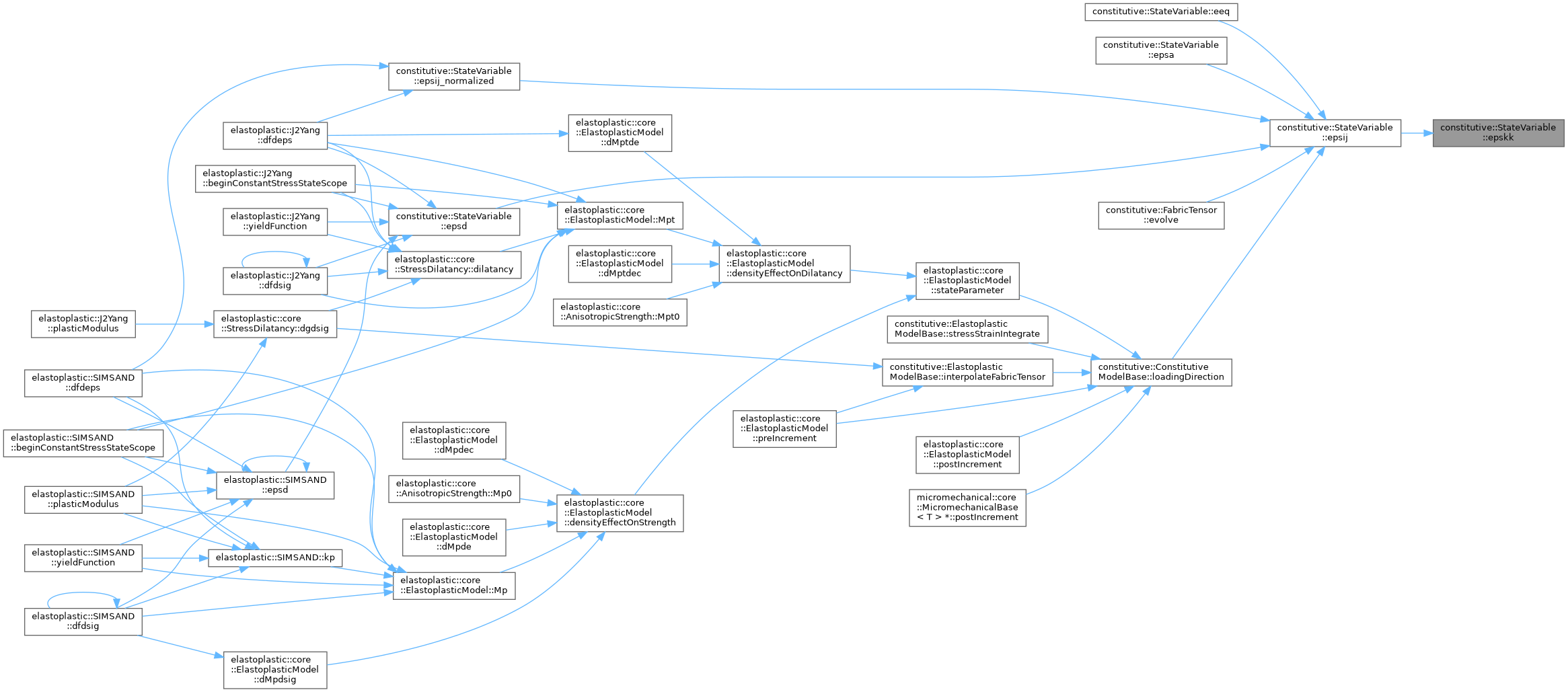
◆ epsm()
template<typename T>
|
inline |
Get the strain tensor.
References constitutive::vec2mat().
Referenced by epsij(), epsv(), and constitutive::FabricTensor< T >::evolve().
Here is the call graph for this function:

Here is the caller graph for this function:
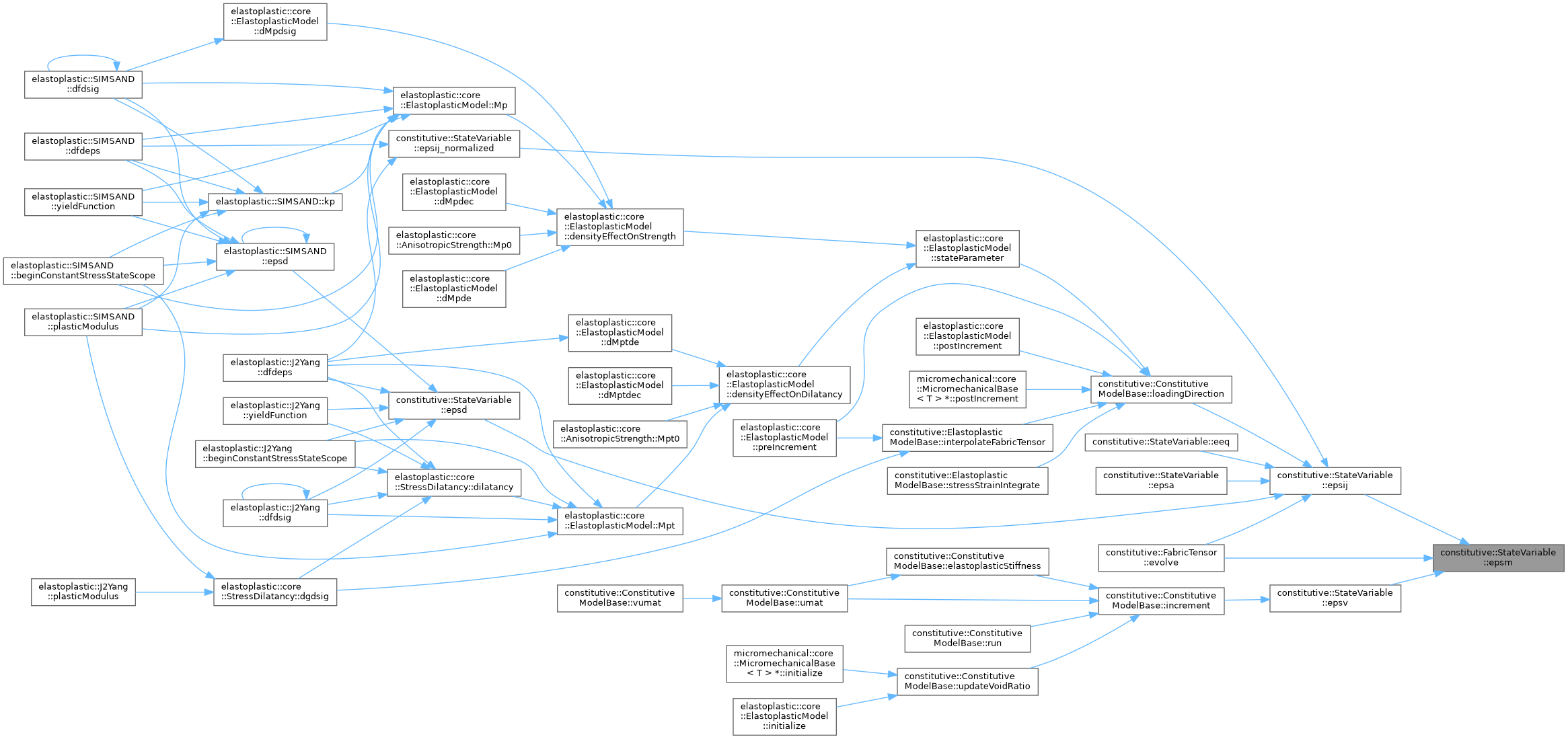
◆ epspa()
template<typename T>
|
inline |

◆ epspd()
template<typename T>
|
inline |
Get the general plastic shear strain.
References epspij().
Referenced by elastoplastic::SIMSAND< T >::epsd().
Here is the call graph for this function:

Here is the caller graph for this function:
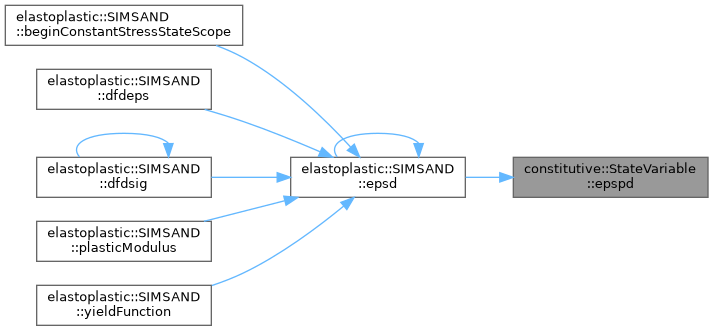
◆ epspij()
template<typename T>
|
inline |
Get the deviatoric plastic strain tensor.
References epspkk(), and epspm().
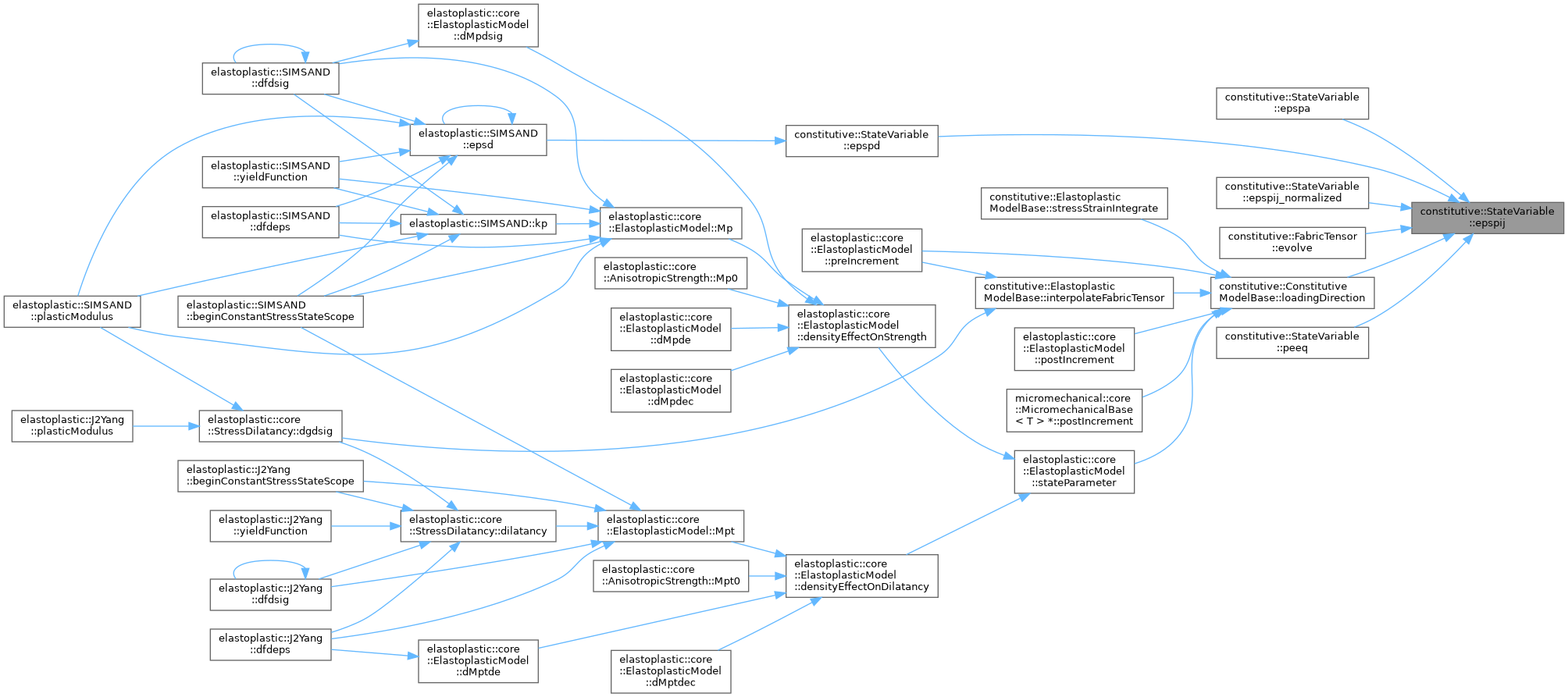
Referenced by epspa(), epspd(), epspij_normalized(), constitutive::FabricTensor< T >::evolve(), constitutive::ConstitutiveModelBase< T >::loadingDirection(), and peeq().
Here is the call graph for this function:

Here is the caller graph for this function:
◆ epspij_normalized()
template<typename T>
|
inline |
Get the normalized deviatoric plastic strain tensor.
References epspij().
Here is the call graph for this function:

◆ epspkk()
template<typename T>
|
inline |
Get the mean plastic strain tensor.
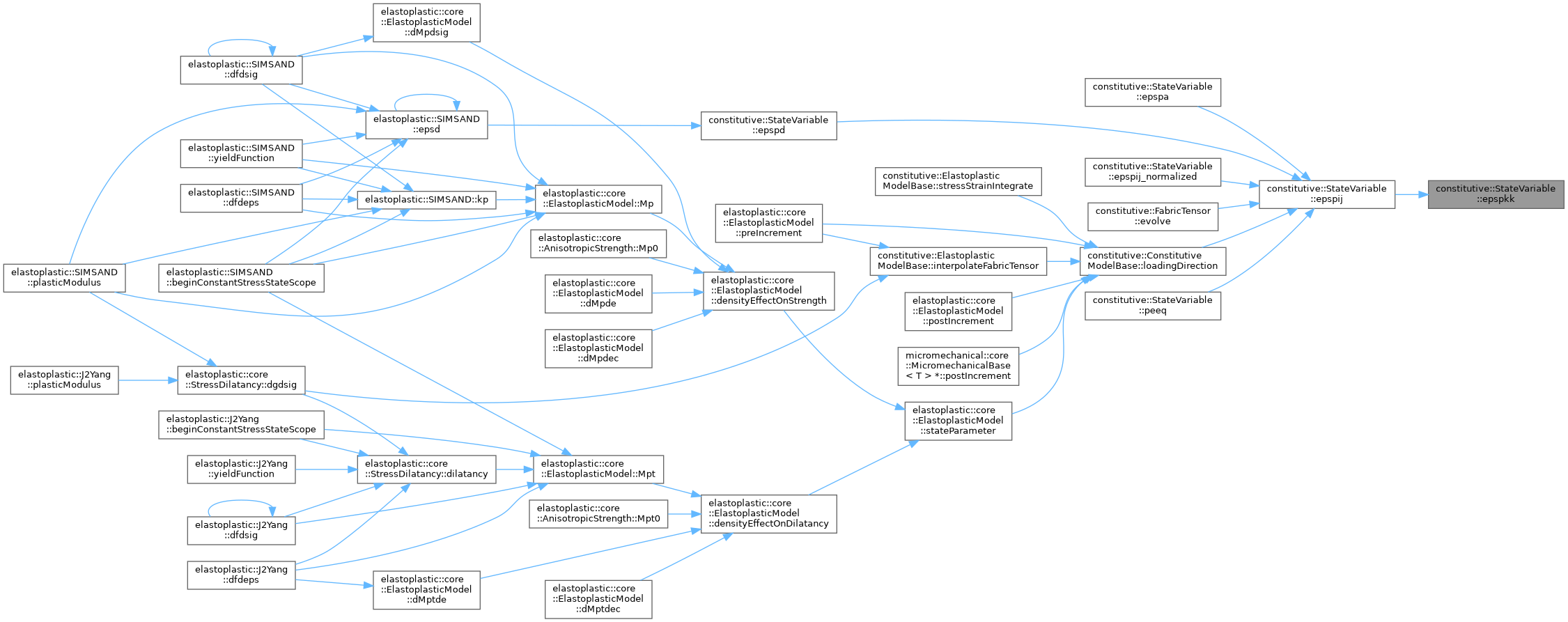
Referenced by epspij().
Here is the caller graph for this function:
◆ epspm()
template<typename T>
|
inline |
Get the plastic strain tensor.
References constitutive::vec2mat().
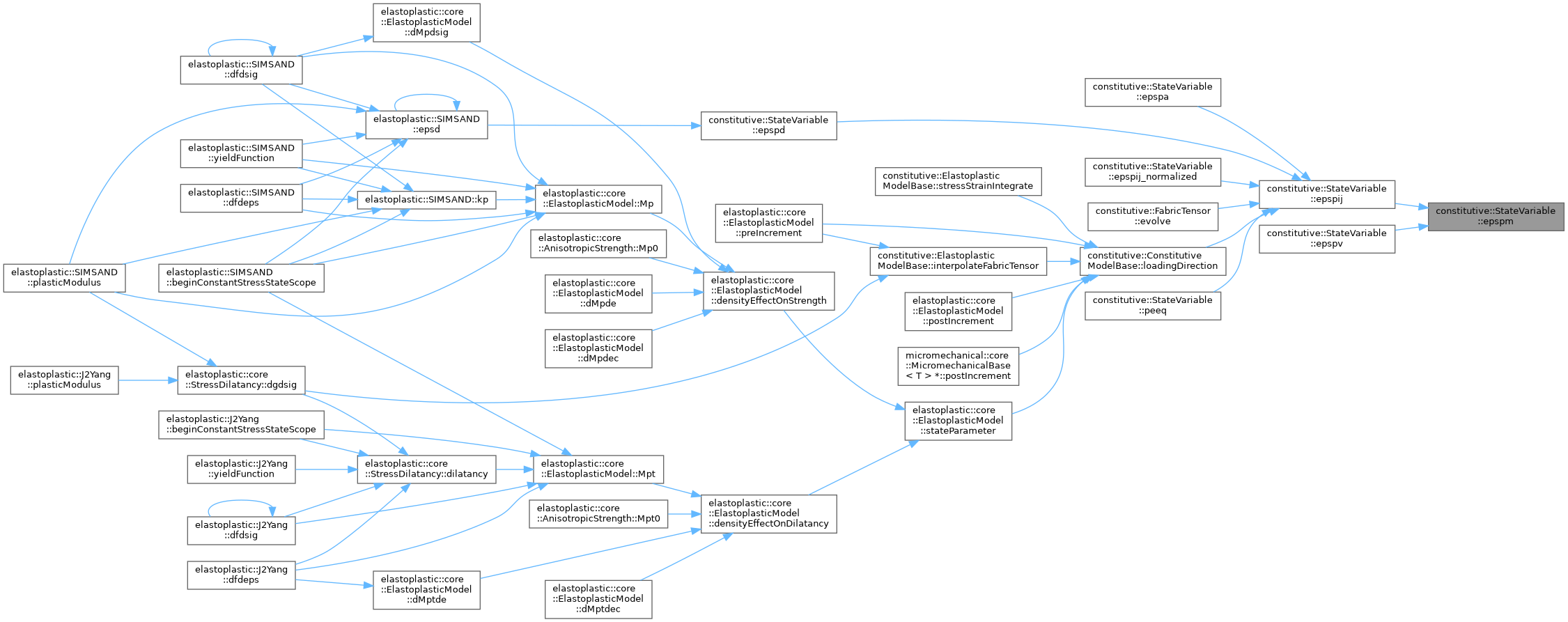
Referenced by epspij(), and epspv().
Here is the call graph for this function:

Here is the caller graph for this function:
◆ epspv()
template<typename T>
|
inline |

◆ epsv()
template<typename T>
|
inline |
Get the volumetric strain.
References epsm().
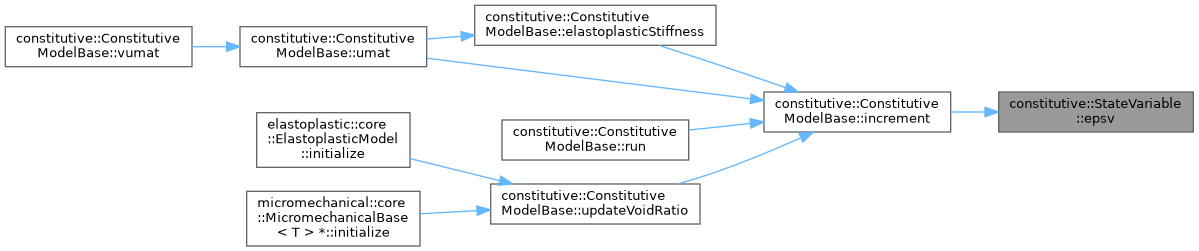
Referenced by constitutive::ConstitutiveModelBase< T >::increment().
Here is the call graph for this function:

Here is the caller graph for this function:
◆ eta()
template<typename T>
|
inline |
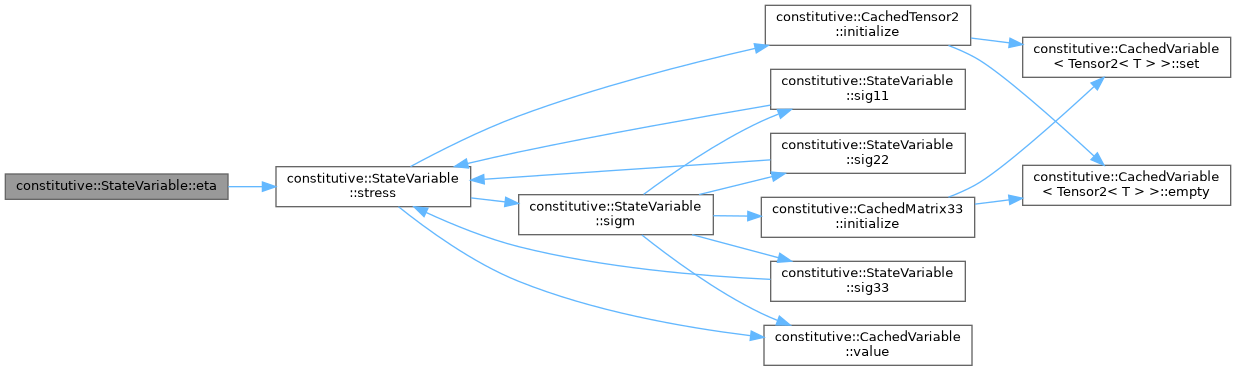
Get the stress ratio.
References stress().
Referenced by constitutive::FabricTensor< T >::evolve().
Here is the call graph for this function:
Here is the caller graph for this function:

◆ etaa()
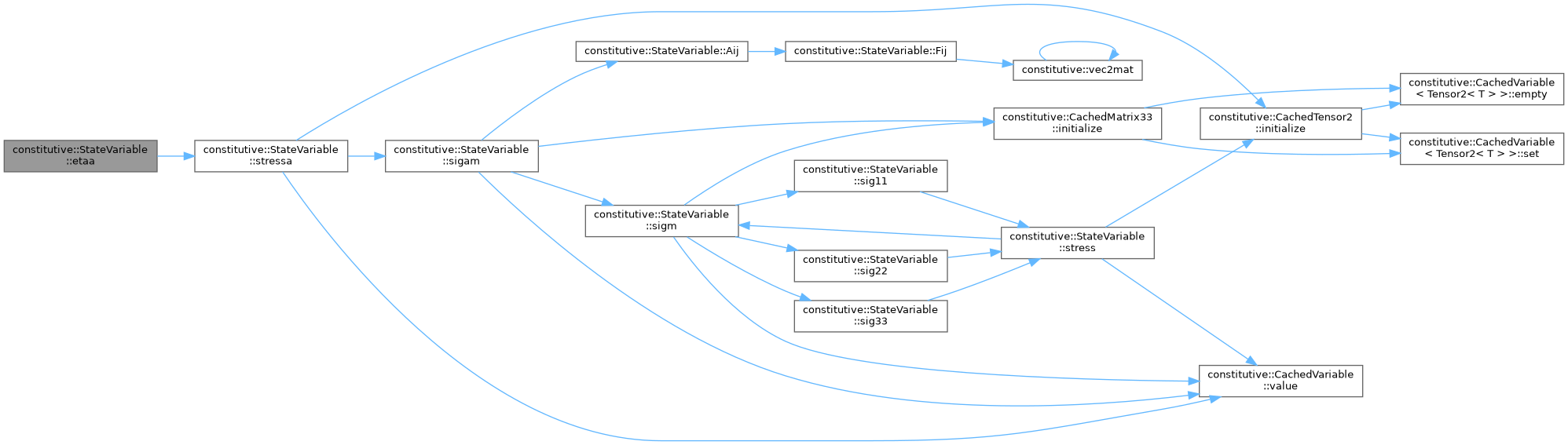
template<typename T>
|
inline |
◆ F11()
template<typename T>
|
inline |
Get the fabric tensor component F11.
◆ F12()
template<typename T>
|
inline |
Get the fabric tensor component F12.
◆ F13()
template<typename T>
|
inline |
Get the fabric tensor component F13.
◆ F22()
template<typename T>
|
inline |
Get the fabric tensor component F22.
◆ F23()
template<typename T>
|
inline |
Get the fabric tensor component F23.
◆ F33()
template<typename T>
|
inline |
Get the fabric tensor component F33.
◆ F_() [1/2]
template<typename T>
|
inline |
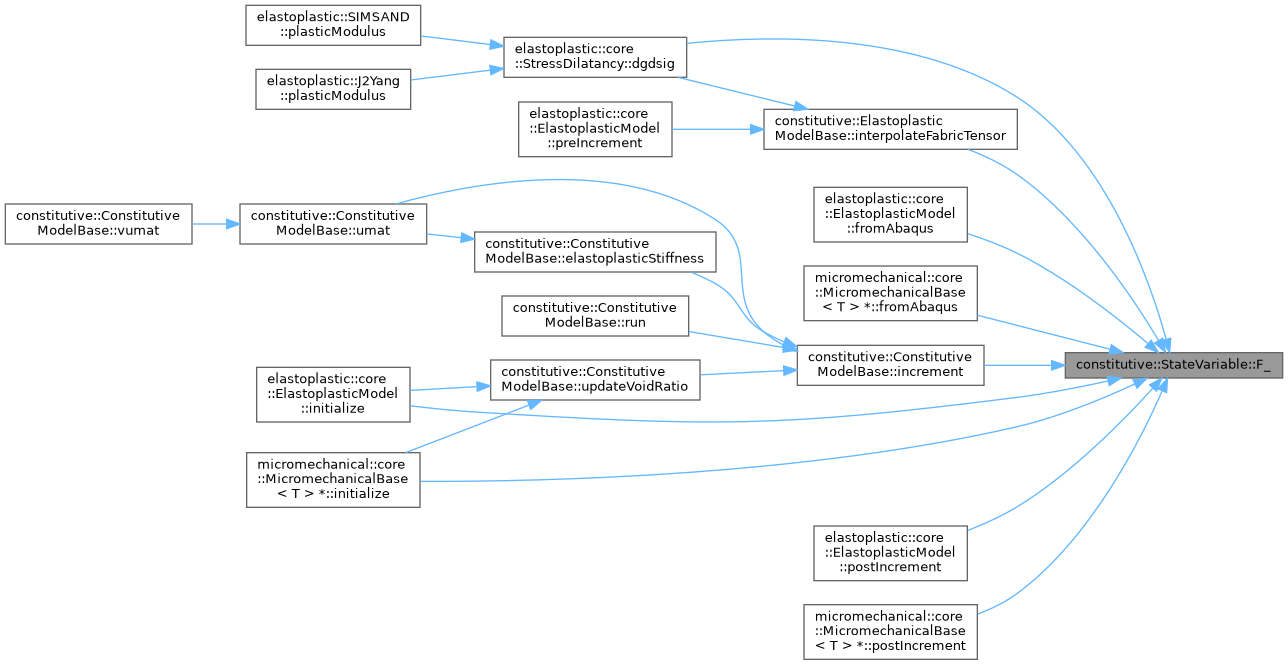
Referenced by elastoplastic::core::StressDilatancy< T >::dgdsig(), elastoplastic::core::ElastoplasticModel< T >::fromAbaqus(), micromechanical::core::MicromechanicalBase< T > *::fromAbaqus(), constitutive::ConstitutiveModelBase< T >::increment(), elastoplastic::core::ElastoplasticModel< T >::initialize(), micromechanical::core::MicromechanicalBase< T > *::initialize(), constitutive::ElastoplasticModelBase< T >::interpolateFabricTensor(), elastoplastic::core::ElastoplasticModel< T >::postIncrement(), and micromechanical::core::MicromechanicalBase< T > *::postIncrement().
Here is the caller graph for this function:
◆ F_() [2/2]
template<typename T>
|
inline |

◆ FAV()
template<typename T>
|
inline |
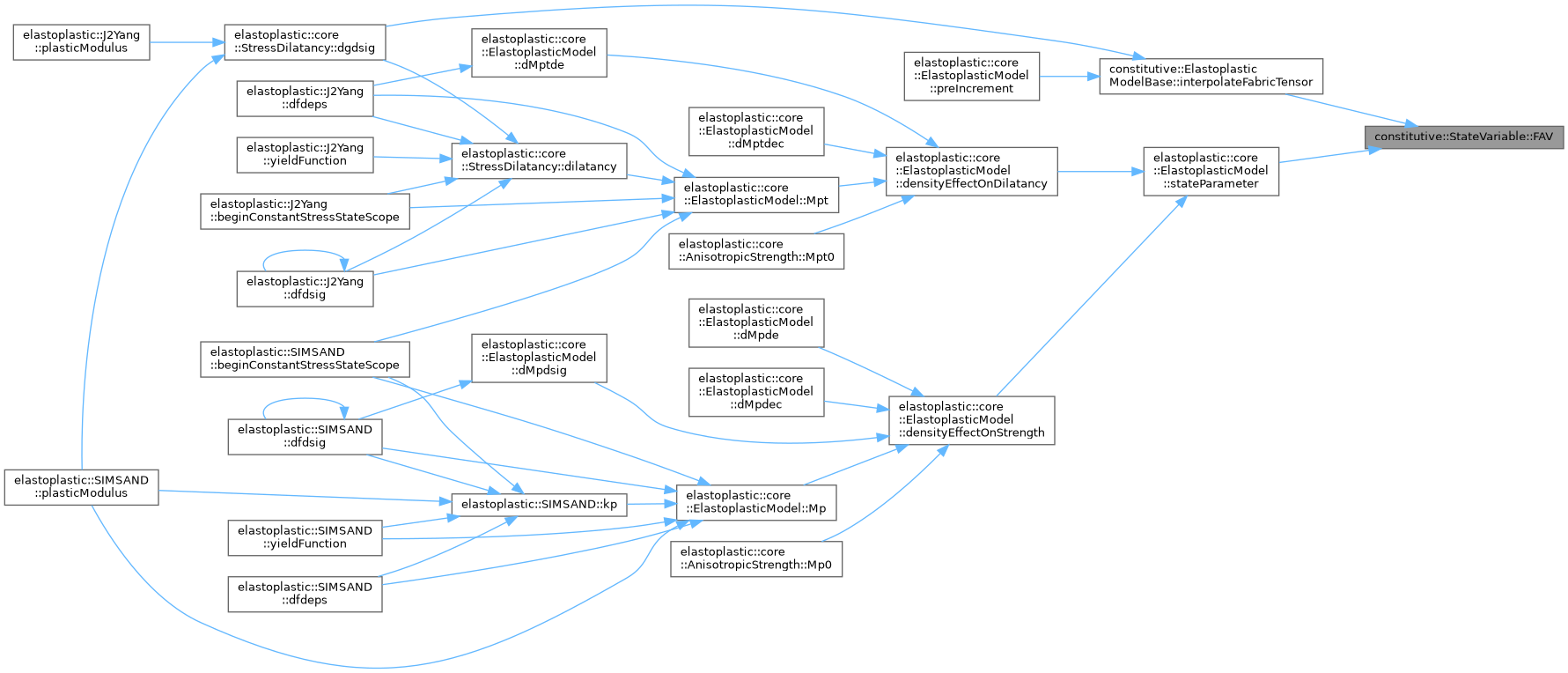
Fabric anisotropy variable.
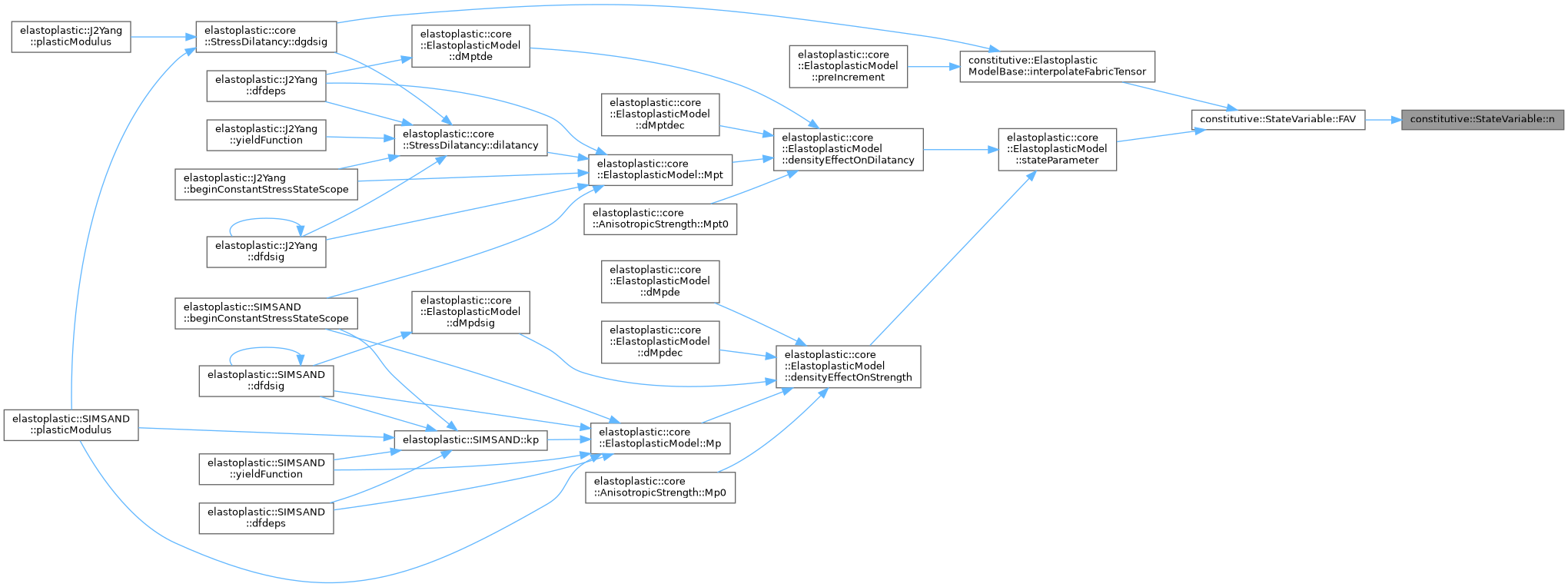
Referenced by constitutive::ElastoplasticModelBase< T >::interpolateFabricTensor(), and elastoplastic::core::ElastoplasticModel< T >::stateParameter().
Here is the call graph for this function:

Here is the caller graph for this function:
◆ feta() [1/2]
template<typename T>
|
inline |

◆ feta() [2/2]
template<typename T>
|
inline |
Get the shear force ratio.
- Parameters
-
idx Index of the integration point
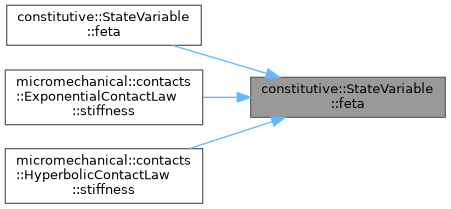
Referenced by feta(), micromechanical::contacts::ExponentialContactLaw< T >::stiffness(), and micromechanical::contacts::HyperbolicContactLaw< T >::stiffness().
Here is the call graph for this function:

Here is the caller graph for this function:
◆ Fij()
template<typename T>
|
inline |
Get the fabric tensor as a matrix.
References constitutive::vec2mat().
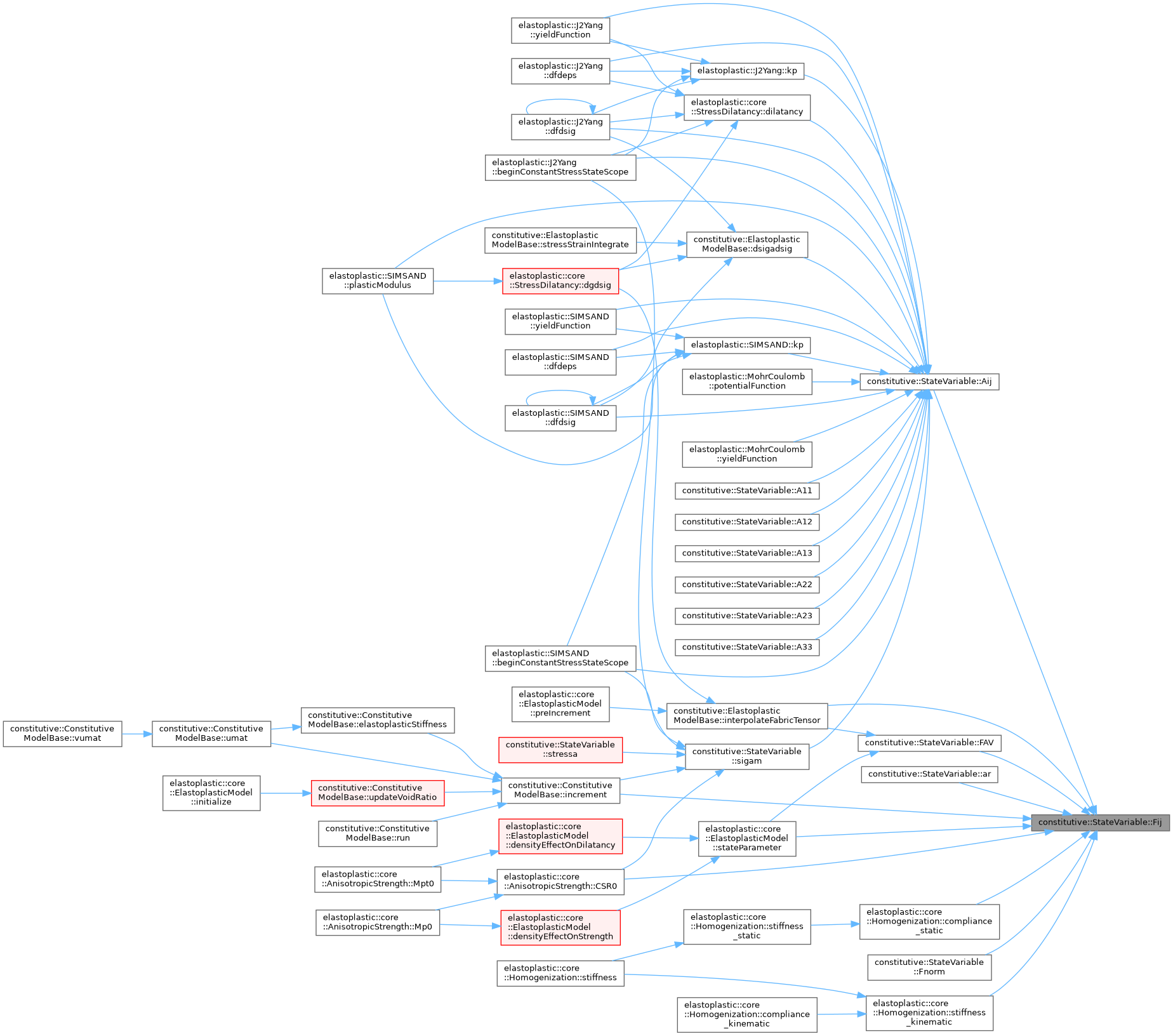
Referenced by Aij(), ar(), elastoplastic::core::Homogenization< T >::compliance_static(), elastoplastic::core::AnisotropicStrength< T >::CSR0(), FAV(), Fnorm(), constitutive::ConstitutiveModelBase< T >::increment(), constitutive::ElastoplasticModelBase< T >::interpolateFabricTensor(), elastoplastic::core::ElastoplasticModel< T >::stateParameter(), and elastoplastic::core::Homogenization< T >::stiffness_kinematic().
Here is the call graph for this function:

Here is the caller graph for this function:
◆ fn() [1/2]
template<typename T>
|
inline |

◆ fn() [2/2]
template<typename T>
|
inline |
Get the normal force.
- Parameters
-
idx Index of the integration point
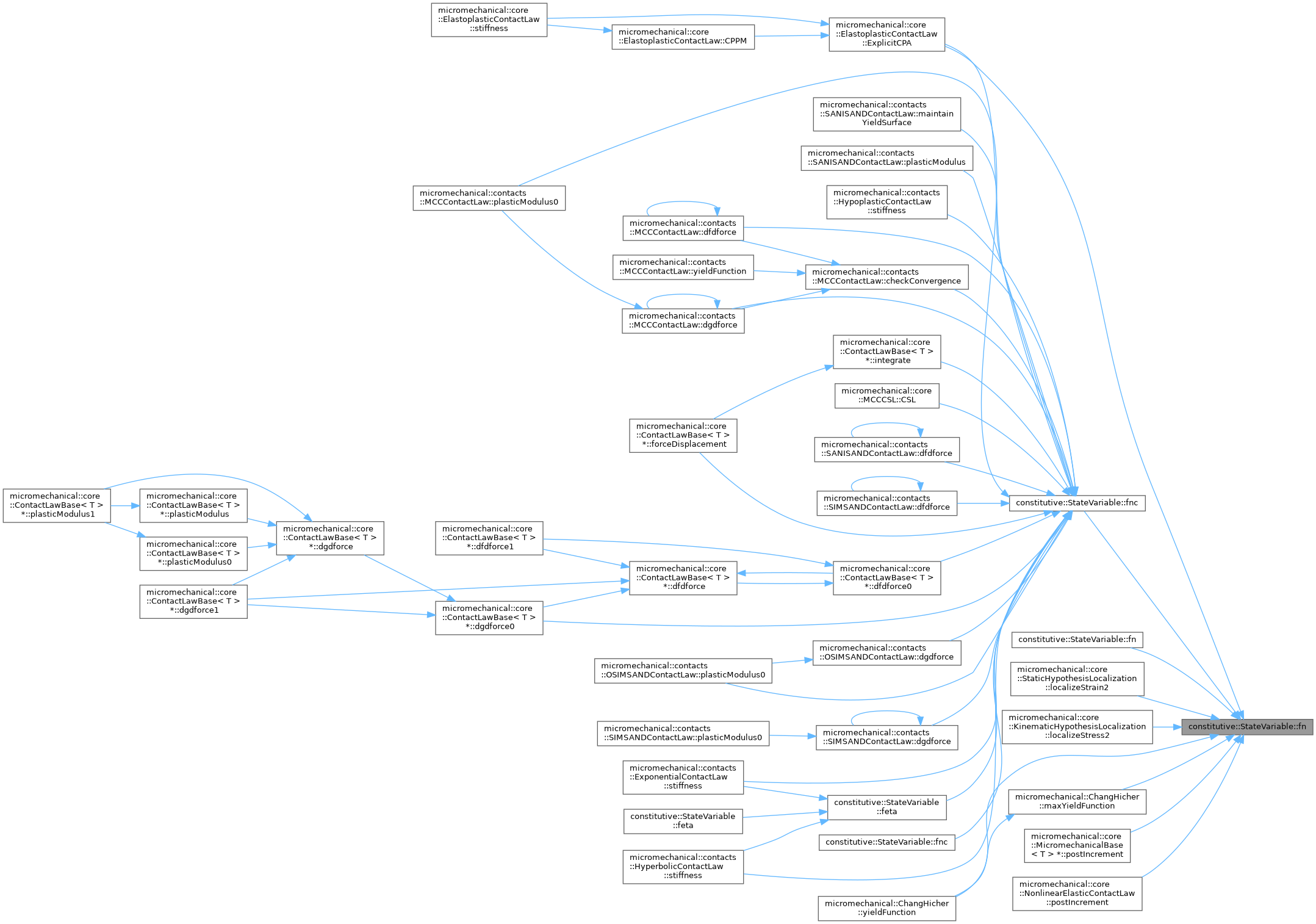
Referenced by micromechanical::core::ElastoplasticContactLaw< T >::ExplicitCPA(), fn(), fnc(), micromechanical::core::StaticHypothesisLocalization< T >::localizeStrain2(), micromechanical::core::KinematicHypothesisLocalization< T >::localizeStress2(), micromechanical::ChangHicher< T >::maxYieldFunction(), micromechanical::core::MicromechanicalBase< T > *::postIncrement(), micromechanical::core::NonlinearElasticContactLaw< T >::postIncrement(), and micromechanical::ChangHicher< T >::yieldFunction().
Here is the caller graph for this function:
◆ FN11()
template<typename T>
|
inline |
Get the fabric tensor of contact normal force component FN11.
◆ FN12()
template<typename T>
|
inline |
Get the fabric tensor of contact normal force component FN12.
◆ FN13()
template<typename T>
|
inline |
Get the fabric tensor of contact normal force component FN13.
◆ FN22()
template<typename T>
|
inline |
Get the fabric tensor of contact normal force component FN22.
◆ FN23()
template<typename T>
|
inline |
Get the fabric tensor of contact normal force component FN23.
◆ FN33()
template<typename T>
|
inline |
Get the fabric tensor of contact normal force component FN33.
◆ fnc() [1/2]
template<typename T>
|
inline |
Get the normal force with minimal adhesive force.
- Parameters
-
idx Index of the integration point cohesion Cohesion, value less than contact_min_normal_force will be ignored
References fn().
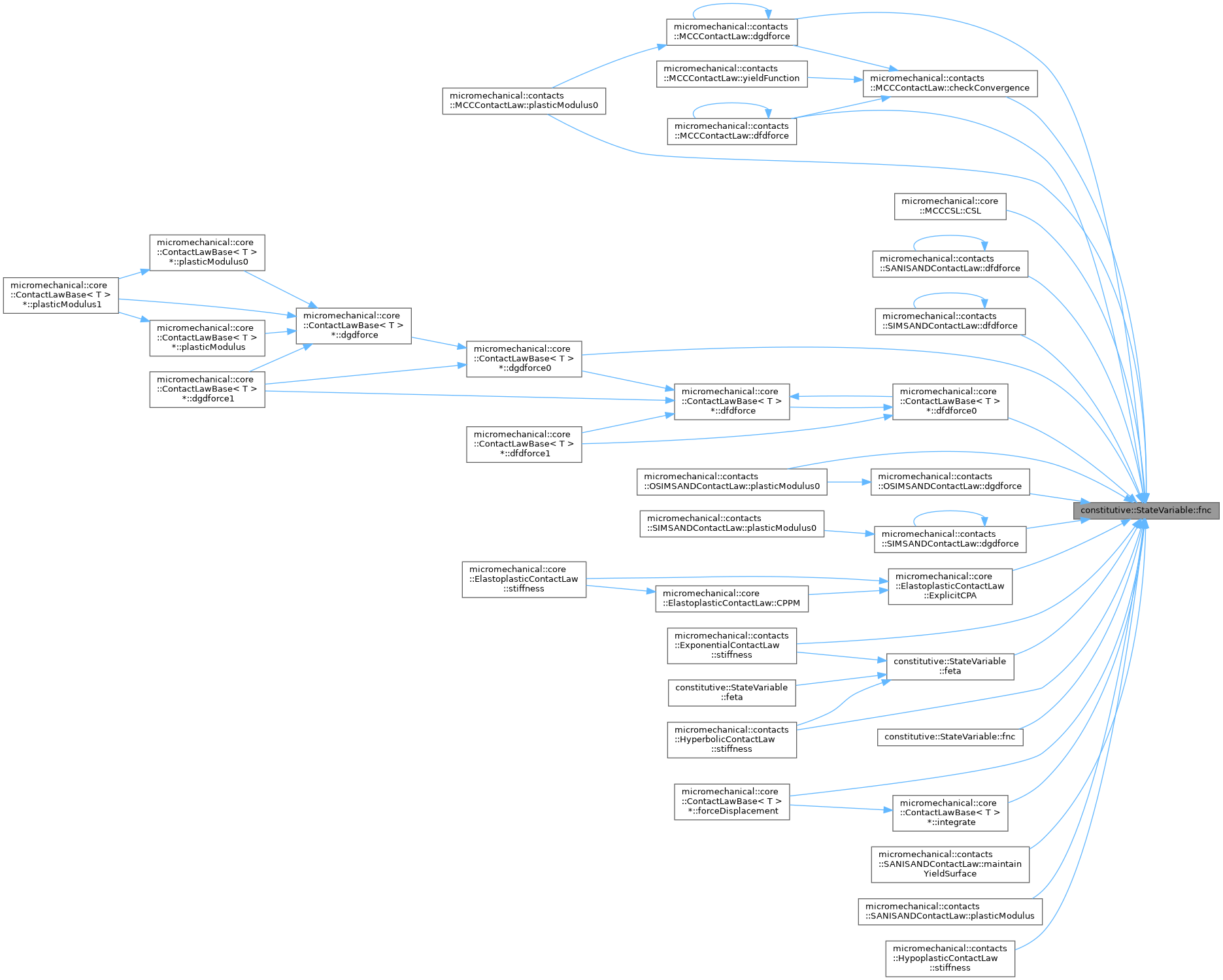
Referenced by micromechanical::contacts::MCCContactLaw< T >::checkConvergence(), micromechanical::core::MCCCSL< T >::CSL(), micromechanical::contacts::MCCContactLaw< T >::dfdforce(), micromechanical::contacts::SANISANDContactLaw< T >::dfdforce(), micromechanical::contacts::SIMSANDContactLaw< T >::dfdforce(), micromechanical::core::ContactLawBase< T > *::dfdforce0(), micromechanical::contacts::MCCContactLaw< T >::dgdforce(), micromechanical::contacts::OSIMSANDContactLaw< T >::dgdforce(), micromechanical::contacts::SIMSANDContactLaw< T >::dgdforce(), micromechanical::core::ContactLawBase< T > *::dgdforce0(), micromechanical::core::ElastoplasticContactLaw< T >::ExplicitCPA(), feta(), fnc(), micromechanical::core::ContactLawBase< T > *::forceDisplacement(), micromechanical::core::ContactLawBase< T > *::integrate(), micromechanical::contacts::SANISANDContactLaw< T >::maintainYieldSurface(), micromechanical::contacts::SANISANDContactLaw< T >::plasticModulus(), micromechanical::contacts::MCCContactLaw< T >::plasticModulus0(), micromechanical::contacts::OSIMSANDContactLaw< T >::plasticModulus0(), micromechanical::contacts::ExponentialContactLaw< T >::stiffness(), micromechanical::contacts::HyperbolicContactLaw< T >::stiffness(), and micromechanical::contacts::HypoplasticContactLaw< T >::stiffness().
Here is the call graph for this function:

Here is the caller graph for this function:
◆ fnc() [2/2]
template<typename T>
|
inline |

◆ FNij()
template<typename T>
|
inline |
Get the fabric tensor of contact normal force.
References constitutive::vec2mat().
Referenced by an().
Here is the call graph for this function:

Here is the caller graph for this function:

◆ Fnorm()
template<typename T>
|
inline |

◆ fr() [1/2]
template<typename T>
|
inline |

◆ fr() [2/2]
template<typename T>
|
inline |
Get the shear force.
- Parameters
-
idx Index of the integration point
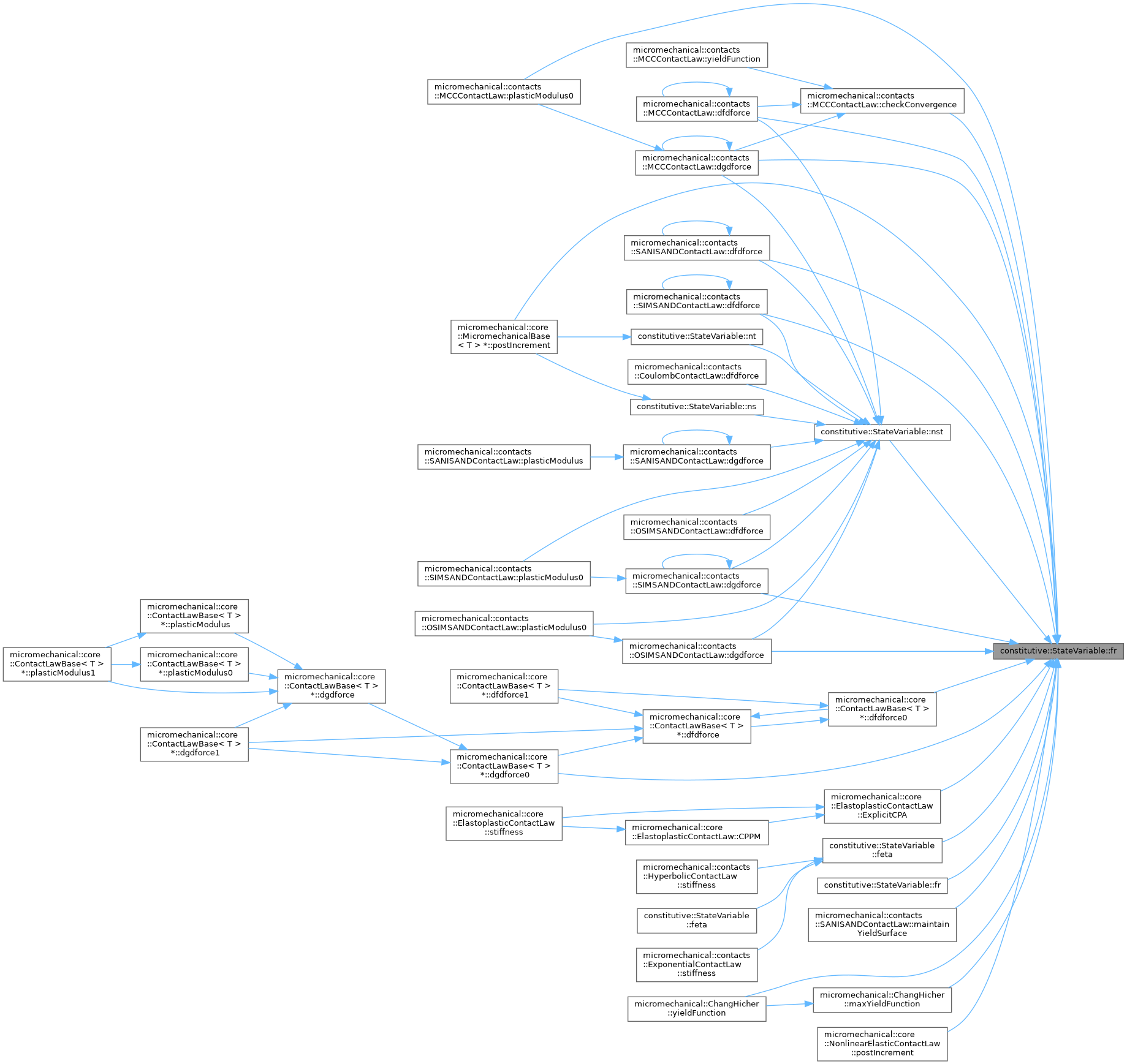
Referenced by micromechanical::contacts::MCCContactLaw< T >::checkConvergence(), micromechanical::contacts::MCCContactLaw< T >::dfdforce(), micromechanical::contacts::SANISANDContactLaw< T >::dfdforce(), micromechanical::contacts::SIMSANDContactLaw< T >::dfdforce(), micromechanical::core::ContactLawBase< T > *::dfdforce0(), micromechanical::contacts::MCCContactLaw< T >::dgdforce(), micromechanical::contacts::OSIMSANDContactLaw< T >::dgdforce(), micromechanical::contacts::SIMSANDContactLaw< T >::dgdforce(), micromechanical::core::ContactLawBase< T > *::dgdforce0(), micromechanical::core::ElastoplasticContactLaw< T >::ExplicitCPA(), feta(), fr(), micromechanical::contacts::SANISANDContactLaw< T >::maintainYieldSurface(), micromechanical::ChangHicher< T >::maxYieldFunction(), nst(), micromechanical::contacts::MCCContactLaw< T >::plasticModulus0(), micromechanical::core::MicromechanicalBase< T > *::postIncrement(), micromechanical::core::NonlinearElasticContactLaw< T >::postIncrement(), and micromechanical::ChangHicher< T >::yieldFunction().
Here is the caller graph for this function:
◆ fs() [1/2]
template<typename T>
|
inline |

◆ fs() [2/2]
template<typename T>
|
inline |
Get the shear force at the first direction.
- Parameters
-
idx Index of the integration point
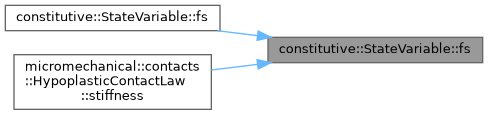
Referenced by fs(), and micromechanical::contacts::HypoplasticContactLaw< T >::stiffness().
Here is the caller graph for this function:
◆ fst() [1/2]
template<typename T>
|
inline |

◆ fst() [2/2]
template<typename T>
|
inline |
◆ ft() [1/2]
template<typename T>
|
inline |

◆ ft() [2/2]
template<typename T>
|
inline |
Get the shear force at the second direction.
- Parameters
-
idx Index of the integration point
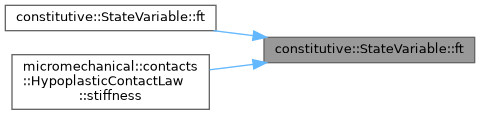
Referenced by ft(), and micromechanical::contacts::HypoplasticContactLaw< T >::stiffness().
Here is the caller graph for this function:
◆ FT11()
template<typename T>
|
inline |
Get the fabric tensor of contact shear force component FT11.
◆ FT12()
template<typename T>
|
inline |
Get the fabric tensor of contact shear force component FT12.
◆ FT13()
template<typename T>
|
inline |
Get the fabric tensor of contact normal force component FT13.
◆ FT22()
template<typename T>
|
inline |
Get the fabric tensor of contact shear force component FT22.
◆ FT23()
template<typename T>
|
inline |
Get the fabric tensor of contact shear force component FT23.
◆ FT33()
template<typename T>
|
inline |
Get the fabric tensor of contact shear force component FT33.
◆ FTij()
template<typename T>
|
inline |
Get the fabric tensor of contact shear force.
References constitutive::vec2mat().
Referenced by at().
Here is the call graph for this function:

Here is the caller graph for this function:

◆ hash()
template<typename T>
|
inline |
Hash the state variables at the integration point with index idx.
- Parameters
-
dfi Contact force increment dui Contact displacement increment idx Index of the integration point precision Precision of the hash value, by default 15 symmetric Whether to revert the symmetric contact state variables, by default False cscalars Custom scalar fields to be multiplied by -1 cvectors Custom vector fields to be multiplied by -1
References cscalars.
Referenced by micromechanical::core::MicromechanicalBase< T > *::contactIntegrates().
Here is the caller graph for this function:

◆ I1()
template<typename T>
|
inline |
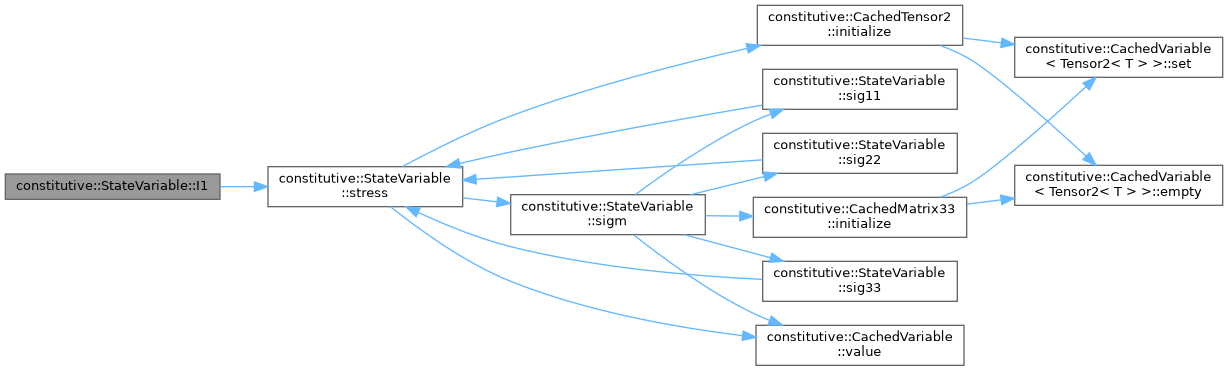
Get the first invariant of the stress tensor.
References stress().
Here is the call graph for this function:
◆ I2()
template<typename T>
|
inline |
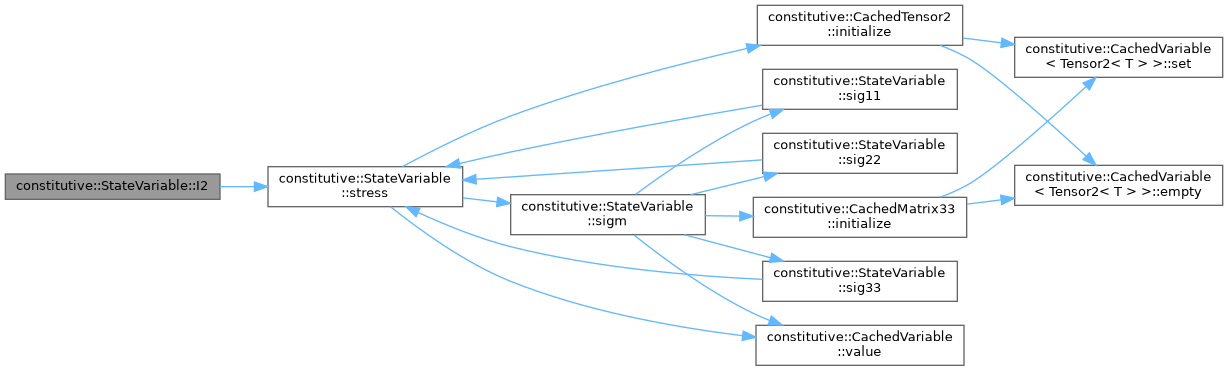
Get the second invariant of the stress tensor.
References stress().
Here is the call graph for this function:
◆ I3()
template<typename T>
|
inline |
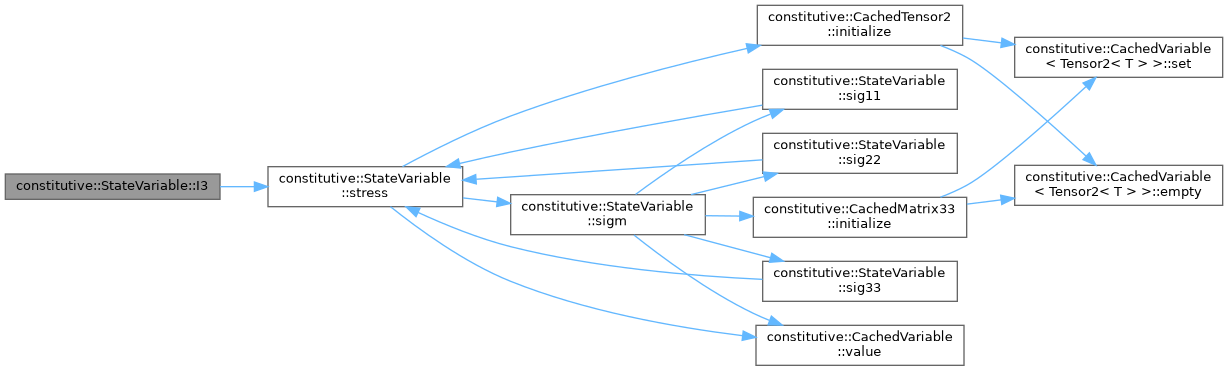
Get the third invariant of the stress tensor.
References stress().
Here is the call graph for this function:
◆ Ia1()
template<typename T>
|
inline |
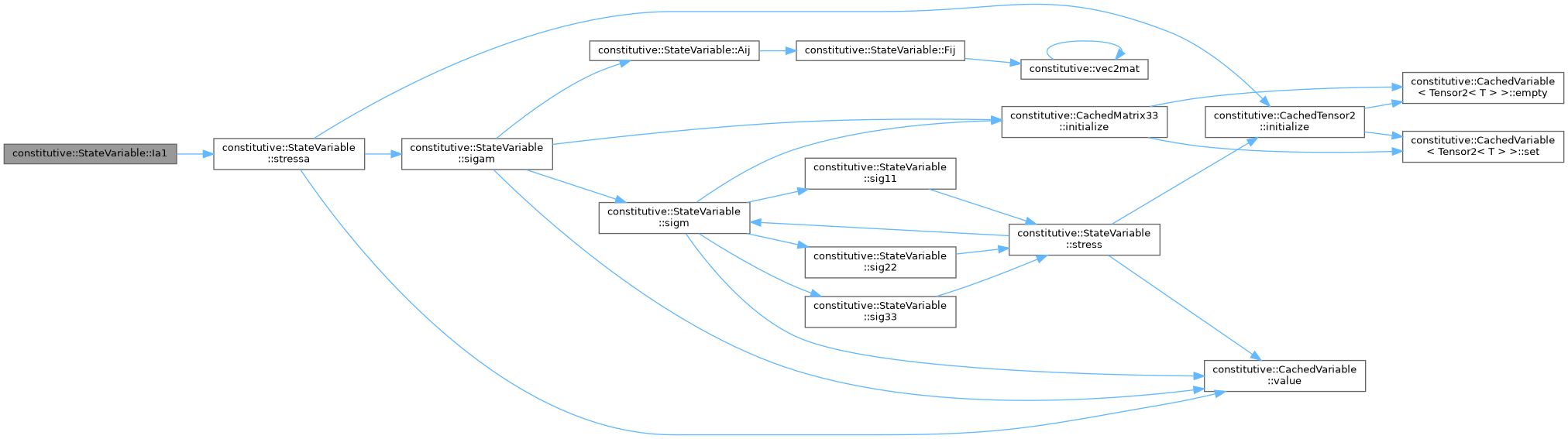
Get the first invariant of the anisotropic stress tensor.
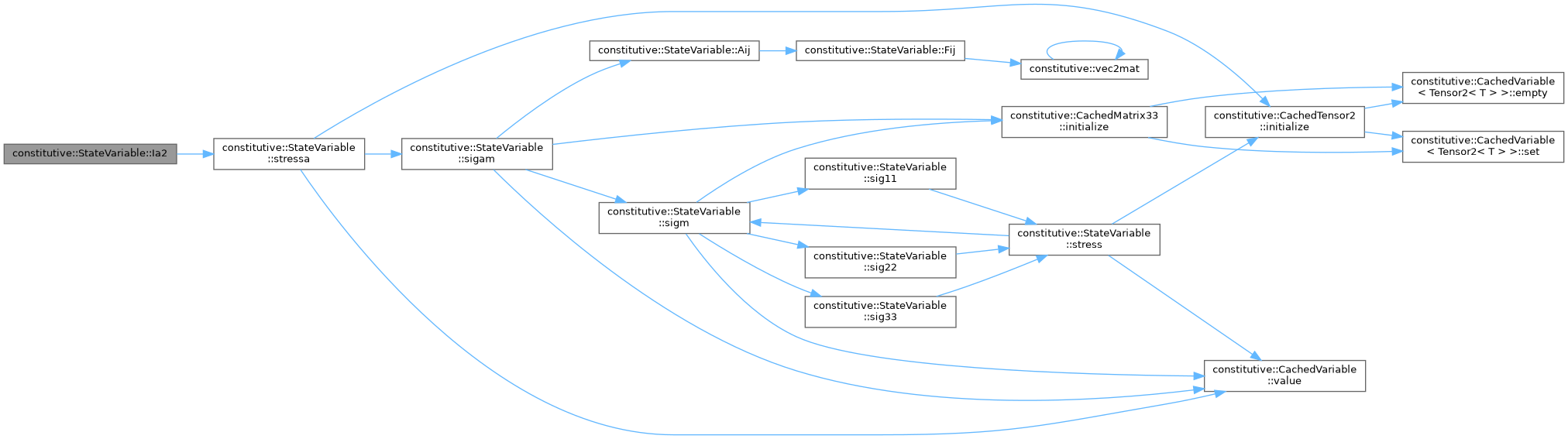
References stressa().
Here is the call graph for this function:
◆ Ia2()
template<typename T>
|
inline |
Get the second invariant of the anisotropic stress tensor.
References stressa().
Here is the call graph for this function:
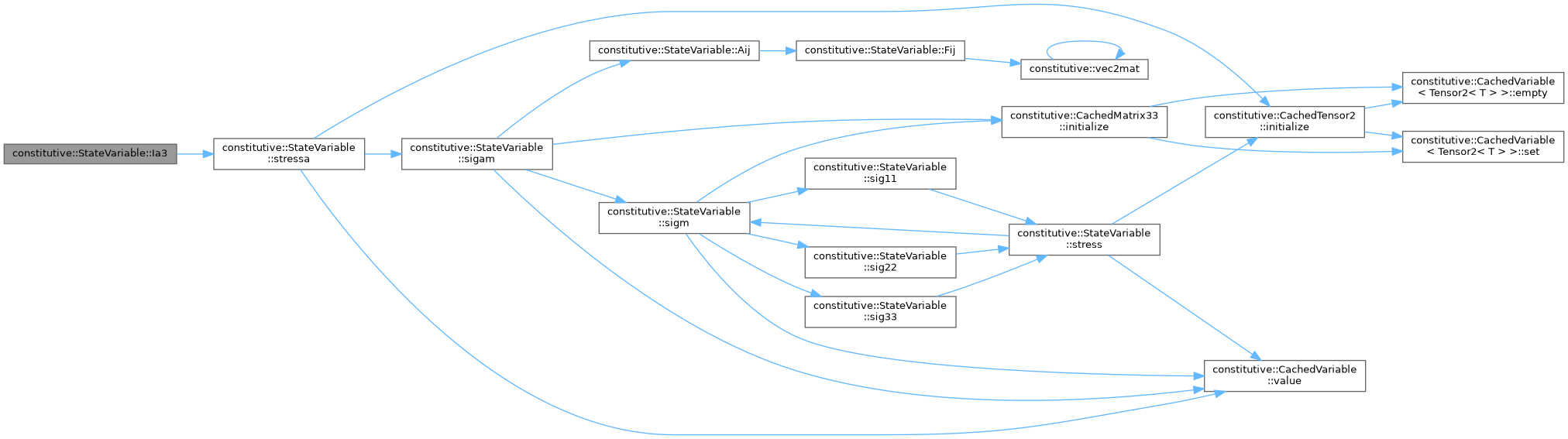
◆ Ia3()
template<typename T>
|
inline |
Get the third invariant of the anisotropic stress tensor.
References stressa().
Here is the call graph for this function:
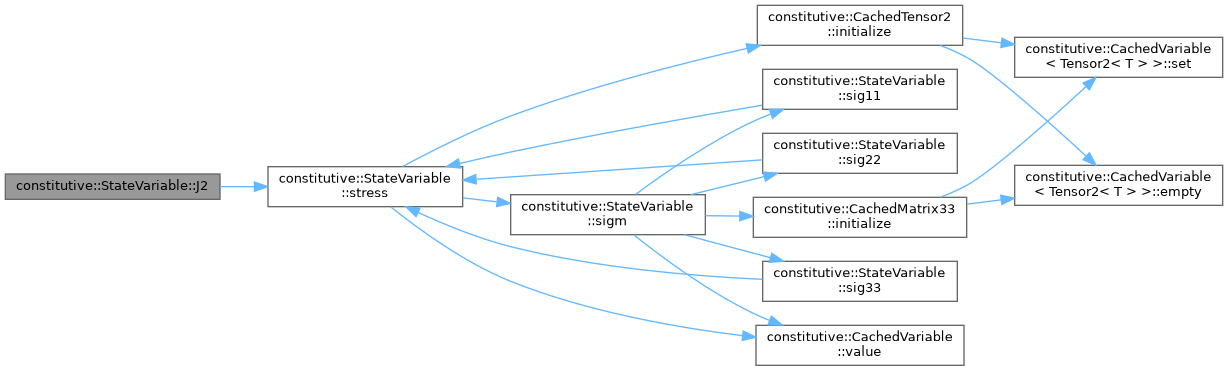
◆ J2()
template<typename T>
|
inline |
Get the second invariant of the deviatoric stress tensor.
References stress().
Here is the call graph for this function:
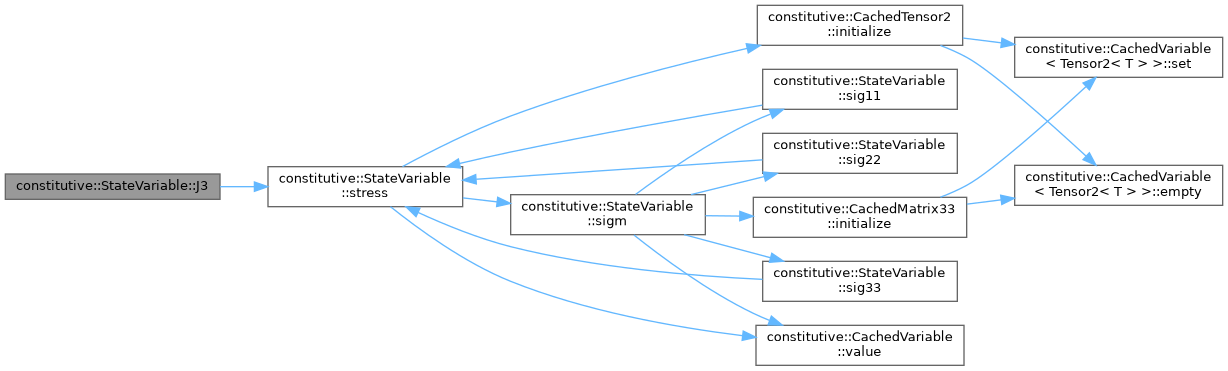
◆ J3()
template<typename T>
|
inline |
Get the third invariant of the deviatoric stress tensor.
References stress().
Here is the call graph for this function:
◆ Ja2()
template<typename T>
|
inline |
Get the second invariant of the anisotropic deviatoric stress tensor.
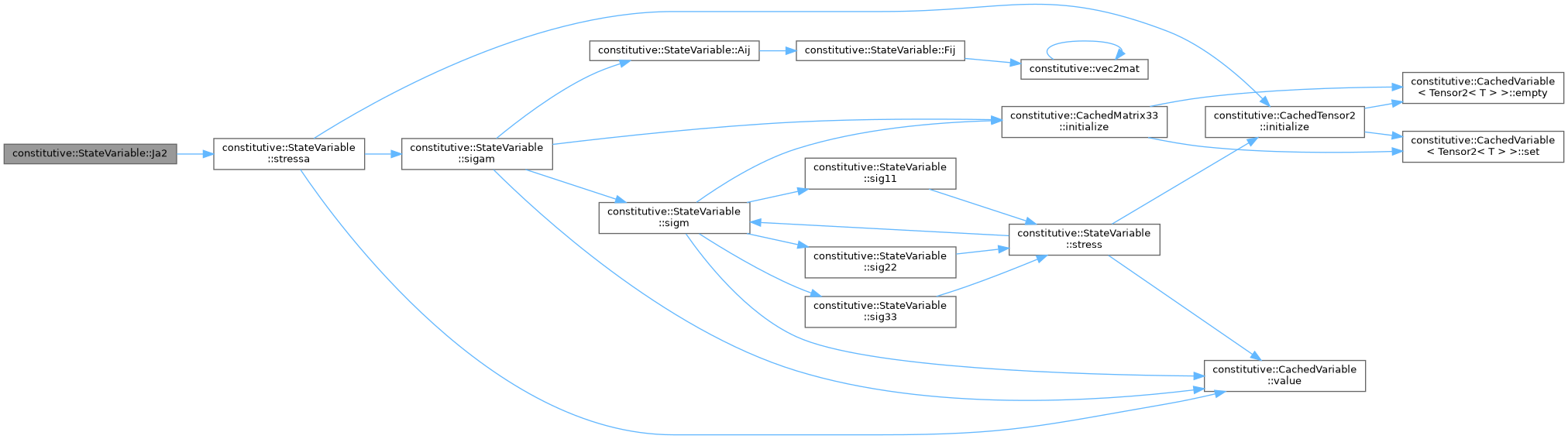
References stressa().
Here is the call graph for this function:
◆ Ja3()
template<typename T>
|
inline |
Get the third invariant of the anisotropic deviatoric stress tensor.
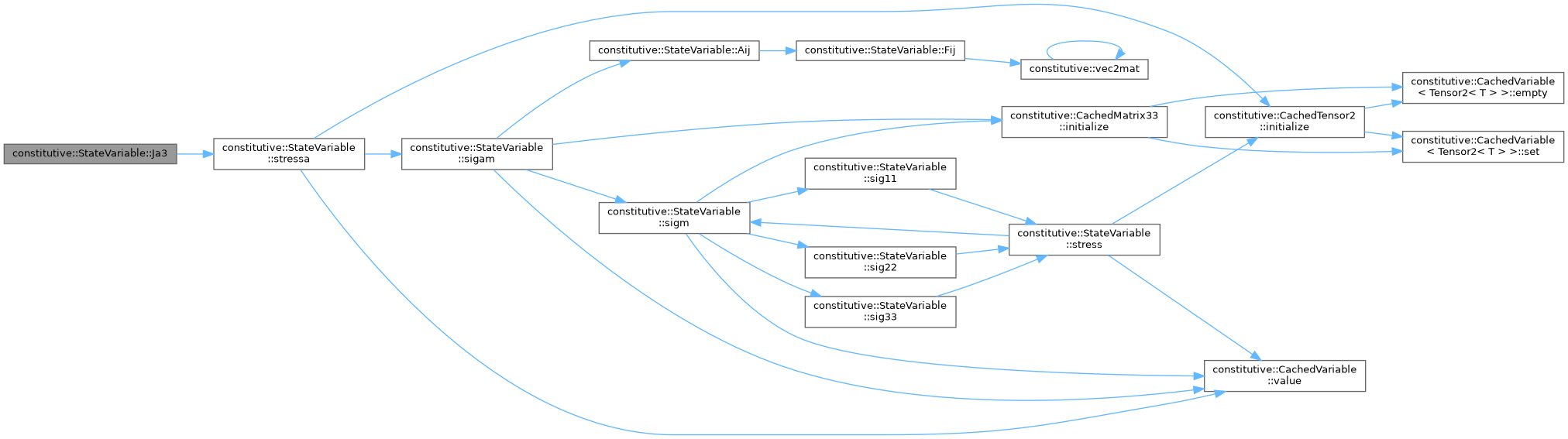
References stressa().
Here is the call graph for this function:
◆ lode()
template<typename T>
|
inline |
Get the lode angle.
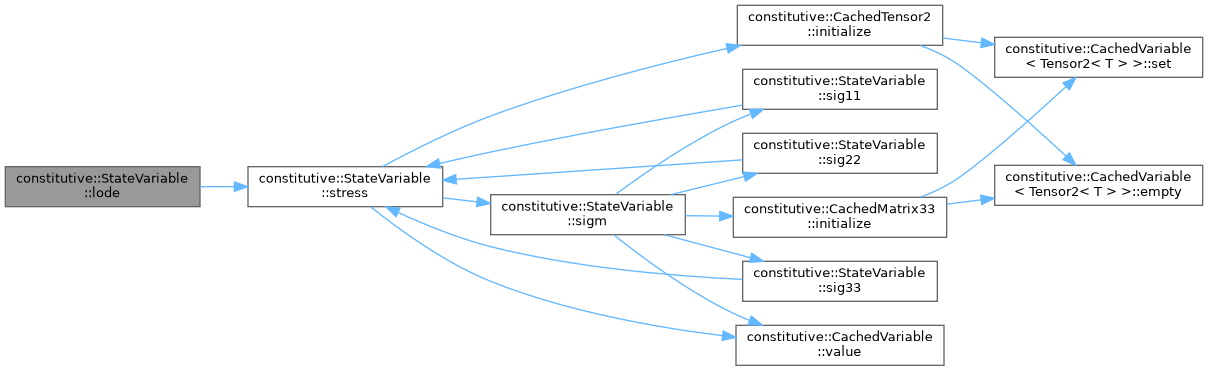
References stress().
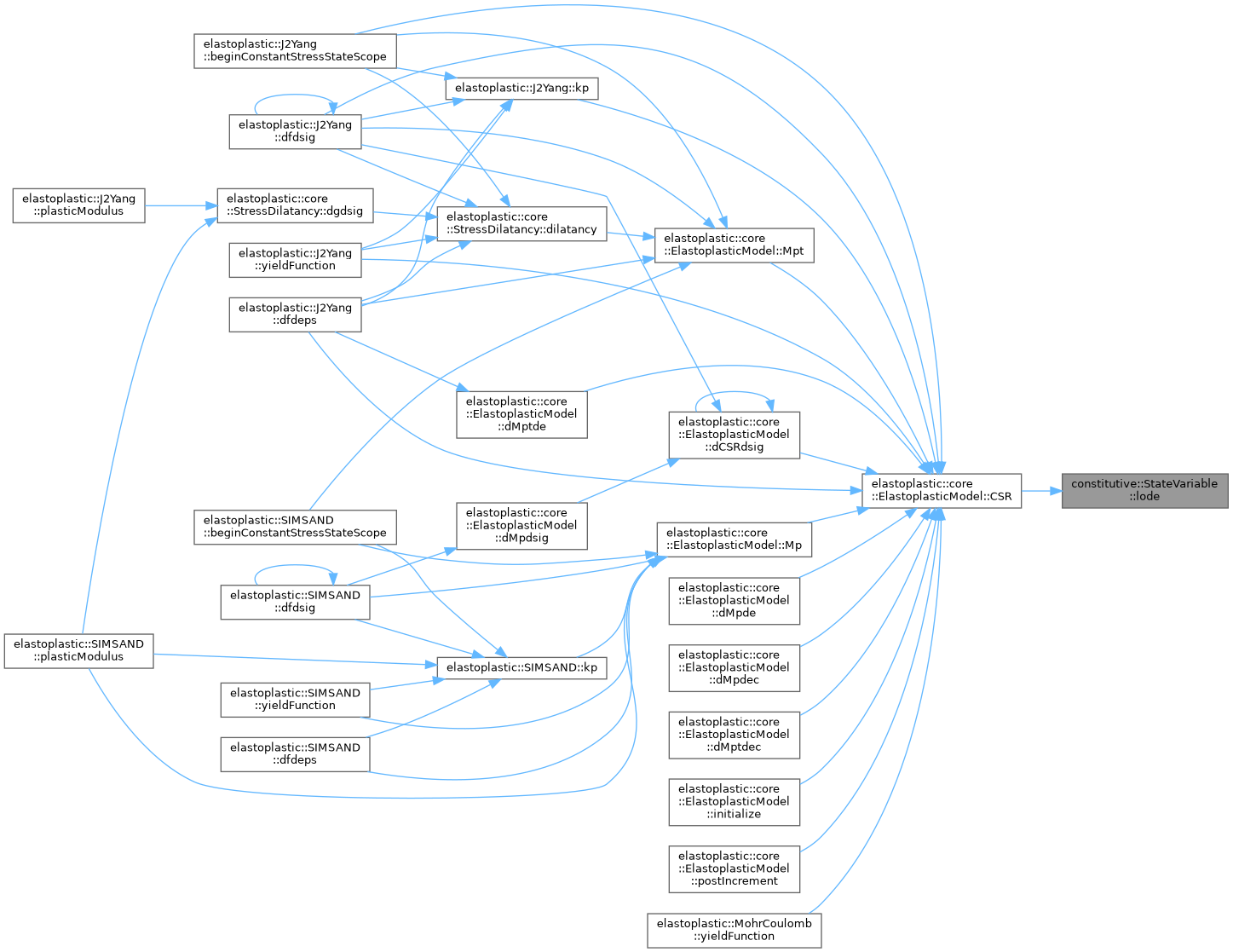
Referenced by elastoplastic::core::ElastoplasticModel< T >::CSR().
Here is the call graph for this function:
Here is the caller graph for this function:
◆ lodea()
template<typename T>
|
inline |
Lode angle with anisotropy.
References stressa().
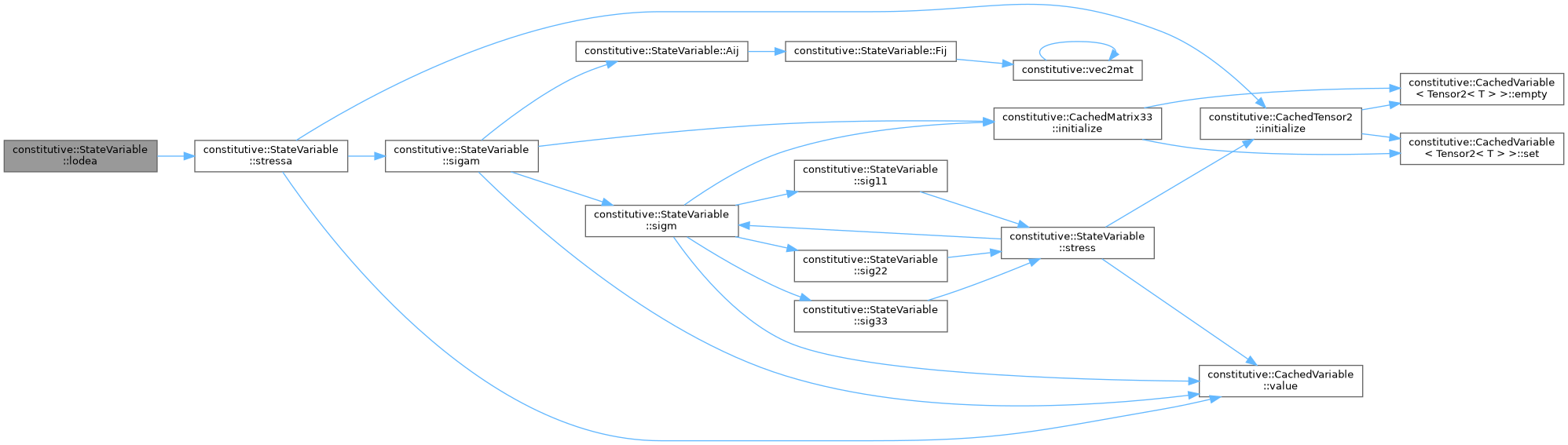
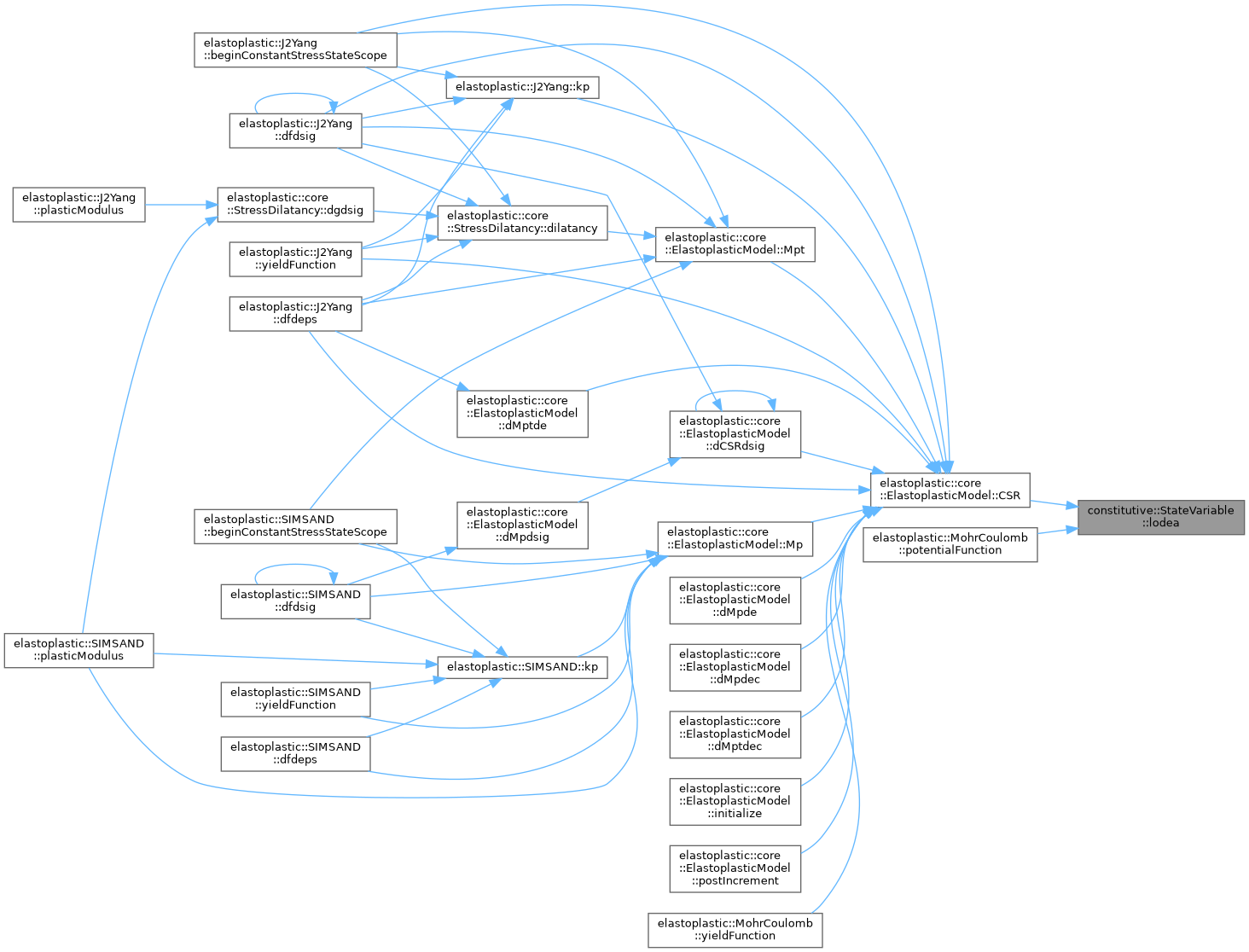
Referenced by elastoplastic::core::ElastoplasticModel< T >::CSR(), and elastoplastic::MohrCoulomb< T >::potentialFunction().
Here is the call graph for this function:
Here is the caller graph for this function:
◆ n()
template<typename T>
|
inline |
◆ ns()
template<typename T>
|
inline |
References nst().
Referenced by micromechanical::core::MicromechanicalBase< T > *::postIncrement().
Here is the call graph for this function:

Here is the caller graph for this function:

◆ nst()
template<typename T>
|
inline |
Get the shear force direction.
- Parameters
-
idx Index of the integration point
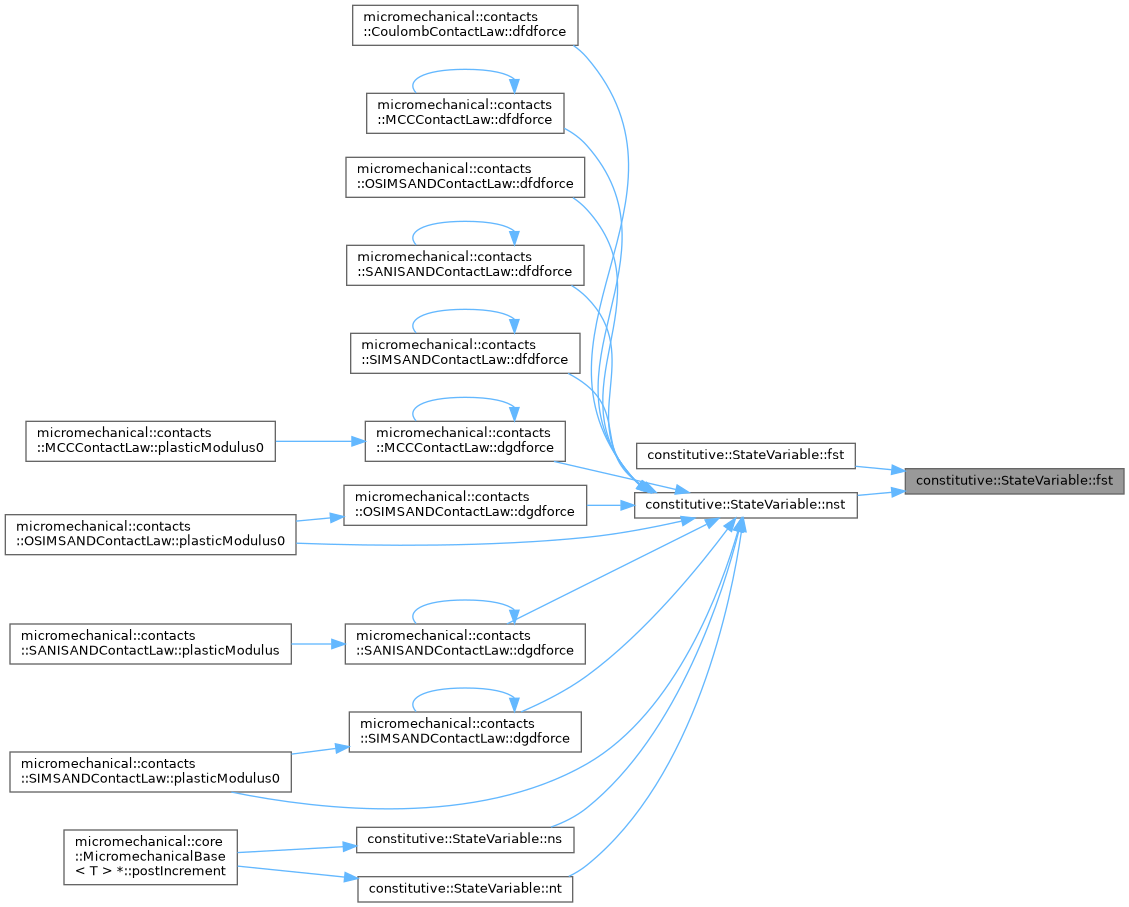
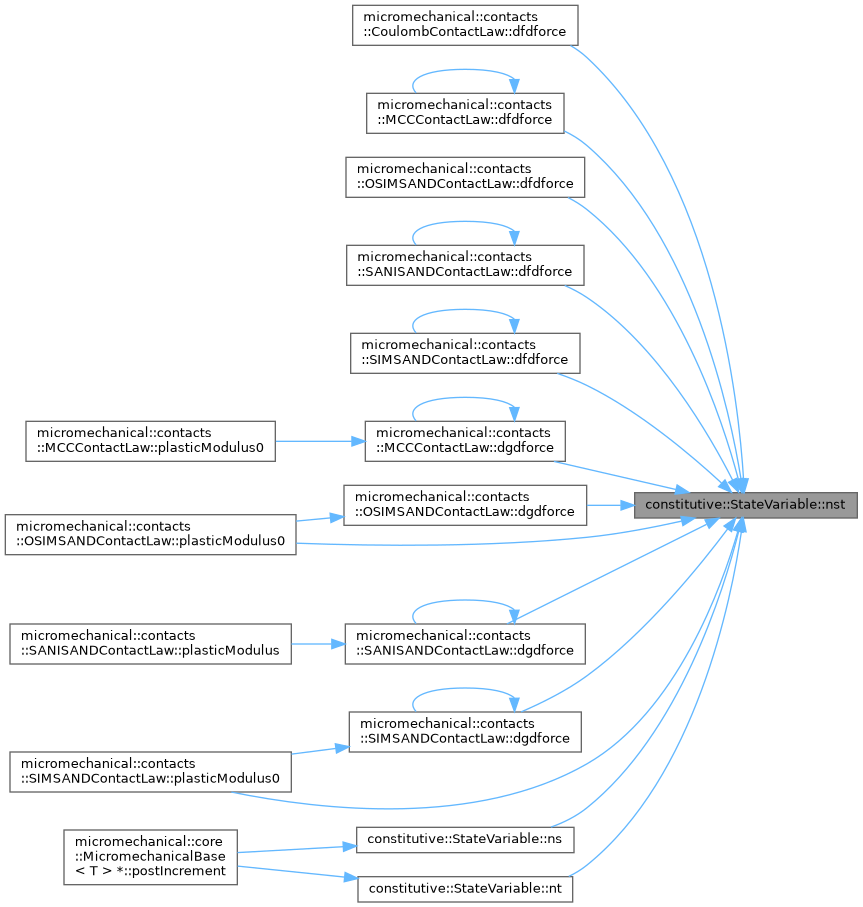
Referenced by micromechanical::contacts::CoulombContactLaw< T >::dfdforce(), micromechanical::contacts::MCCContactLaw< T >::dfdforce(), micromechanical::contacts::OSIMSANDContactLaw< T >::dfdforce(), micromechanical::contacts::SANISANDContactLaw< T >::dfdforce(), micromechanical::contacts::SIMSANDContactLaw< T >::dfdforce(), micromechanical::contacts::MCCContactLaw< T >::dgdforce(), micromechanical::contacts::OSIMSANDContactLaw< T >::dgdforce(), micromechanical::contacts::SANISANDContactLaw< T >::dgdforce(), micromechanical::contacts::SIMSANDContactLaw< T >::dgdforce(), ns(), nt(), micromechanical::contacts::OSIMSANDContactLaw< T >::plasticModulus0(), and micromechanical::contacts::SIMSANDContactLaw< T >::plasticModulus0().
Here is the call graph for this function:

Here is the caller graph for this function:
◆ nStateVariables()
template<typename T>
|
inlinestatic |
Get the number of state variables.
- Parameters
-
size Number of integration points dispp Whether to include plastic displacement in the state variables nstatev_custom Number of custom state variables
References dispp, size, and stateVariableNames().
Referenced by micromechanical::core::MicromechanicalBase< T > *::nstatev().
Here is the call graph for this function:

Here is the caller graph for this function:

◆ nt()
template<typename T>
|
inline |
References nst().
Referenced by micromechanical::core::MicromechanicalBase< T > *::postIncrement().
Here is the call graph for this function:

Here is the caller graph for this function:

◆ p()
template<typename T>
|
inline |
Get the mean stress.
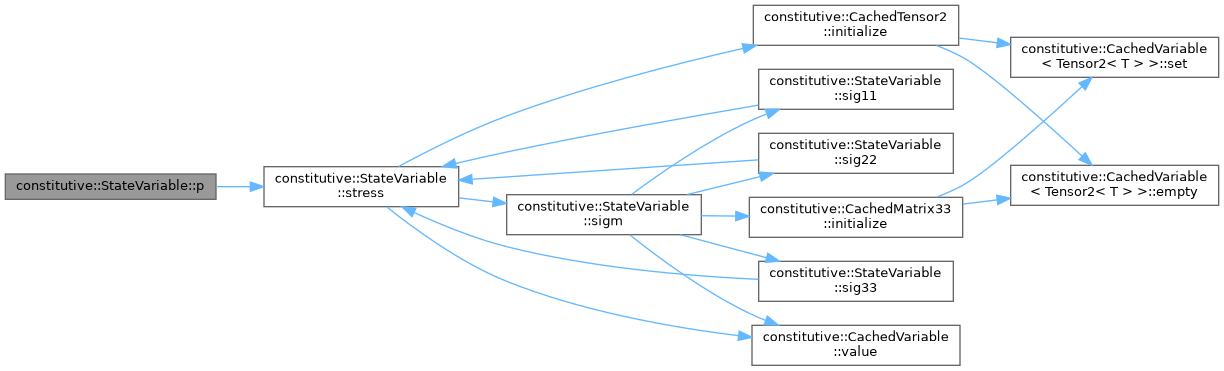
References stress().
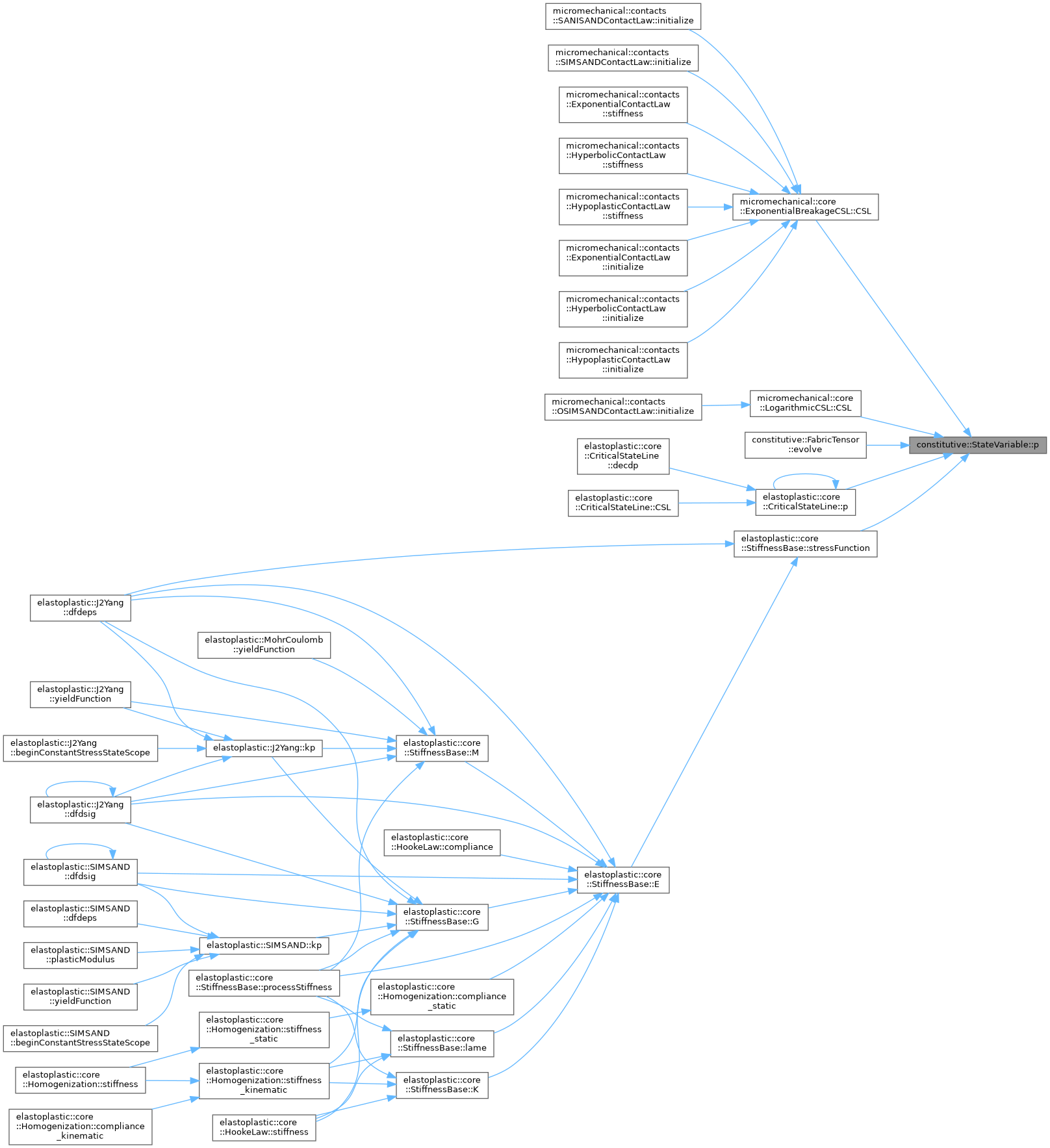
Referenced by micromechanical::core::ExponentialBreakageCSL< T >::CSL(), micromechanical::core::LogarithmicCSL< T >::CSL(), constitutive::FabricTensor< T >::evolve(), elastoplastic::core::CriticalStateLine< T >::p(), and elastoplastic::core::StiffnessBase< T >::stressFunction().
Here is the call graph for this function:
Here is the caller graph for this function:
◆ pa()
template<typename T>
|
inline |
Get the anisotropic mean stress.
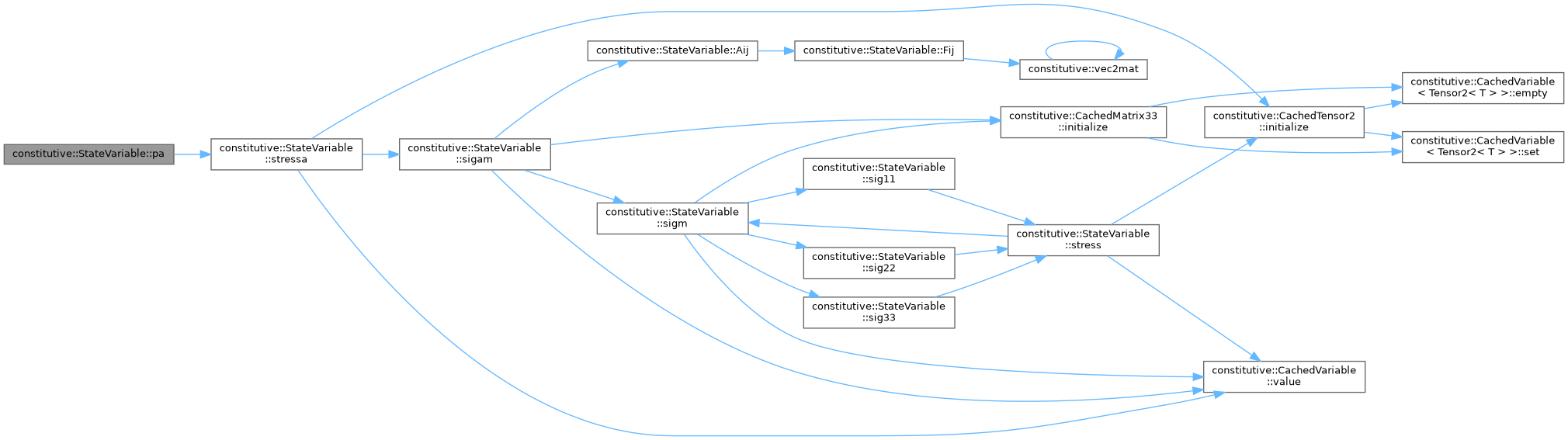
References stressa().
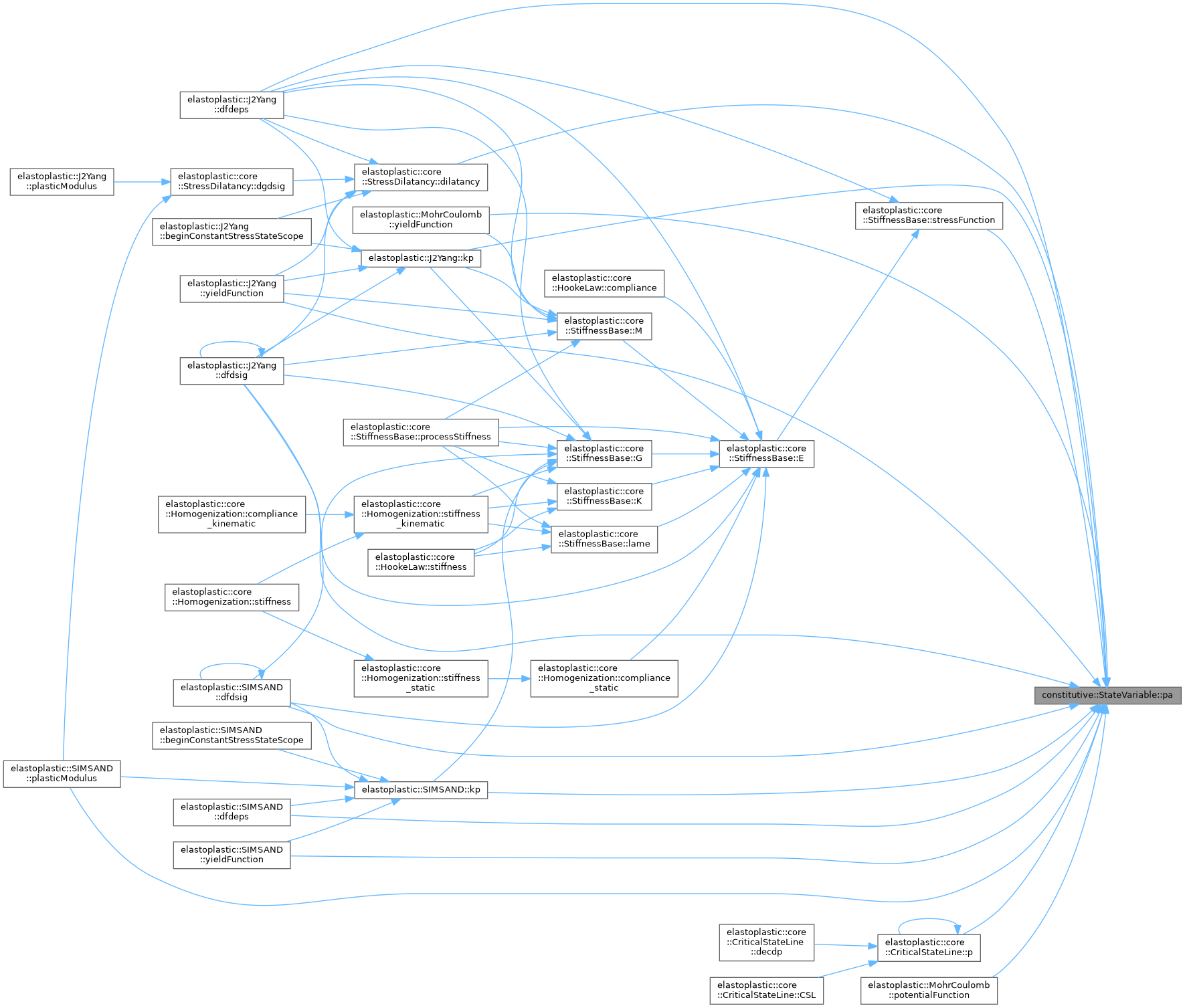
Referenced by elastoplastic::J2Yang< T >::dfdeps(), elastoplastic::SIMSAND< T >::dfdeps(), elastoplastic::J2Yang< T >::dfdsig(), elastoplastic::SIMSAND< T >::dfdsig(), elastoplastic::core::StressDilatancy< T >::dilatancy(), elastoplastic::J2Yang< T >::kp(), elastoplastic::SIMSAND< T >::kp(), elastoplastic::core::CriticalStateLine< T >::p(), elastoplastic::SIMSAND< T >::plasticModulus(), elastoplastic::MohrCoulomb< T >::potentialFunction(), elastoplastic::core::StiffnessBase< T >::stressFunction(), elastoplastic::J2Yang< T >::yieldFunction(), elastoplastic::MohrCoulomb< T >::yieldFunction(), and elastoplastic::SIMSAND< T >::yieldFunction().
Here is the call graph for this function:
Here is the caller graph for this function:
◆ peeq()
template<typename T>
|
inline |

◆ plastic()
template<typename T>
|
inline |
Whether the current state is plastic.
Referenced by elastic().
Here is the caller graph for this function:

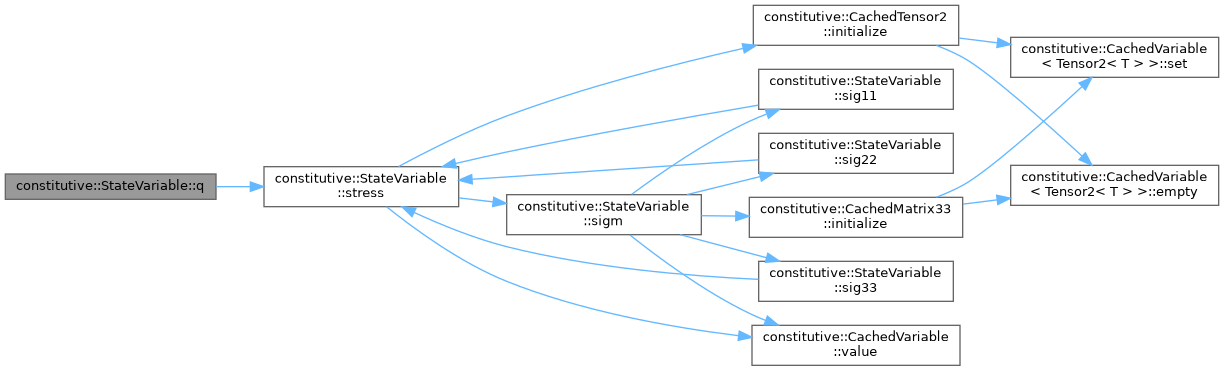
◆ q()
template<typename T>
|
inline |
◆ qa()
template<typename T>
|
inline |
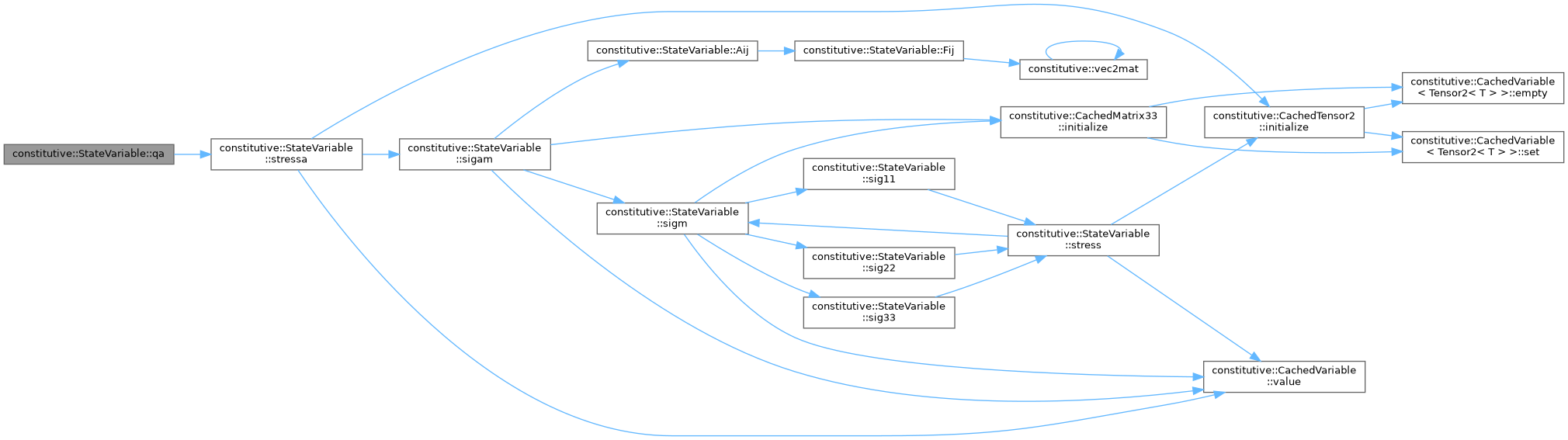
Get the anisotropic deviatoric stress.
References stressa().
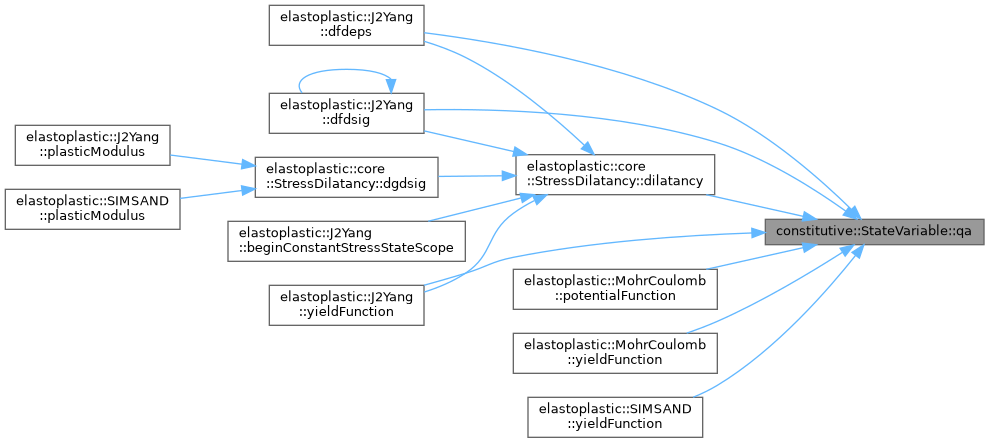
Referenced by elastoplastic::J2Yang< T >::dfdeps(), elastoplastic::J2Yang< T >::dfdsig(), elastoplastic::core::StressDilatancy< T >::dilatancy(), elastoplastic::MohrCoulomb< T >::potentialFunction(), elastoplastic::J2Yang< T >::yieldFunction(), elastoplastic::MohrCoulomb< T >::yieldFunction(), and elastoplastic::SIMSAND< T >::yieldFunction().
Here is the call graph for this function:
Here is the caller graph for this function:
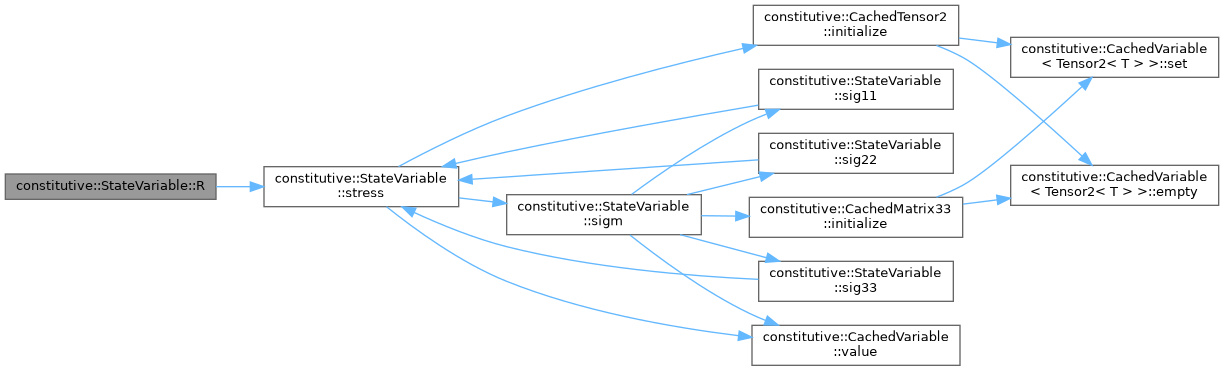
◆ R()
template<typename T>
|
inline |
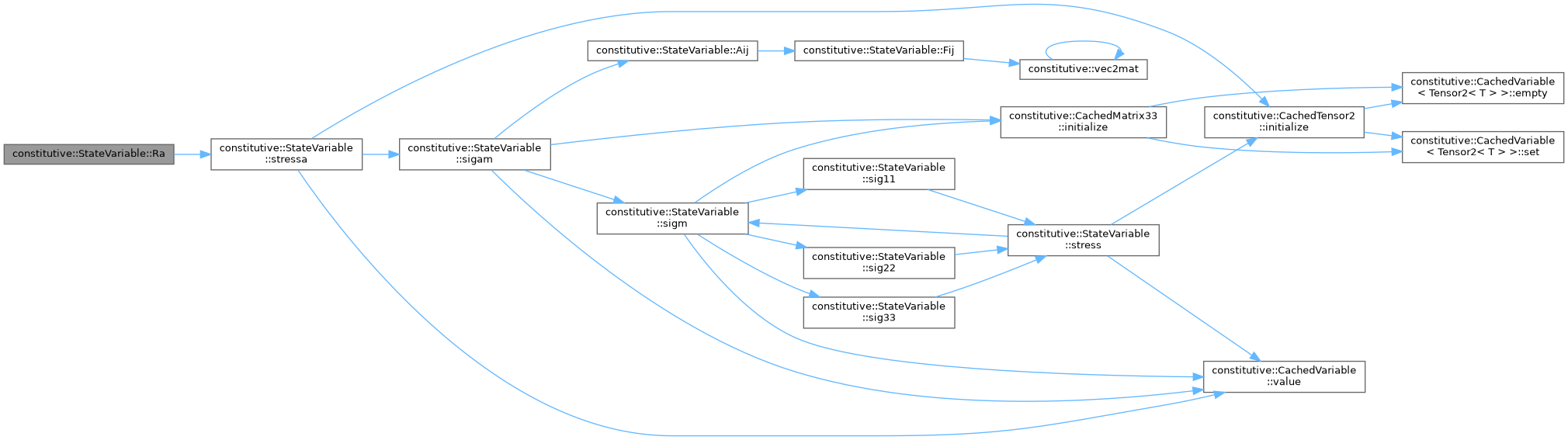
◆ Ra()
template<typename T>
|
inline |
Major stress ratio siga1/siga3.
References stressa().
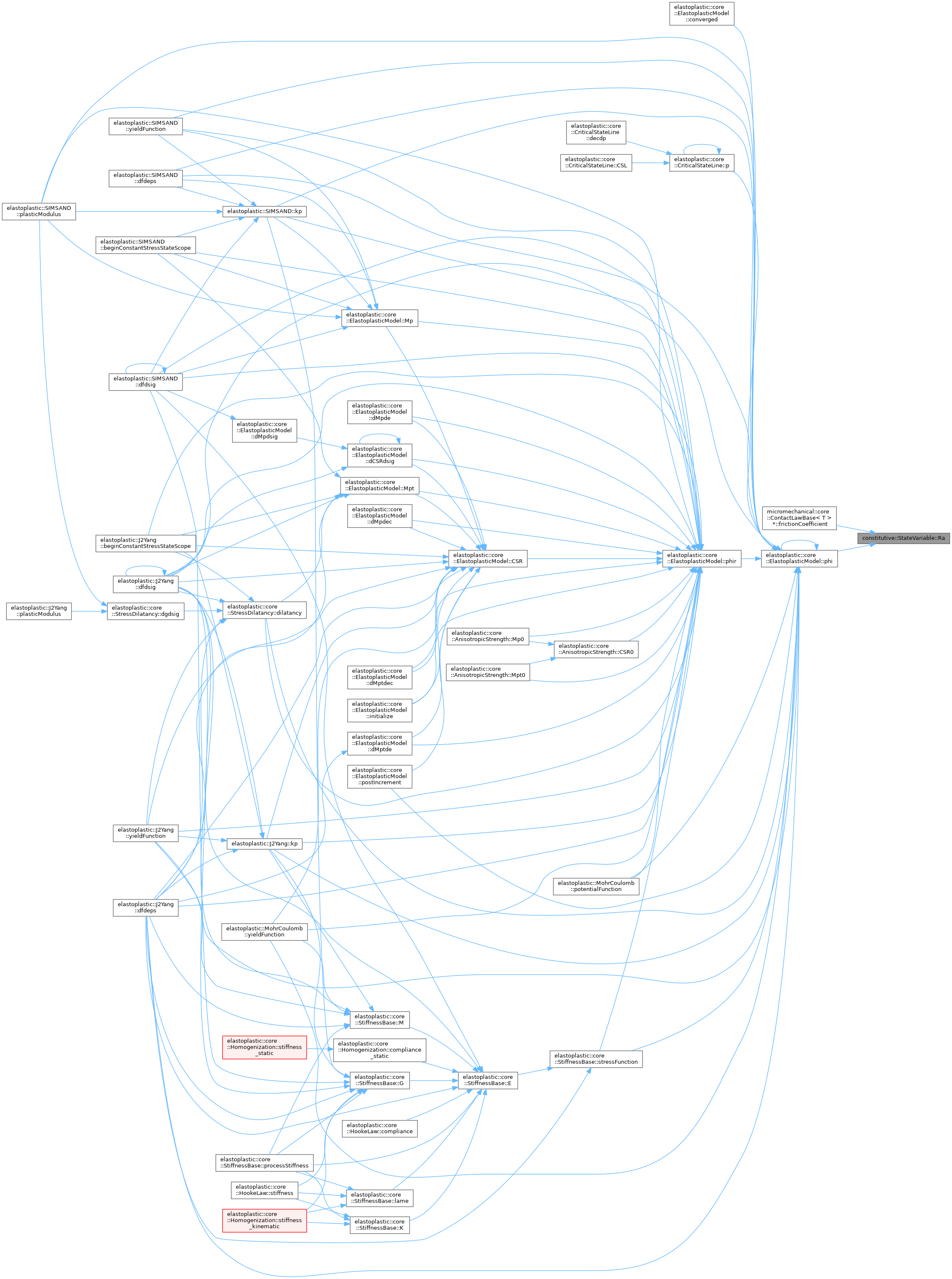
Referenced by micromechanical::core::ContactLawBase< T > *::frictionCoefficient(), and elastoplastic::core::ElastoplasticModel< T >::phi().
Here is the call graph for this function:
Here is the caller graph for this function:
◆ revertSymmetricContactStateVariables()
template<typename T>
|
inline |
Revert contact force, displacement and specified custom variables by multiplying them with -1.
- Parameters
-
idx Index of the integration point cscalars Custom scalar fields to be multiplied by -1 cvectors Custom vector fields to be multiplied by -1
References cscalars.
◆ setStrain()
template<typename T>
|
inline |
Set strain and update void ratio.
- Parameters
-
eps strain update_void_ratio Whether to update void ratio
References addStrain(), and eps.
Referenced by constitutive::ElastoplasticModelBase< T >::dfdeps0(), constitutive::ElastoplasticModelBase< T >::integrateToYieldSurface(), and constitutive::ElastoplasticModelBase< T >::RKn().
Here is the call graph for this function:

Here is the caller graph for this function:

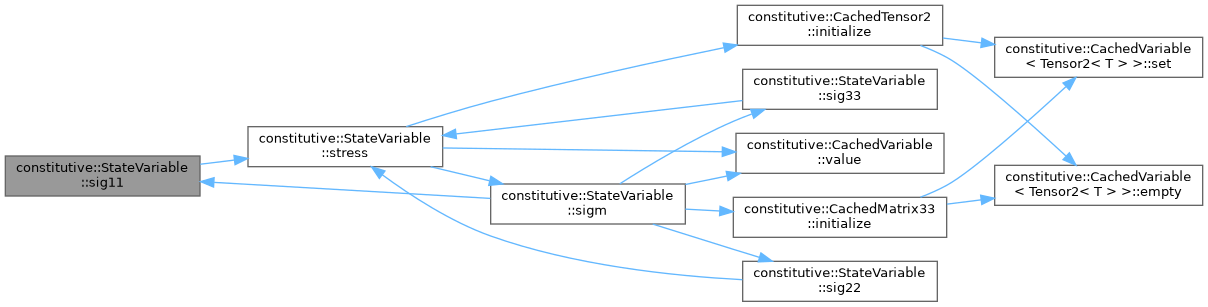
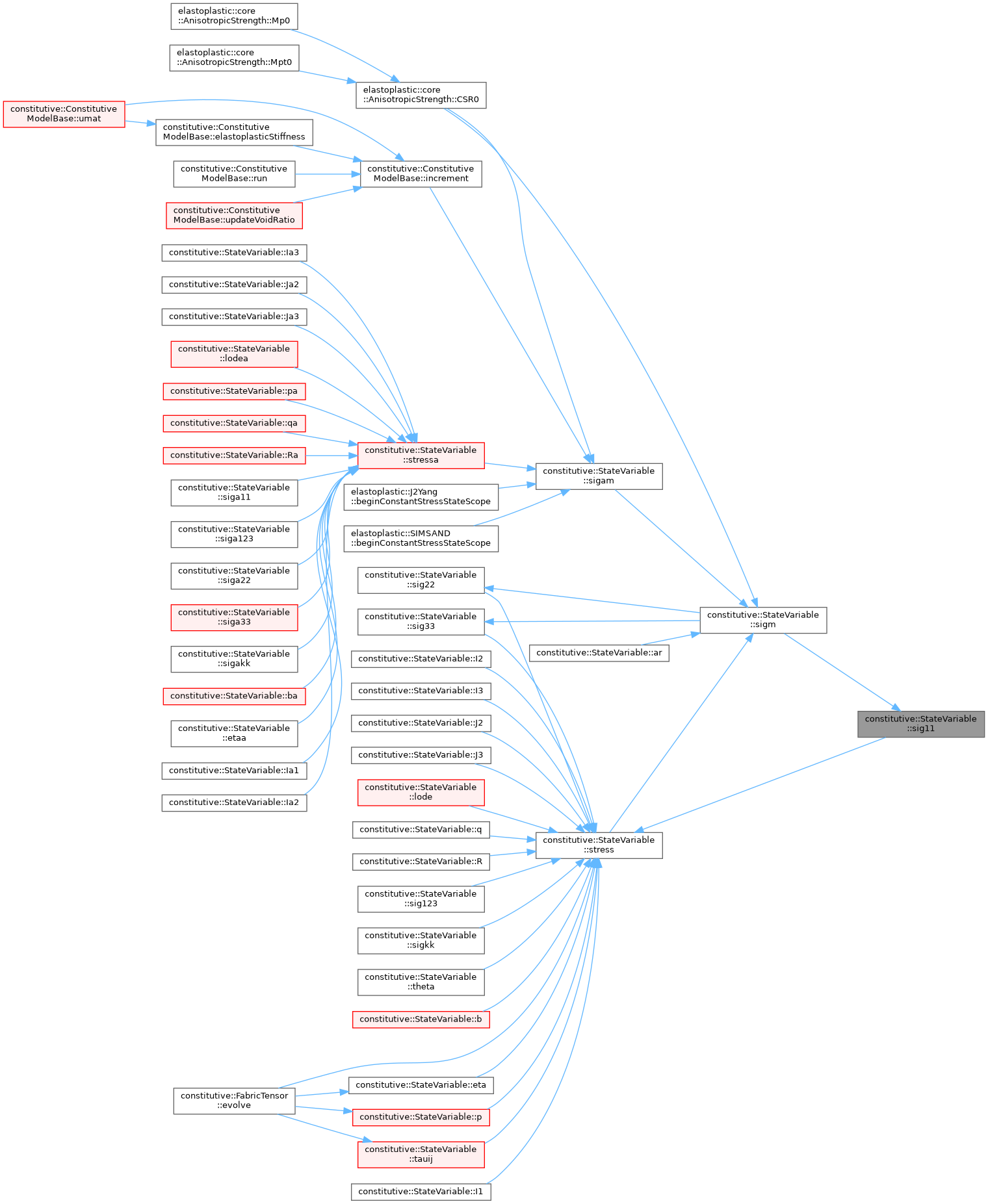
◆ sig11()
template<typename T>
|
inline |
◆ sig123()
template<typename T>
|
inline |
◆ sig22()
template<typename T>
|
inline |
◆ sig33()
template<typename T>
|
inline |
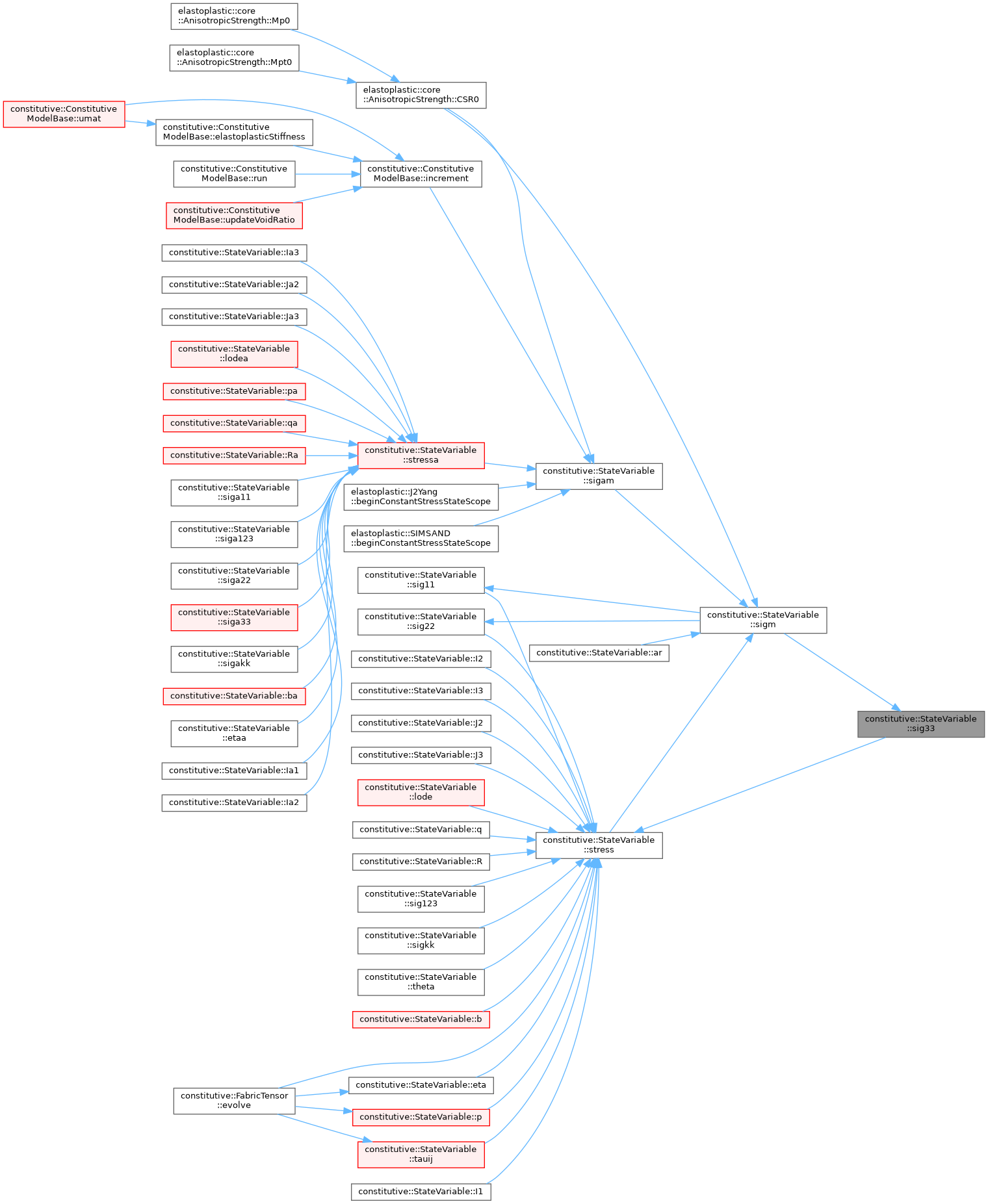
◆ sig_() [1/2]
template<typename T>
|
inline |
Referenced by constitutive::ElastoplasticModelBase< T >::CPPM(), constitutive::ElastoplasticModelBase< T >::d2gdsig20(), elastoplastic::core::ElastoplasticModel< T >::dCSRdsig(), constitutive::ElastoplasticModelBase< T >::dfdsig0(), constitutive::ElastoplasticModelBase< T >::dgdsig0(), constitutive::ElastoplasticModelBase< T >::elasticTrial(), constitutive::ConstitutiveModelBase< T >::elastoplasticStiffness(), constitutive::LoadPhase< T >::initialize(), constitutive::ElastoplasticModelBase< T >::integrateToYieldSurface(), constitutive::ElastoplasticModelBase< T >::revertElasticTrial(), constitutive::ElastoplasticModelBase< T >::RKn(), constitutive::ElastoplasticModelBase< T >::RungeKutta(), constitutive::ElastoplasticModelBase< T >::stressStrainIntegrate(), micromechanical::ChangHicher< T >::stressStrainIntegrate1(), and constitutive::ElastoplasticModelBase< T >::yieldFunctionCorrection().
Here is the caller graph for this function:
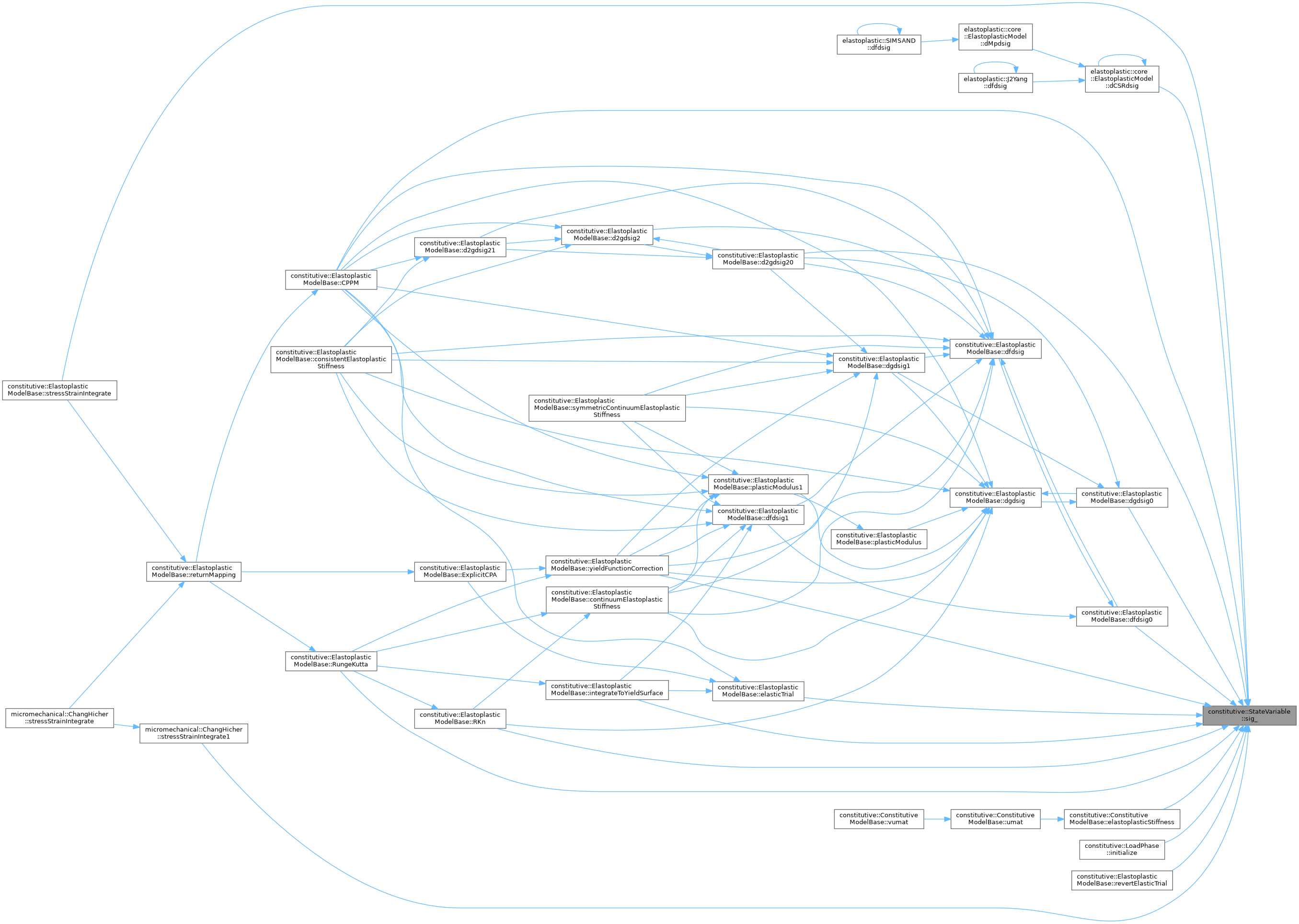
◆ sig_() [2/2]
template<typename T>
|
inline |

◆ siga11()
template<typename T>
|
inline |
First principal stress with anisotropy.
References stressa().
Here is the call graph for this function:
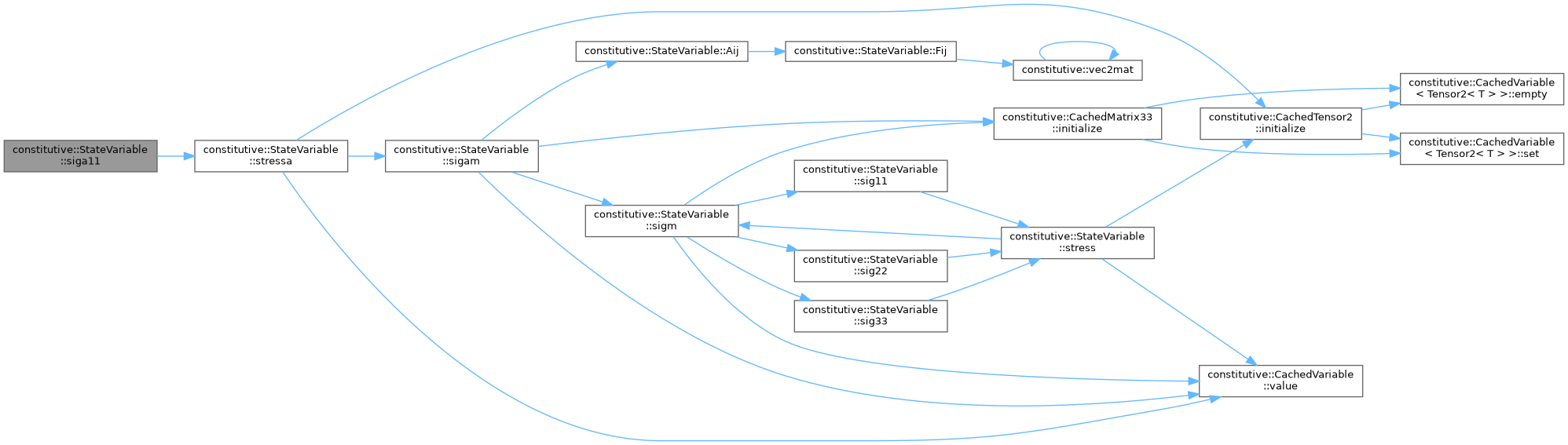
◆ siga123()
template<typename T>
|
inline |
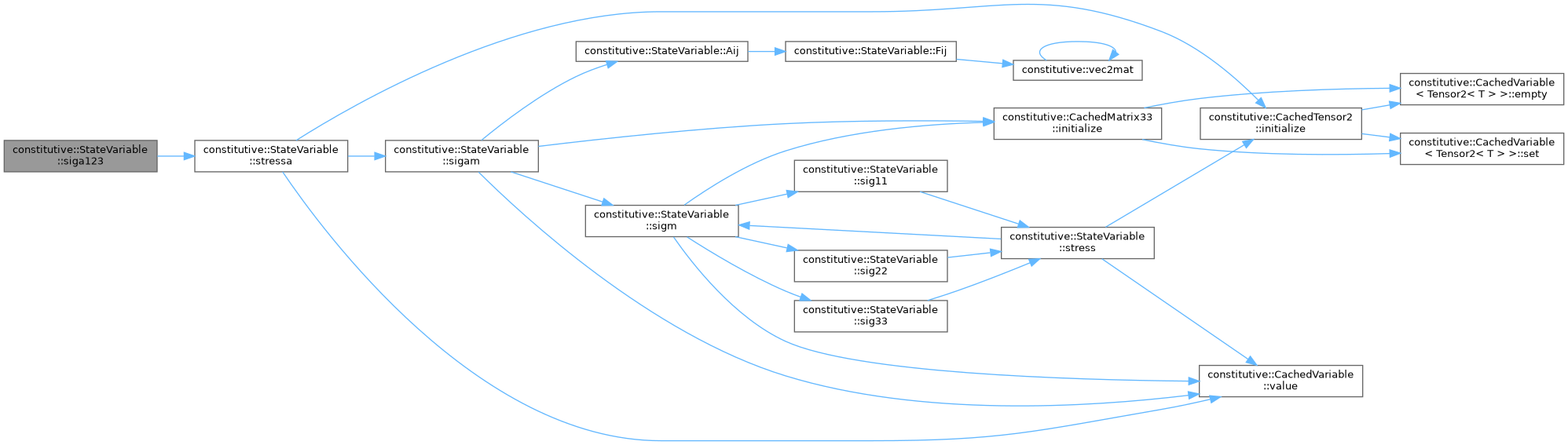
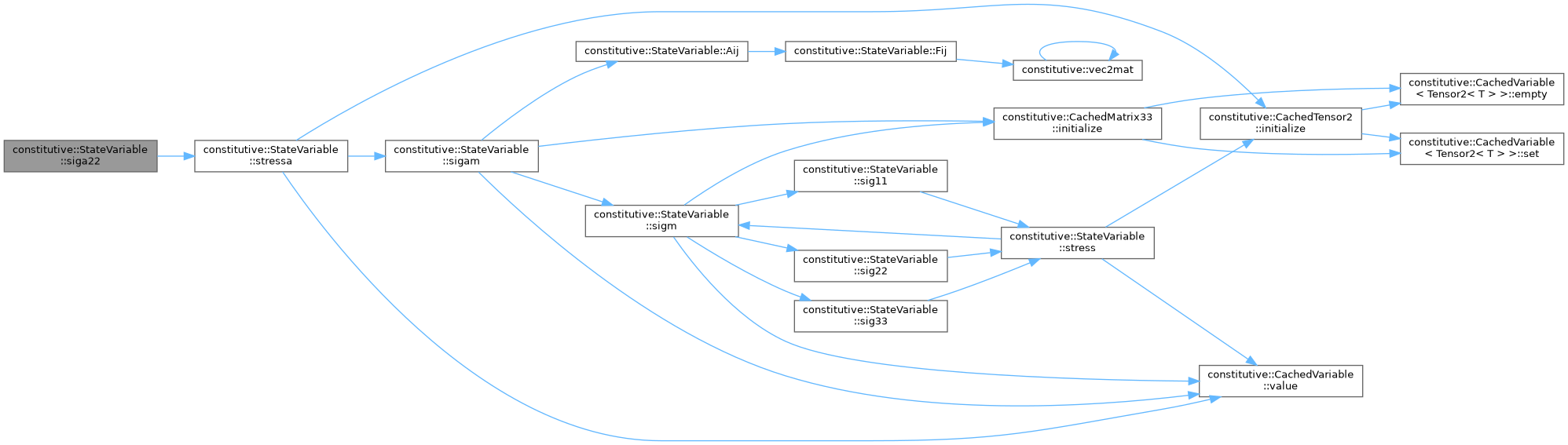
◆ siga22()
template<typename T>
|
inline |
Second principal stress with anisotropy.
References stressa().
Here is the call graph for this function:
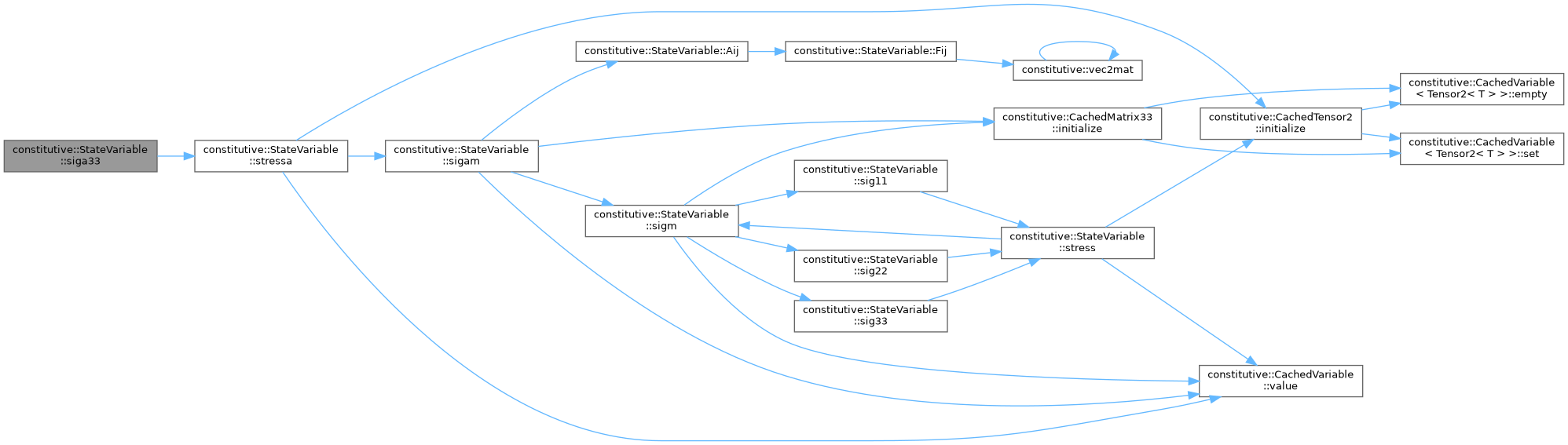
◆ siga33()
template<typename T>
|
inline |
Third principal stress with anisotropy.
References stressa().
Referenced by elastoplastic::core::ElastoplasticModel< T >::converged().
Here is the call graph for this function:
Here is the caller graph for this function:

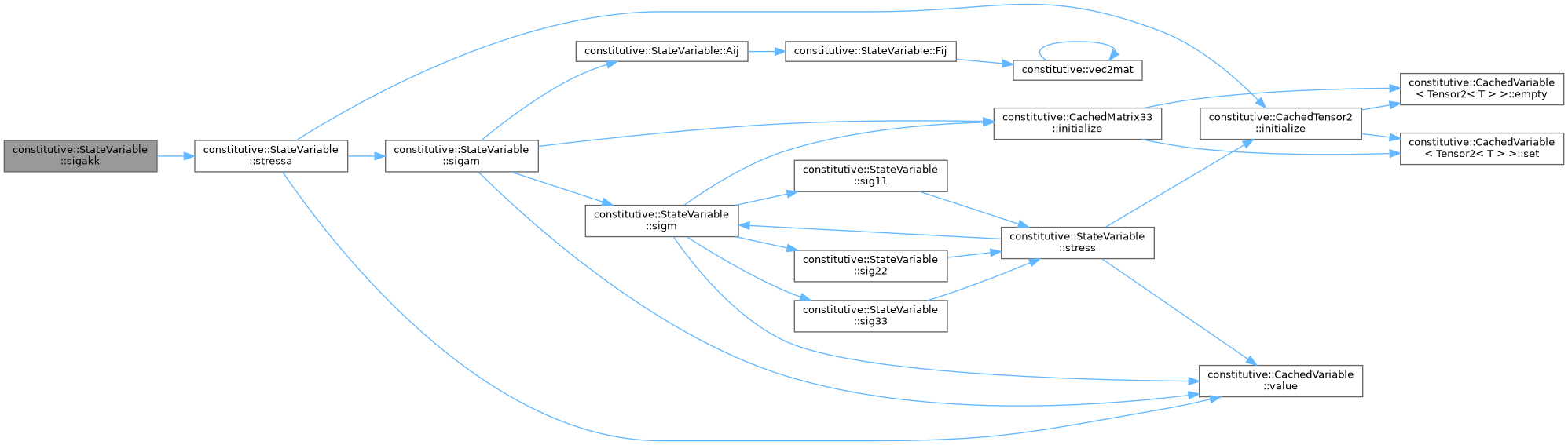
◆ sigakk()
template<typename T>
|
inline |
Get the anisotropic mean stress tensor.
References stressa().
Here is the call graph for this function:
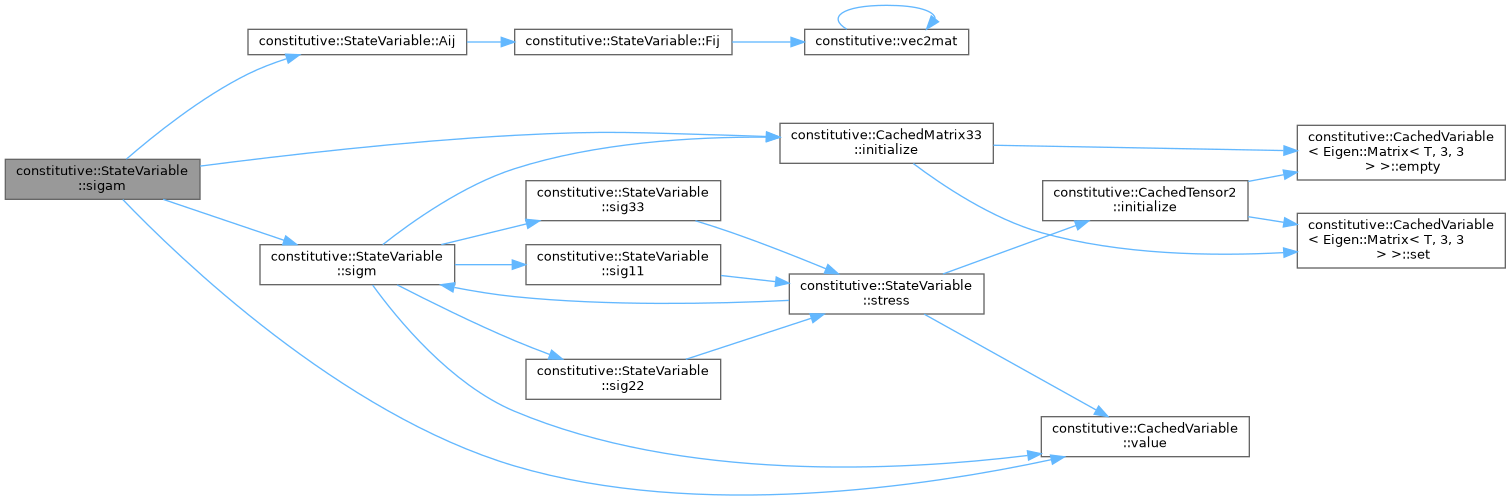
◆ sigam()
template<typename T>
|
inline |
Get the anisotropic stress tensor.
References Aij(), constitutive::CachedVariable< T >::cached, constitutive::CachedMatrix33< T >::initialize(), sigm(), and constitutive::CachedVariable< T >::value().
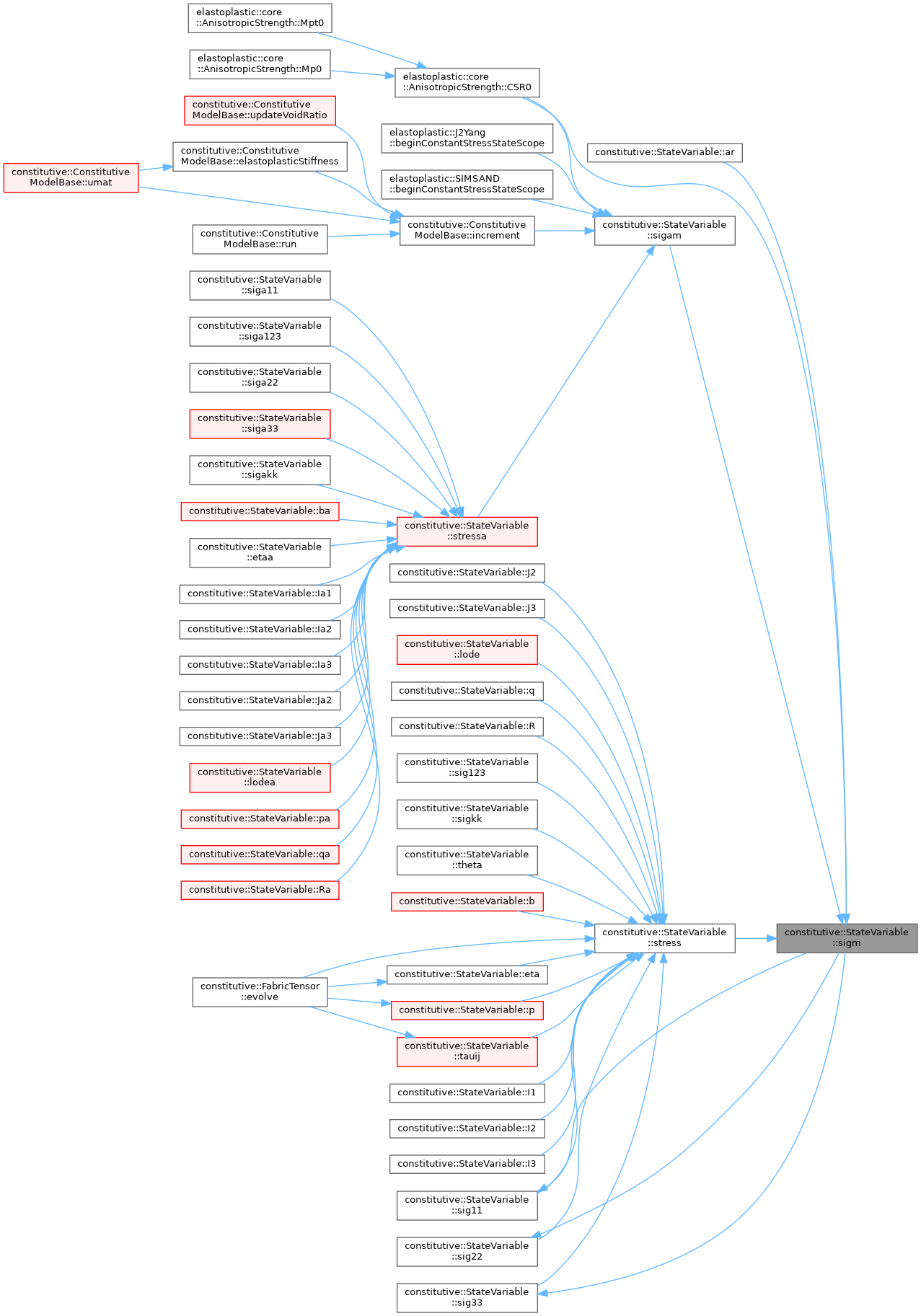
Referenced by elastoplastic::J2Yang< T >::beginConstantStressStateScope(), elastoplastic::SIMSAND< T >::beginConstantStressStateScope(), elastoplastic::core::AnisotropicStrength< T >::CSR0(), constitutive::ConstitutiveModelBase< T >::increment(), and stressa().
Here is the call graph for this function:
Here is the caller graph for this function:
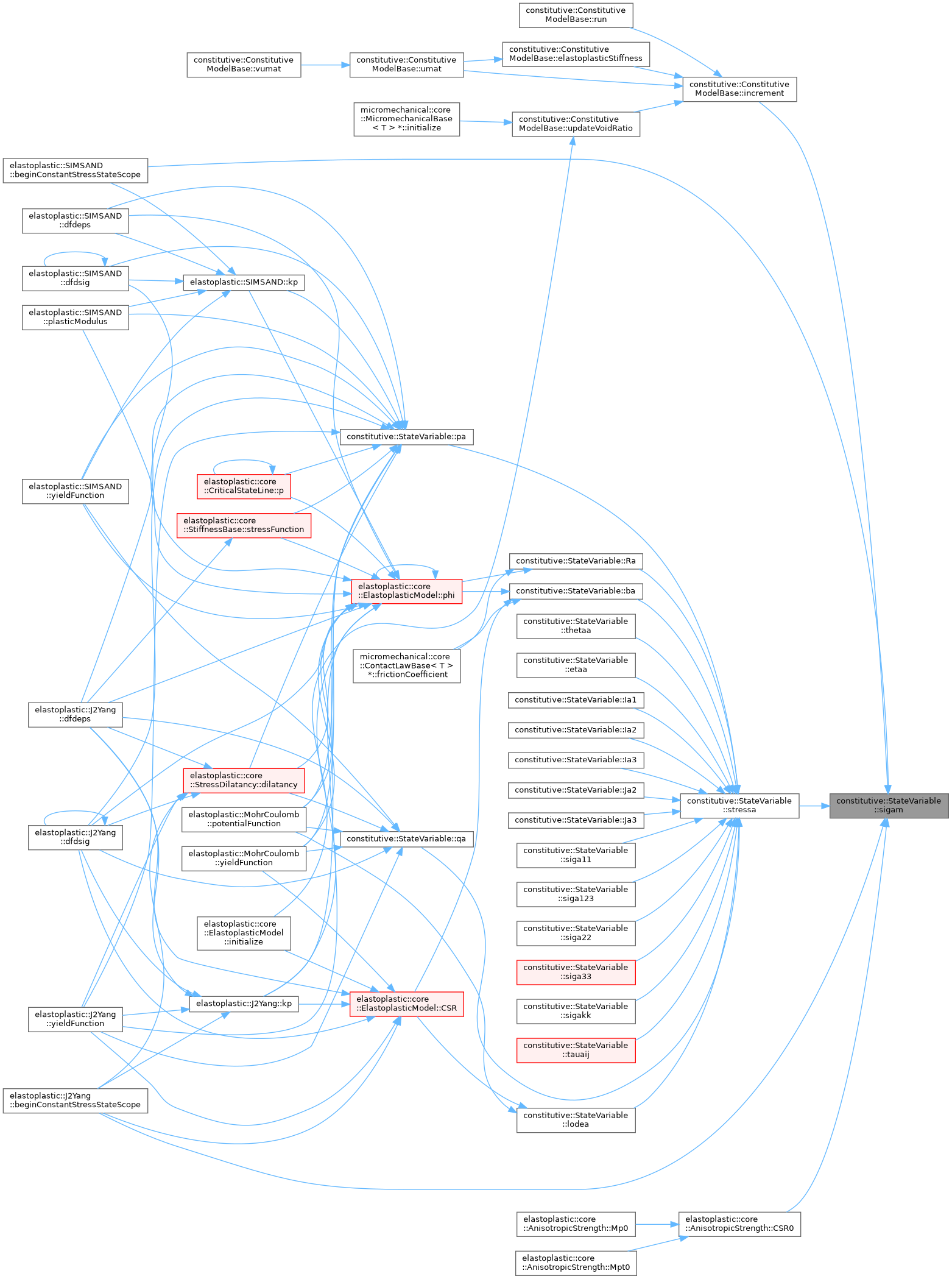
◆ sigkk()
template<typename T>
|
inline |
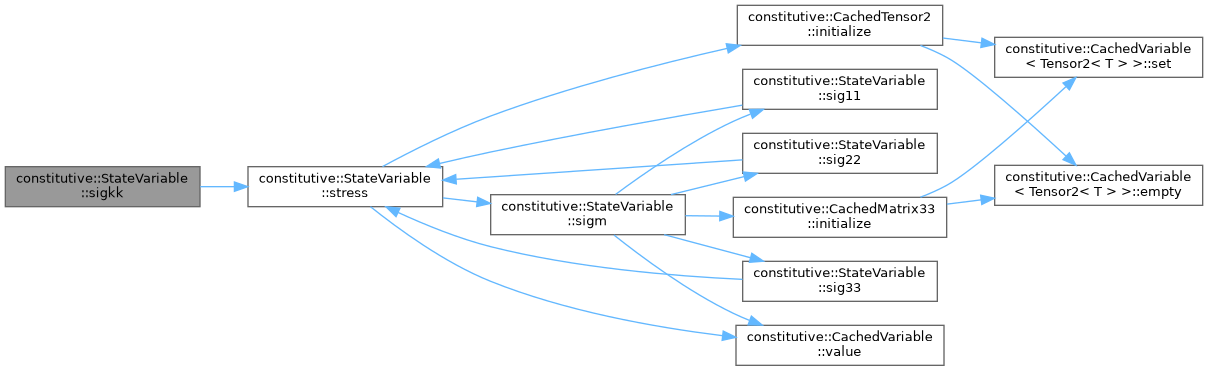
◆ sigm()
template<typename T>
|
inline |
Get the stress tensor.
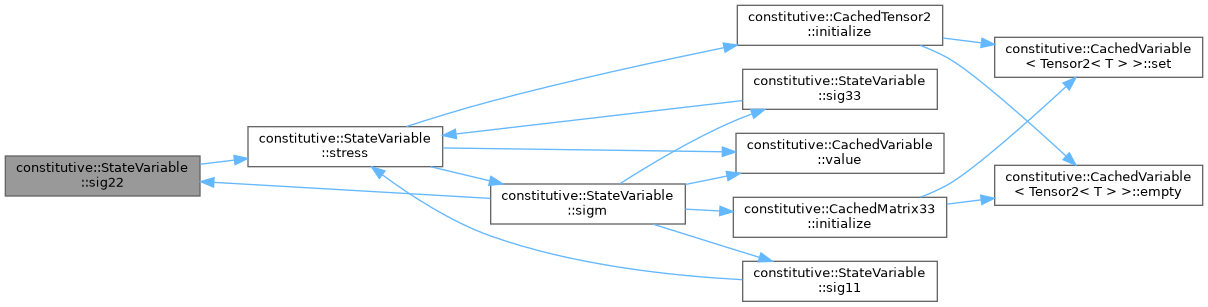
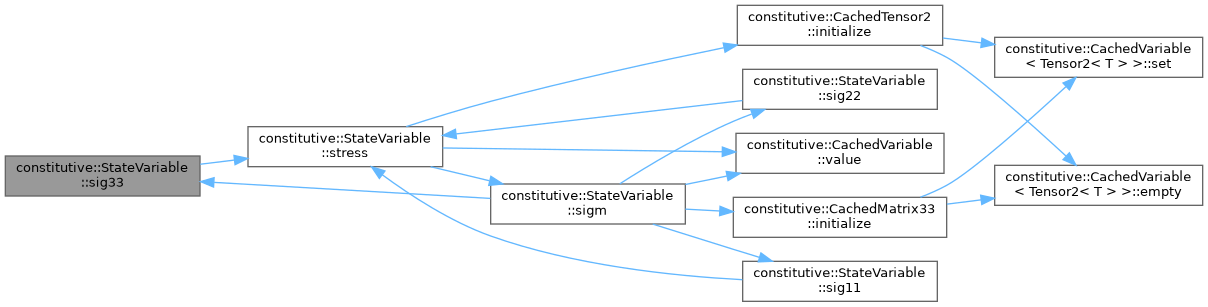
References constitutive::CachedVariable< T >::cached, constitutive::CachedMatrix33< T >::initialize(), sig11(), sig22(), sig33(), and constitutive::CachedVariable< T >::value().
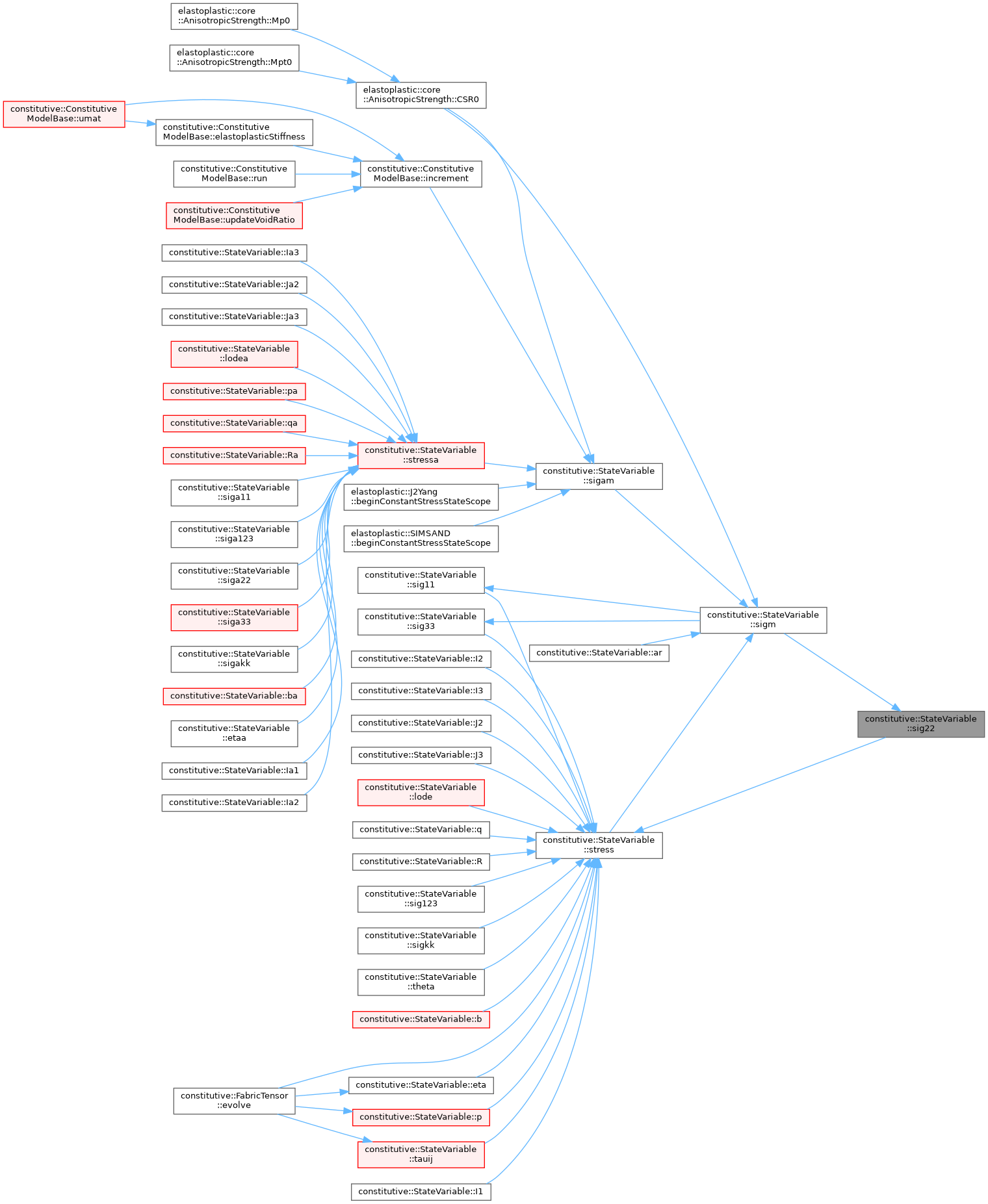
Referenced by ar(), elastoplastic::core::AnisotropicStrength< T >::CSR0(), sigam(), and stress().
Here is the call graph for this function:
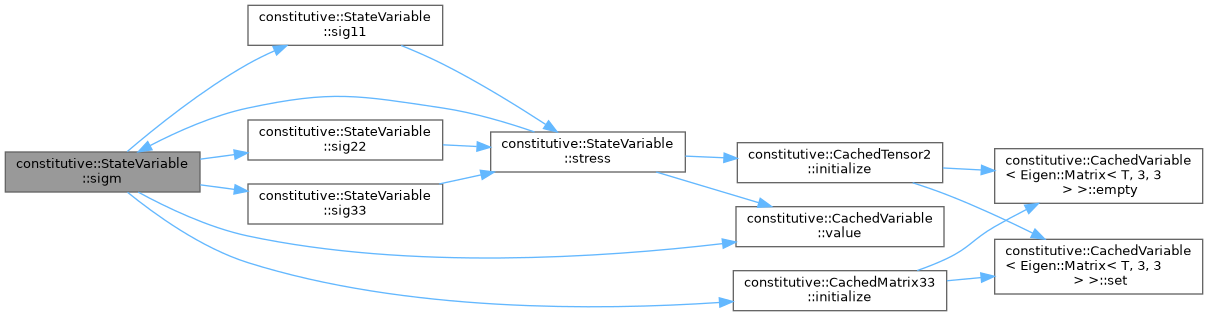
Here is the caller graph for this function:
◆ stateVariableNames()
template<typename T>
|
inlinestatic |
Get the names of the state variables.
References dispp, size, and StateVariable().
Referenced by nStateVariables().
Here is the call graph for this function:

Here is the caller graph for this function:

◆ strain()
template<typename T>
|
inline |
Get the strain tensor.
References constitutive::Tensor2< T >::fromVector().
Here is the call graph for this function:

◆ strainp()
template<typename T>
|
inline |
Get the plastic strain tensor.
References constitutive::Tensor2< T >::fromVector().
Here is the call graph for this function:

◆ stress()
template<typename T>
|
inline |
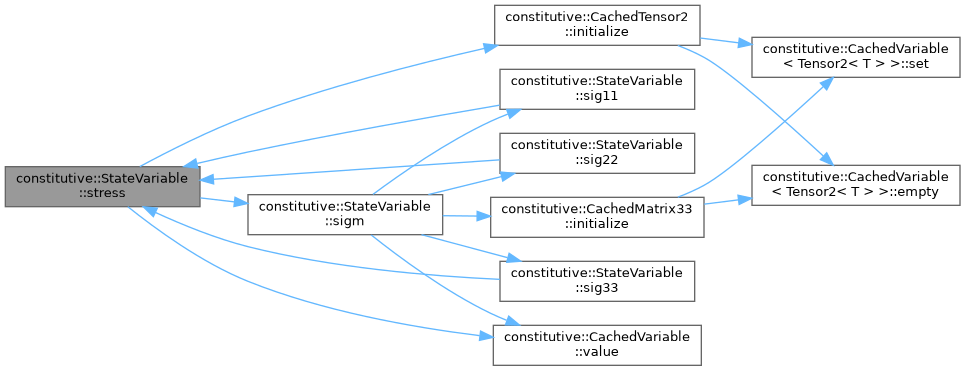
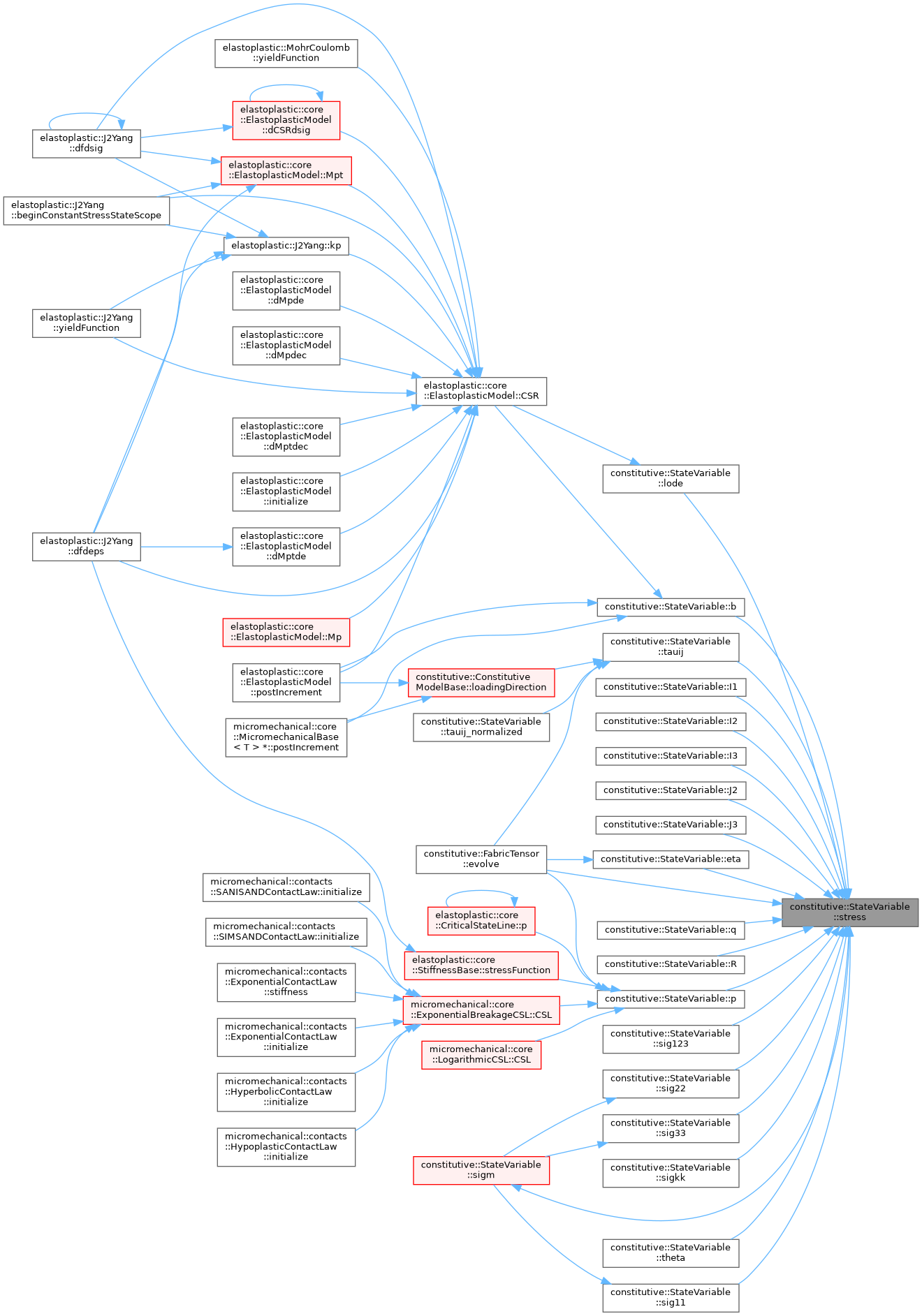
Get the stress tensor.
References constitutive::CachedVariable< T >::cached, constitutive::CachedTensor2< T >::initialize(), sigm(), and constitutive::CachedVariable< T >::value().
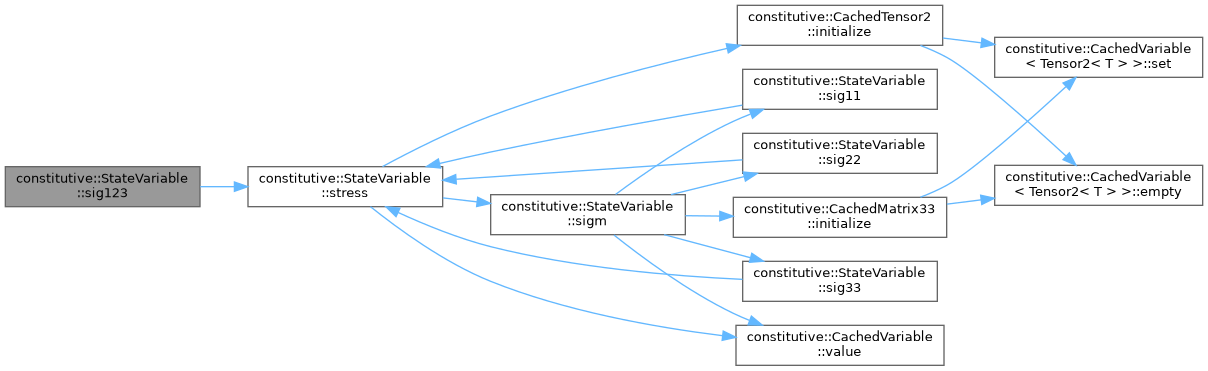
Referenced by b(), eta(), constitutive::FabricTensor< T >::evolve(), I1(), I2(), I3(), J2(), J3(), lode(), p(), q(), R(), sig11(), sig123(), sig22(), sig33(), sigkk(), tauij(), and theta().
Here is the call graph for this function:
Here is the caller graph for this function:
◆ stressa()
template<typename T>
|
inline |
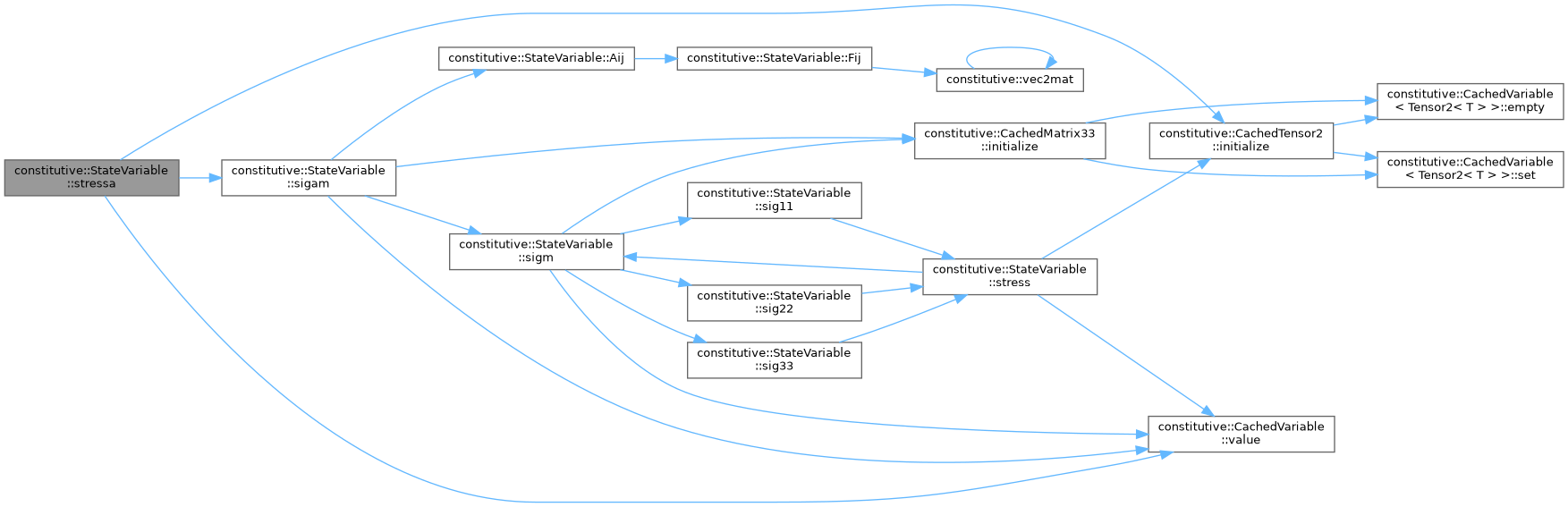
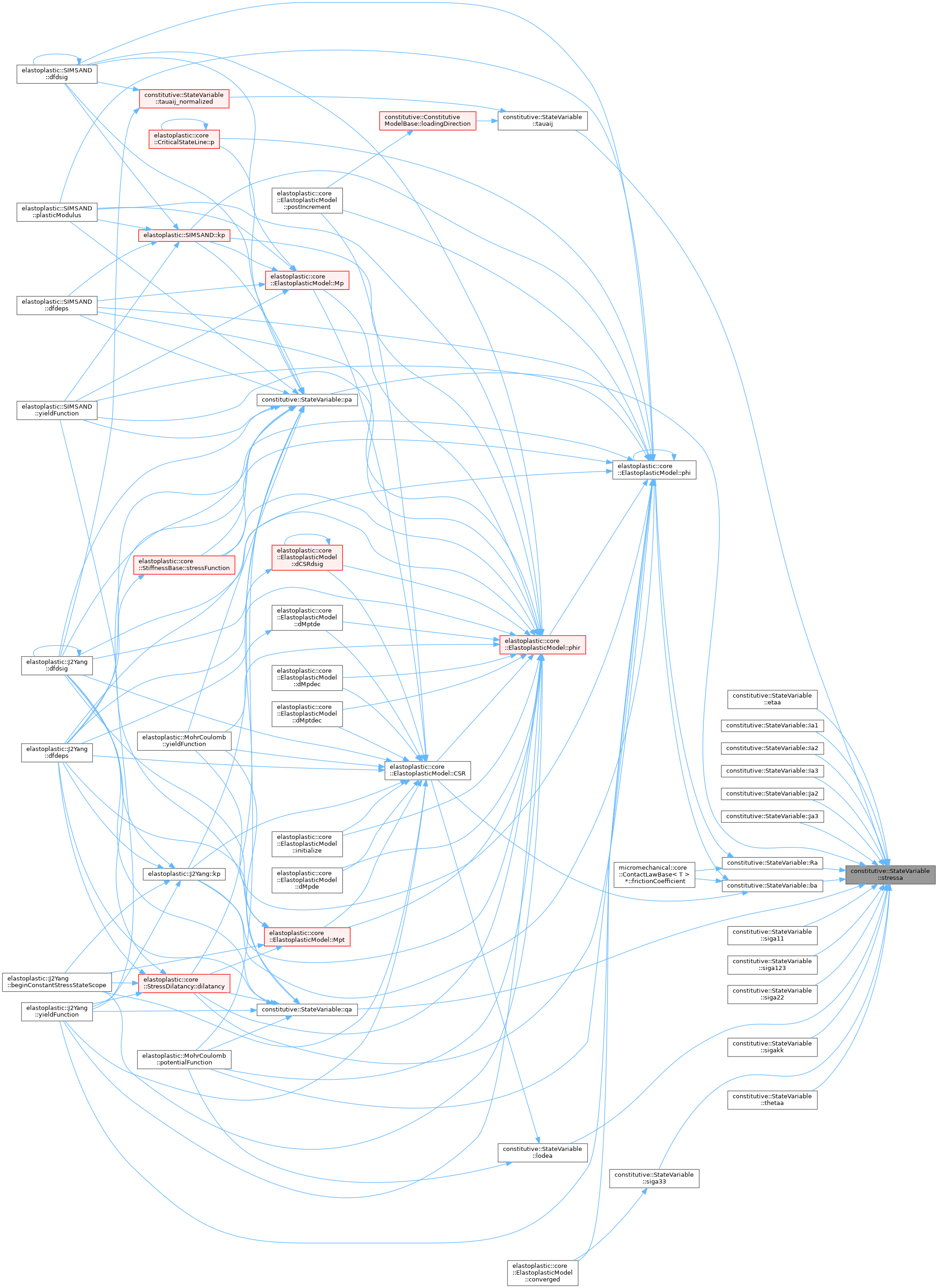
anisotropic stress tensor
References constitutive::CachedVariable< T >::cached, constitutive::CachedTensor2< T >::initialize(), sigam(), and constitutive::CachedVariable< T >::value().
Referenced by ba(), etaa(), Ia1(), Ia2(), Ia3(), Ja2(), Ja3(), lodea(), pa(), qa(), Ra(), siga11(), siga123(), siga22(), siga33(), sigakk(), tauaij(), and thetaa().
Here is the call graph for this function:
Here is the caller graph for this function:
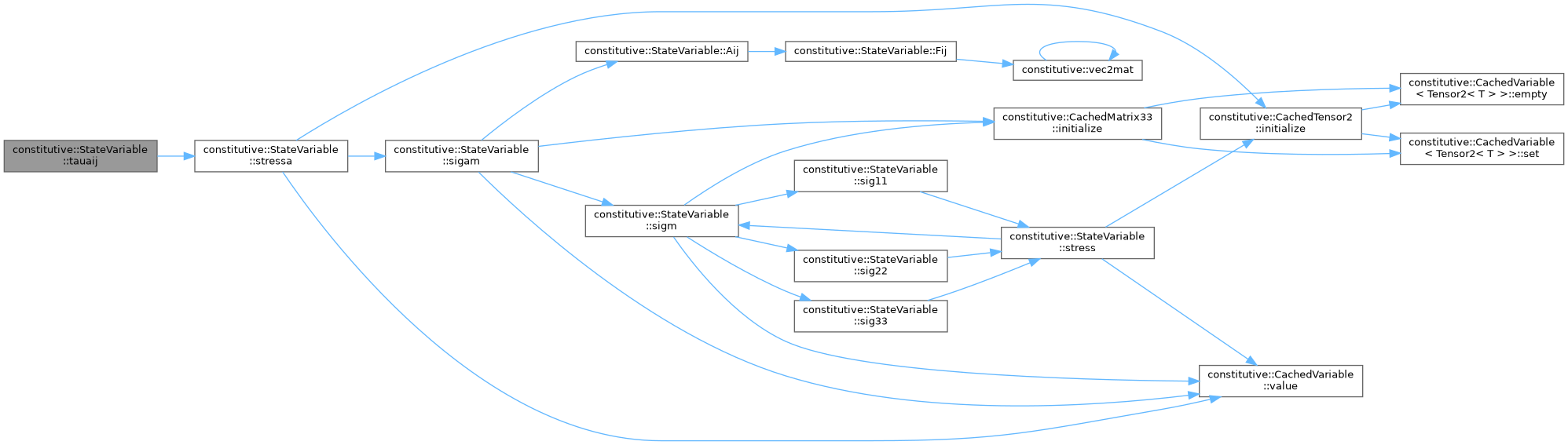
◆ tauaij()
template<typename T>
|
inline |
Get the anisotropic deviatoric stress tensor.
References stressa().
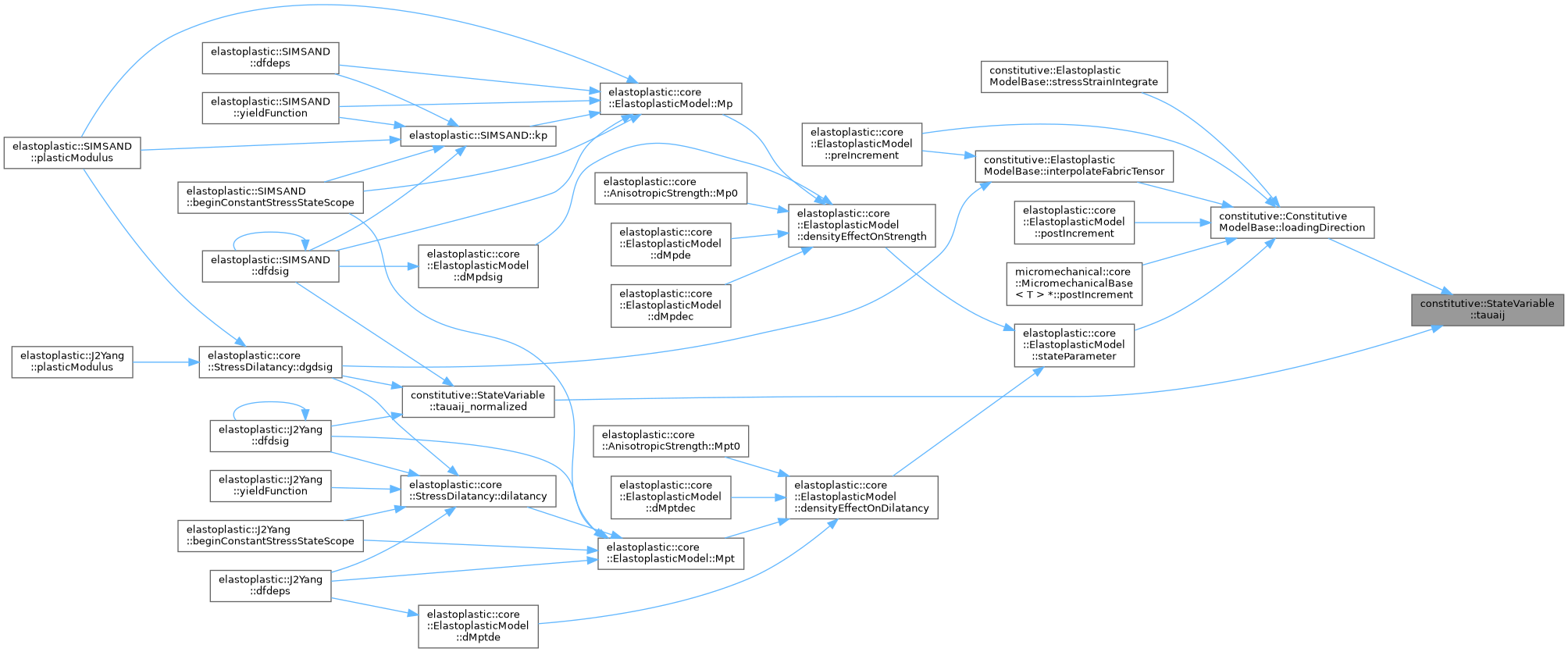
Referenced by constitutive::ConstitutiveModelBase< T >::loadingDirection(), and tauaij_normalized().
Here is the call graph for this function:
Here is the caller graph for this function:
◆ tauaij_normalized()
template<typename T>
|
inline |
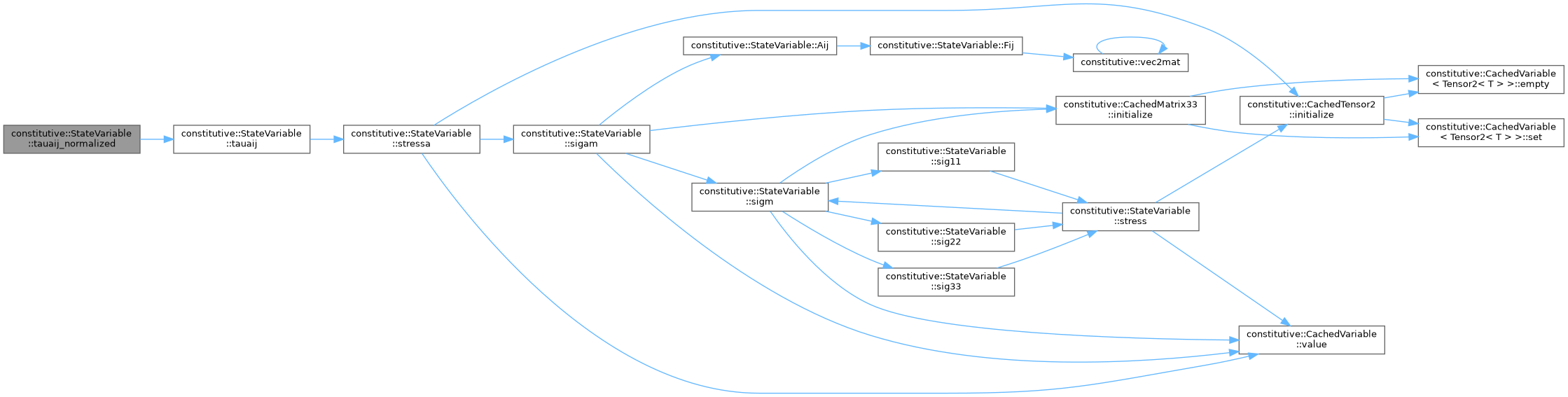
Get the normalized anisotropic deviatoric stress tensor.
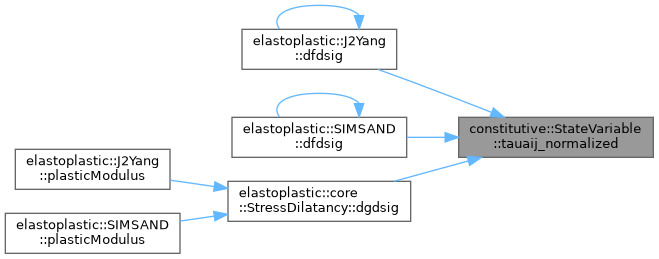
Referenced by elastoplastic::J2Yang< T >::dfdsig(), elastoplastic::SIMSAND< T >::dfdsig(), and elastoplastic::core::StressDilatancy< T >::dgdsig().
Here is the call graph for this function:
Here is the caller graph for this function:
◆ tauij()
template<typename T>
|
inline |
Get the deviatoric stress tensor.
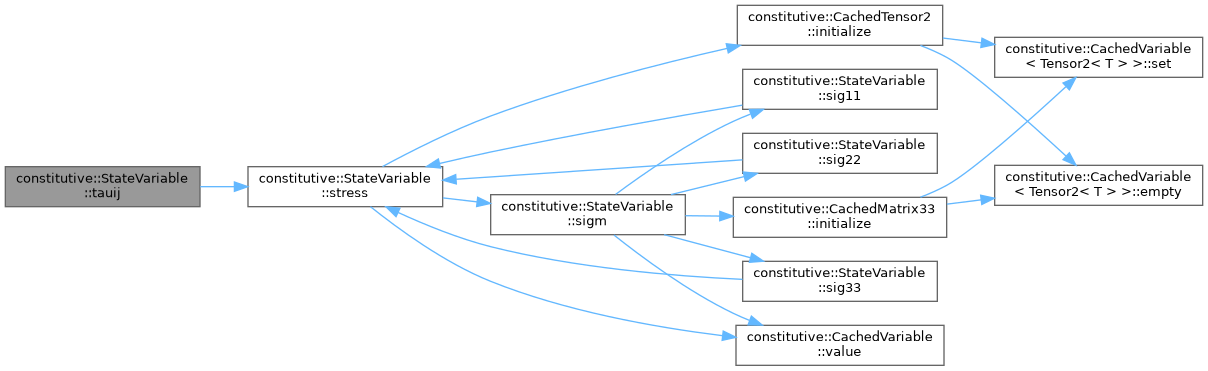
References stress().
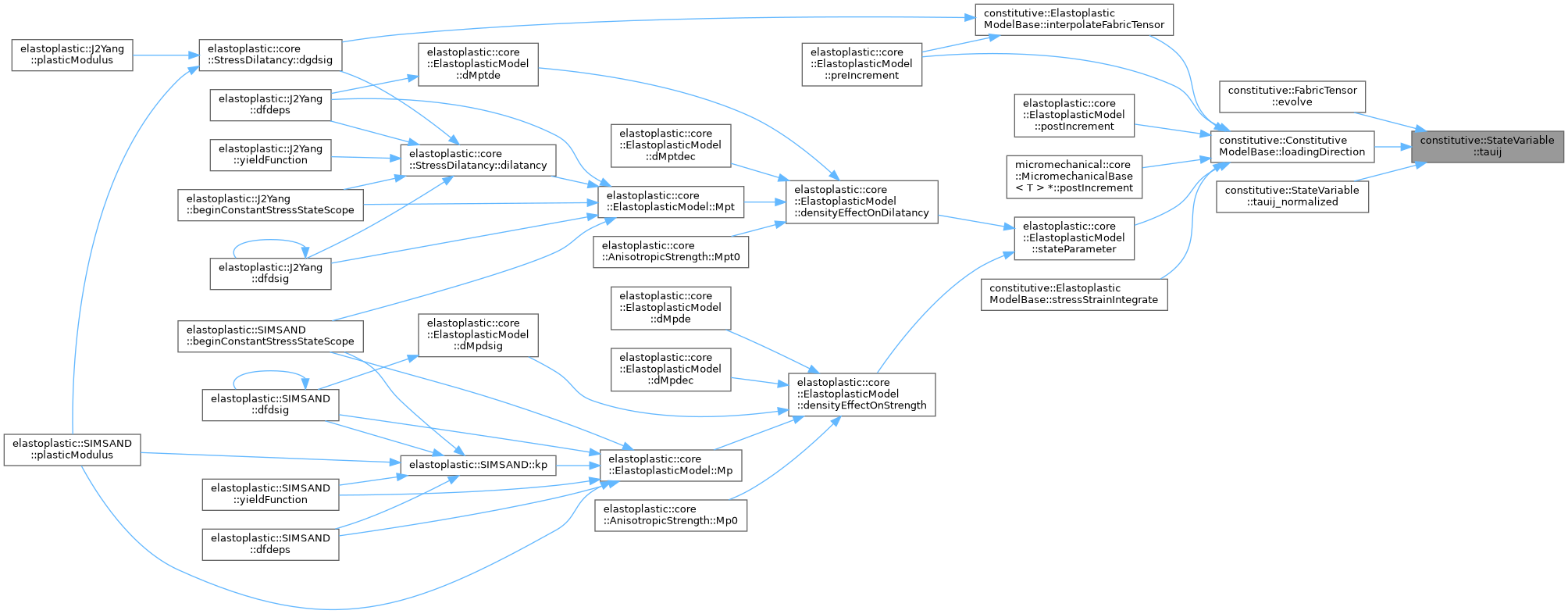
Referenced by constitutive::FabricTensor< T >::evolve(), constitutive::ConstitutiveModelBase< T >::loadingDirection(), and tauij_normalized().
Here is the call graph for this function:
Here is the caller graph for this function:
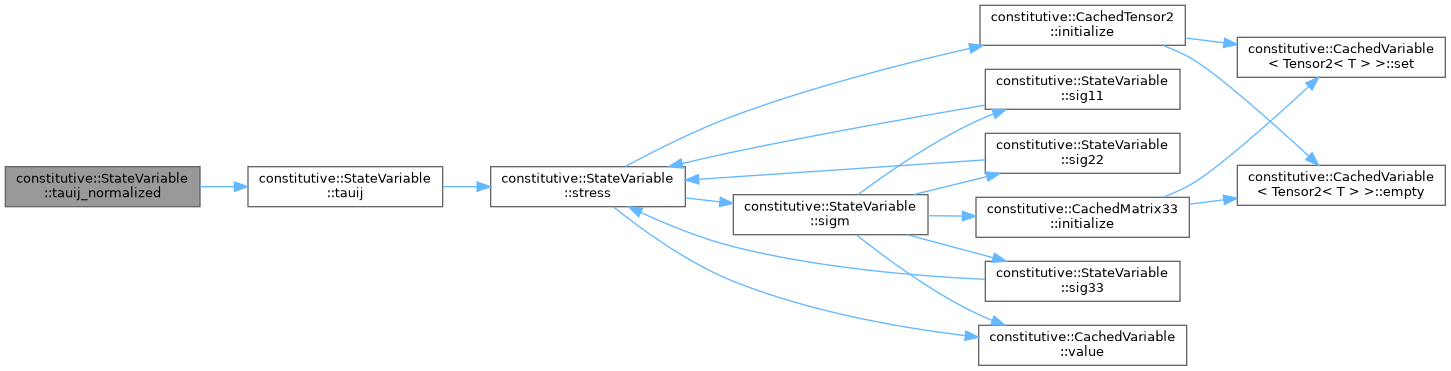
◆ tauij_normalized()
template<typename T>
|
inline |
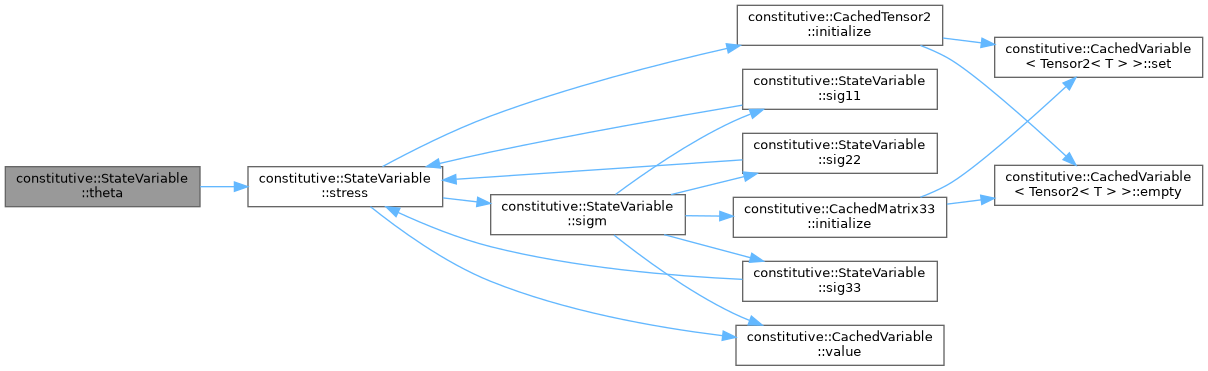
◆ theta()
template<typename T>
|
inline |
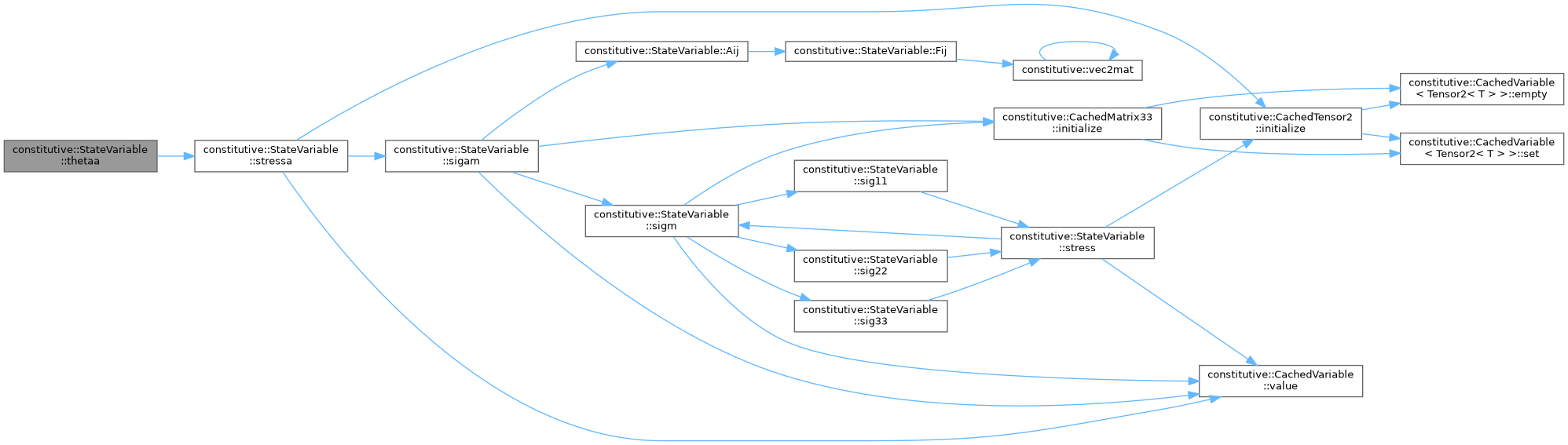
◆ thetaa()
template<typename T>
|
inline |
Lode angle (0, pi/3) with anisotropy.
References stressa().
Here is the call graph for this function:
◆ un() [1/2]
template<typename T>
|
inline |

◆ un() [2/2]
template<typename T>
|
inline |
Get the normal displacement.
- Parameters
-
idx Index of the integration point
Referenced by un().
Here is the caller graph for this function:

◆ upn() [1/2]
template<typename T>
|
inline |

◆ upn() [2/2]
template<typename T>
|
inline |
Get the plastic normal displacement.
- Parameters
-
idx Index of the integration point
Referenced by upn().
Here is the caller graph for this function:

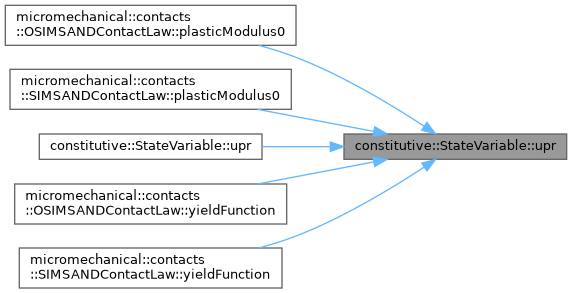
◆ upr() [1/2]
template<typename T>
|
inline |

◆ upr() [2/2]
template<typename T>
|
inline |
Get the plastic shear displacement.
- Parameters
-
idx Index of the integration point
Referenced by micromechanical::contacts::OSIMSANDContactLaw< T >::plasticModulus0(), micromechanical::contacts::SIMSANDContactLaw< T >::plasticModulus0(), upr(), micromechanical::contacts::OSIMSANDContactLaw< T >::yieldFunction(), and micromechanical::contacts::SIMSANDContactLaw< T >::yieldFunction().
Here is the caller graph for this function:
◆ ups() [1/2]
template<typename T>
|
inline |

◆ ups() [2/2]
template<typename T>
|
inline |
Get the plastic shear displacement at the first direction.
- Parameters
-
idx Index of the integration point
Referenced by ups().
Here is the caller graph for this function:

◆ upst() [1/2]
template<typename T>
|
inline |

◆ upst() [2/2]
template<typename T>
|
inline |
Get the plastic shear displacement at both directions.
- Parameters
-
idx Index of the integration point
Referenced by upst().
Here is the caller graph for this function:

◆ upt() [1/2]
template<typename T>
|
inline |

◆ upt() [2/2]
template<typename T>
|
inline |
Get the plastic shear displacement at the second direction.
- Parameters
-
idx Index of the integration point
Referenced by upt().
Here is the caller graph for this function:

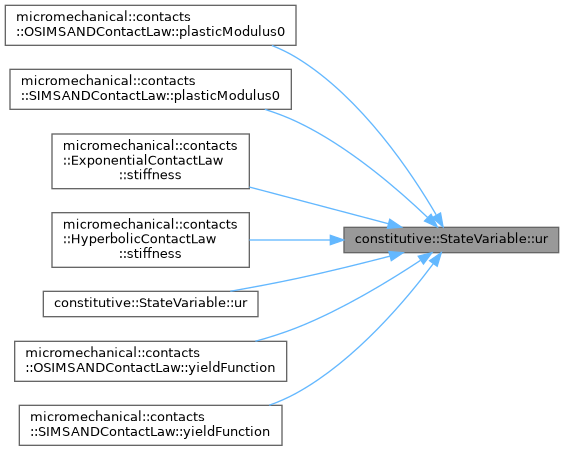
◆ ur() [1/2]
template<typename T>
|
inline |

◆ ur() [2/2]
template<typename T>
|
inline |
Get the shear displacement.
- Parameters
-
idx Index of the integration point
Referenced by micromechanical::contacts::OSIMSANDContactLaw< T >::plasticModulus0(), micromechanical::contacts::SIMSANDContactLaw< T >::plasticModulus0(), micromechanical::contacts::ExponentialContactLaw< T >::stiffness(), micromechanical::contacts::HyperbolicContactLaw< T >::stiffness(), ur(), micromechanical::contacts::OSIMSANDContactLaw< T >::yieldFunction(), and micromechanical::contacts::SIMSANDContactLaw< T >::yieldFunction().
Here is the caller graph for this function:
◆ us() [1/2]
template<typename T>
|
inline |

◆ us() [2/2]
template<typename T>
|
inline |
Get the shear displacement at the first direction.
- Parameters
-
idx Index of the integration point
Referenced by us().
Here is the caller graph for this function:

◆ ust() [1/2]
template<typename T>
|
inline |

◆ ust() [2/2]
template<typename T>
|
inline |
Get the shear displacement at both directions.
- Parameters
-
idx Index of the integration point
Referenced by ust().
Here is the caller graph for this function:

◆ ut() [1/2]
template<typename T>
|
inline |

◆ ut() [2/2]
template<typename T>
|
inline |
Get the shear displacement at the second direction.
- Parameters
-
idx Index of the integration point
Referenced by ut().
Here is the caller graph for this function:

Member Data Documentation
◆ cached_num
template<typename T>
| int constitutive::StateVariable< T >::cached_num = 0 |
cached number of the integration points
Referenced by micromechanical::core::MicromechanicalBase< T > *::contactIntegrates(), copyFrom(), and copyTo().
◆ contact_min_normal_force
template<typename T>
| T constitutive::StateVariable< T >::contact_min_normal_force = 1e-10 |
minimum normal force
Referenced by copyFrom(), copyTo(), micromechanical::core::Material< T >::initialize(), and micromechanical::core::ContactLawBase< T > *::integrate().
◆ cscalars
template<typename T>
| std::unordered_map<std::string, Eigen::Matrix<T, Eigen::Dynamic, 1> > constitutive::StateVariable< T >::cscalars = {} |
custom contact scalars
Referenced by micromechanical::contacts::MCCContactLaw< T >::checkConvergence(), micromechanical::core::MicromechanicalBase< T > *::contactIntegrates(), copyContactStateVariables(), copyFrom(), copyFrom(), copyFrom(), copyTo(), copyTo(), copyTo(), micromechanical::core::MCCCSL< T >::CSL(), micromechanical::contacts::MCCContactLaw< T >::dfdforce(), micromechanical::contacts::SANISANDContactLaw< T >::dfdforce(), micromechanical::contacts::MCCContactLaw< T >::dgdforce(), micromechanical::contacts::SANISANDContactLaw< T >::dgdforce(), micromechanical::core::ElastoplasticContactLaw< T >::ExplicitCPA(), hash(), micromechanical::contacts::MCCContactLaw< T >::initialize(), micromechanical::contacts::SANISANDContactLaw< T >::initialize(), micromechanical::core::MicromechanicalBase< T > *::initialize(), micromechanical::contacts::SANISANDContactLaw< T >::maintainYieldSurface(), micromechanical::contacts::SANISANDContactLaw< T >::plasticModulus(), micromechanical::contacts::MCCContactLaw< T >::plasticModulus0(), constitutive::ConstitutiveModelBase< T >::resetCustomStateVariables(), revertSymmetricContactStateVariables(), micromechanical::ChangHicher< T >::stressStrainIntegrate1(), micromechanical::contacts::MCCContactLaw< T >::updateHardeningVariables(), micromechanical::contacts::SANISANDContactLaw< T >::updateHardeningVariables(), micromechanical::contacts::MCCContactLaw< T >::yieldFunction(), and micromechanical::contacts::SANISANDContactLaw< T >::yieldFunction().
◆ cvectors
template<typename T>
| std::unordered_map<std::string, Eigen::Matrix<T, Eigen::Dynamic, Eigen::Dynamic> > constitutive::StateVariable< T >::cvectors |
Initial value:
=
{}
custom contact vectors
Referenced by copyFrom(), copyFrom(), copyFrom(), copyTo(), copyTo(), copyTo(), constitutive::ConstitutiveModelBase< T >::resetCustomStateVariables(), and micromechanical::ChangHicher< T >::stressStrainIntegrate1().
◆ disp
template<typename T>
| Eigen::Matrix<T, Eigen::Dynamic, 3> constitutive::StateVariable< T >::disp |
displacement
Referenced by micromechanical::core::MicromechanicalBase< T > *::contactIntegrates(), copyFrom(), copyTo(), micromechanical::core::ElastoplasticContactLaw< T >::ExplicitCPA(), micromechanical::core::ContactLawBase< T > *::forceDisplacement(), micromechanical::core::ContactLawBase< T > *::increment(), and micromechanical::ChangHicher< T >::stressStrainIntegrate1().
◆ dispp
template<typename T>
| Eigen::Matrix<T, Eigen::Dynamic, 3> constitutive::StateVariable< T >::dispp |
plastic displacement
Referenced by copyFrom(), copyFrom(), copyFrom(), copyTo(), copyTo(), copyTo(), micromechanical::core::ElastoplasticContactLaw< T >::ExplicitCPA(), nStateVariables(), stateVariableNames(), and micromechanical::ChangHicher< T >::stressStrainIntegrate1().
◆ e
template<typename T>
| T constitutive::StateVariable< T >::e = 0.0 |
void ratio
Referenced by copyFrom(), copyTo(), elastoplastic::J2Yang< T >::dfdeps(), elastoplastic::core::ElastoplasticModel< T >::dMpde(), elastoplastic::core::ElastoplasticModel< T >::dMpdec(), elastoplastic::core::ElastoplasticModel< T >::dMptde(), elastoplastic::core::ElastoplasticModel< T >::dMptdec(), micromechanical::core::RichartStiffness< T >::elasticStiffness(), constitutive::FabricTensor< T >::evolve(), constitutive::ConstitutiveModelBase< T >::increment(), micromechanical::contacts::SANISANDContactLaw< T >::plasticModulus(), micromechanical::contacts::MCCContactLaw< T >::plasticModulus0(), constitutive::ElastoplasticModelBase< T >::returnMapping(), elastoplastic::core::ElastoplasticModel< T >::stateParameter(), micromechanical::contacts::HypoplasticContactLaw< T >::stiffness(), constitutive::ElastoplasticModelBase< T >::stressStrainIntegrate(), micromechanical::ChangHicher< T >::stressStrainIntegrate1(), micromechanical::core::CSLBase< T >::tanphip(), micromechanical::core::CSLBase< T >::tanphipt(), tauaij_normalized(), tauij_normalized(), constitutive::ConstitutiveModelBase< T >::updateVoidRatio(), elastoplastic::core::StiffnessBase< T >::voidRatioFunction(), and micromechanical::contacts::SANISANDContactLaw< T >::yieldFunction().
◆ e0
template<typename T>
| T constitutive::StateVariable< T >::e0 = 0.0 |
initial void ratio
Referenced by elastoplastic::J2Yang< T >::dfdeps(), constitutive::ConstitutiveModelBase< T >::increment(), and constitutive::ConstitutiveModelBase< T >::updateVoidRatio().
◆ ec
template<typename T>
| T constitutive::StateVariable< T >::ec = 0.0 |
critical void ratio
Referenced by micromechanical::ChangHicher< T >::contactIntegrate(), copyFrom(), copyTo(), elastoplastic::core::CriticalStateLine< T >::CSL(), micromechanical::core::ExponentialBreakageCSL< T >::CSL(), micromechanical::core::LogarithmicCSL< T >::CSL(), elastoplastic::core::ElastoplasticModel< T >::dMpde(), elastoplastic::core::ElastoplasticModel< T >::dMpdec(), elastoplastic::core::ElastoplasticModel< T >::dMptde(), elastoplastic::core::ElastoplasticModel< T >::dMptdec(), constitutive::FabricTensor< T >::evolve(), micromechanical::ChangHicher< T >::maxYieldFunction(), constitutive::ElastoplasticModelBase< T >::returnMapping(), elastoplastic::core::ElastoplasticModel< T >::stateParameter(), micromechanical::core::CSLBase< T >::tanphip(), micromechanical::core::CSLBase< T >::tanphipt(), and micromechanical::contacts::SANISANDContactLaw< T >::yieldFunction().
◆ eps
template<typename T>
| Eigen::Matrix<T, 6, 1> constitutive::StateVariable< T >::eps = Eigen::Matrix<T, 6, 1>::Zero() |
strain vector
Referenced by copyFrom(), copyTo(), constitutive::ElastoplasticModelBase< T >::CPPM(), constitutive::ElastoplasticModelBase< T >::dfdeps0(), constitutive::ConstitutiveModelBase< T >::elastoplasticStiffness(), constitutive::LoadPhase< T >::finalize(), constitutive::ConstitutiveModelBase< T >::increment(), constitutive::LoadPhase< T >::initialize(), constitutive::ElastoplasticModelBase< T >::integrateToYieldSurface(), constitutive::ElastoplasticModelBase< T >::RKn(), constitutive::ElastoplasticModelBase< T >::RungeKutta(), setStrain(), constitutive::ElastoplasticModelBase< T >::stressStrainIntegrate(), micromechanical::ChangHicher< T >::stressStrainIntegrate1(), and constitutive::ElastoplasticModelBase< T >::yieldFunctionCorrection().
◆ epsp
template<typename T>
| Eigen::Matrix<T, 6, 1> constitutive::StateVariable< T >::epsp = Eigen::Matrix<T, 6, 1>::Zero() |
plastic strain vector
Referenced by copyFrom(), copyTo(), constitutive::ElastoplasticModelBase< T >::CPPM(), constitutive::ElastoplasticModelBase< T >::dfdepsp0(), constitutive::ElastoplasticModelBase< T >::RKn(), constitutive::ElastoplasticModelBase< T >::RungeKutta(), constitutive::ElastoplasticModelBase< T >::stressStrainIntegrate(), micromechanical::ChangHicher< T >::stressStrainIntegrate1(), constitutive::ConstitutiveModelBase< T >::umat(), and constitutive::ElastoplasticModelBase< T >::yieldFunctionCorrection().
◆ F
template<typename T>
| Eigen::Matrix<T, 6, 1> constitutive::StateVariable< T >::F = Eigen::Matrix<T, 6, 1>::Zero() |
fabric vector F
Referenced by constitutive::ElastoplasticModelBase< T >::beginConstantStressStateScope1(), copyFrom(), copyTo(), constitutive::ElastoplasticModelBase< T >::dfdeps1(), constitutive::ElastoplasticModelBase< T >::dfdepsp1(), constitutive::ElastoplasticModelBase< T >::dfdsig1(), constitutive::ConstitutiveModelBase< T >::increment(), constitutive::ElastoplasticModelBase< T >::plasticModulus1(), elastoplastic::core::ElastoplasticModel< T >::preIncrement(), and constitutive::ElastoplasticModelBase< T >::yieldFunction1().
◆ force
template<typename T>
| Eigen::Matrix<T, Eigen::Dynamic, 3> constitutive::StateVariable< T >::force |
force
Referenced by micromechanical::ChangHicher< T >::contactIntegrate(), micromechanical::core::MicromechanicalBase< T > *::contactIntegrates(), copyFrom(), copyTo(), micromechanical::core::ContactLawBase< T > *::dfdforce0(), micromechanical::core::ContactLawBase< T > *::dgdforce0(), micromechanical::core::ElastoplasticContactLaw< T >::ExplicitCPA(), micromechanical::core::ContactLawBase< T > *::forceDisplacement(), micromechanical::core::ContactLawBase< T > *::increment(), micromechanical::contacts::SANISANDContactLaw< T >::maintainYieldSurface(), micromechanical::contacts::MCCContactLaw< T >::plasticModulus0(), micromechanical::contacts::ElasticContactLaw< T >::stiffness(), micromechanical::contacts::ExponentialContactLaw< T >::stiffness(), micromechanical::contacts::HyperbolicContactLaw< T >::stiffness(), micromechanical::contacts::HypoplasticContactLaw< T >::stiffness(), micromechanical::core::ElastoplasticContactLaw< T >::stiffness(), micromechanical::ChangHicher< T >::stiffness1(), micromechanical::ChangHicher< T >::stressStrainIntegrate(), micromechanical::ChangHicher< T >::stressStrainIntegrate1(), and micromechanical::ChangHicher< T >::yieldFunction().
◆ matrices
template<typename T>
| std::unordered_map<std::string, Eigen::Matrix<T, Eigen::Dynamic, Eigen::Dynamic> > constitutive::StateVariable< T >::matrices |
Initial value:
=
{}
custom matrices
Referenced by copyFrom(), copyTo(), elastoplastic::J2Yang< T >::dfdsig(), elastoplastic::SIMSAND< T >::dfdsig(), elastoplastic::core::ElastoplasticModel< T >::preIncrement(), constitutive::ElastoplasticModelBase< T >::RungeKutta(), constitutive::ElastoplasticModelBase< T >::stressStrainIntegrate(), and constitutive::ConstitutiveModelBase< T >::umat().
◆ phase
template<typename T>
| int constitutive::StateVariable< T >::phase = 0 |
load phase index
Referenced by copyFrom(), and copyTo().
◆ scalars
template<typename T>
| std::unordered_map<std::string, T> constitutive::StateVariable< T >::scalars = {} |
custom scalars
Referenced by constitutive::ElastoplasticModelBase< T >::consistentElastoplasticStiffness(), copyFrom(), copyTo(), constitutive::ElastoplasticModelBase< T >::CPPM(), micromechanical::contacts::OSIMSANDContactLaw< T >::dfdforce(), micromechanical::contacts::SANISANDContactLaw< T >::dfdforce(), micromechanical::contacts::SANISANDContactLaw< T >::dgdforce(), micromechanical::contacts::HypoplasticContactLaw< T >::elasticStiffness(), micromechanical::core::ChangStiffness< T >::elasticStiffness(), micromechanical::core::ConstantStiffness< T >::elasticStiffness(), micromechanical::core::RichartStiffness< T >::elasticStiffness(), constitutive::ElastoplasticModelBase< T >::elasticTrial(), constitutive::FabricTensor< T >::evolve(), micromechanical::core::ElastoplasticContactLaw< T >::ExplicitCPA(), constitutive::ConstitutiveModelBase< T >::increment(), elastoplastic::core::ElastoplasticModel< T >::initialize(), micromechanical::core::Integration< T >::initialize(), micromechanical::core::MicromechanicalBase< T > *::initialize(), constitutive::ElastoplasticModelBase< T >::interpolateFabricTensor(), micromechanical::contacts::SANISANDContactLaw< T >::maintainYieldSurface(), micromechanical::contacts::SANISANDContactLaw< T >::plasticModulus(), micromechanical::contacts::OSIMSANDContactLaw< T >::plasticModulus0(), constitutive::ConstitutiveModelBase< T >::resetCustomStateVariables(), constitutive::ElastoplasticModelBase< T >::RungeKutta(), constitutive::ConstitutiveModelBase< T >::saveElasticStiffnessMatrix(), micromechanical::contacts::ExponentialContactLaw< T >::stiffness(), micromechanical::contacts::HyperbolicContactLaw< T >::stiffness(), micromechanical::contacts::HypoplasticContactLaw< T >::stiffness(), constitutive::ElastoplasticModelBase< T >::stressStrainIntegrate(), micromechanical::contacts::SANISANDContactLaw< T >::updateHardeningVariables(), elastoplastic::J2Yang< T >::yieldFunction(), micromechanical::contacts::OSIMSANDContactLaw< T >::yieldFunction(), micromechanical::contacts::SANISANDContactLaw< T >::yieldFunction(), and constitutive::ElastoplasticModelBase< T >::yieldFunctionCorrection().
◆ sig
template<typename T>
| Eigen::Matrix<T, 6, 1> constitutive::StateVariable< T >::sig = Eigen::Matrix<T, 6, 1>::Zero() |
stress vector
Referenced by copyFrom(), copyTo(), constitutive::ElastoplasticModelBase< T >::CPPM(), constitutive::ElastoplasticModelBase< T >::d2gdsig20(), elastoplastic::core::ElastoplasticModel< T >::dCSRdsig(), constitutive::ElastoplasticModelBase< T >::dfdsig0(), constitutive::ElastoplasticModelBase< T >::dgdsig0(), constitutive::LoadPhase< T >::finalize(), constitutive::ConstitutiveModelBase< T >::increment(), constitutive::ElastoplasticModelBase< T >::integrateToYieldSurface(), constitutive::ElastoplasticModelBase< T >::RKn(), constitutive::ElastoplasticModelBase< T >::RungeKutta(), constitutive::ElastoplasticModelBase< T >::stressStrainIntegrate(), micromechanical::ChangHicher< T >::stressStrainIntegrate(), micromechanical::ChangHicher< T >::stressStrainIntegrate1(), constitutive::ConstitutiveModelBase< T >::umat(), micromechanical::ChangHicher< T >::yieldFunction(), and constitutive::ElastoplasticModelBase< T >::yieldFunctionCorrection().
◆ size
template<typename T>
| int constitutive::StateVariable< T >::size = 37 |
number of the integration points
Referenced by copyFrom(), copyTo(), micromechanical::contacts::MCCContactLaw< T >::initialize(), micromechanical::contacts::SANISANDContactLaw< T >::initialize(), micromechanical::core::MicromechanicalBase< T > *::initialize(), micromechanical::ChangHicher< T >::maxYieldFunction(), nStateVariables(), StateVariable(), and stateVariableNames().
◆ vectors
template<typename T>
| std::unordered_map<std::string, Eigen::Matrix<T, Eigen::Dynamic, 1> > constitutive::StateVariable< T >::vectors = {} |
custom vectors
Referenced by constitutive::ElastoplasticModelBase< T >::continuumElastoplasticStiffness(), copyFrom(), copyTo(), constitutive::ElastoplasticModelBase< T >::ExplicitCPA(), micromechanical::core::ElastoplasticContactLaw< T >::ExplicitCPA(), elastoplastic::core::ElastoplasticModel< T >::initialize(), micromechanical::core::MicromechanicalBase< T > *::initialize(), micromechanical::contacts::MCCContactLaw< T >::plasticModulus0(), micromechanical::contacts::OSIMSANDContactLaw< T >::plasticModulus0(), micromechanical::contacts::SIMSANDContactLaw< T >::plasticModulus0(), elastoplastic::core::ElastoplasticModel< T >::postIncrement(), micromechanical::core::MicromechanicalBase< T > *::postIncrement(), elastoplastic::core::ElastoplasticModel< T >::preIncrement(), micromechanical::contacts::HypoplasticContactLaw< T >::preIntegration(), constitutive::ConstitutiveModelBase< T >::resetCustomStateVariables(), constitutive::ElastoplasticModelBase< T >::RKn(), micromechanical::contacts::HypoplasticContactLaw< T >::stiffness(), micromechanical::core::ElastoplasticContactLaw< T >::stiffness(), constitutive::ElastoplasticModelBase< T >::stressStrainIntegrate(), and micromechanical::contacts::MCCContactLaw< T >::updateHardeningVariables().
◆ w
template<typename T>
| Eigen::Matrix<T, Eigen::Dynamic, 1> constitutive::StateVariable< T >::w |
plastic work
Referenced by copyFrom(), copyTo(), micromechanical::core::ExponentialBreakageCSL< T >::CSL(), micromechanical::core::ElastoplasticContactLaw< T >::ExplicitCPA(), micromechanical::contacts::MCCContactLaw< T >::plasticModulus0(), micromechanical::core::NonlinearElasticContactLaw< T >::postIncrement(), micromechanical::ChangHicher< T >::stressStrainIntegrate1(), and micromechanical::contacts::MCCContactLaw< T >::updateHardeningVariables().
The documentation for this struct was generated from the following file:
- include/constitutive/statevariable.hpp